

Visa-Free Countries for US Passport Holders in 2026
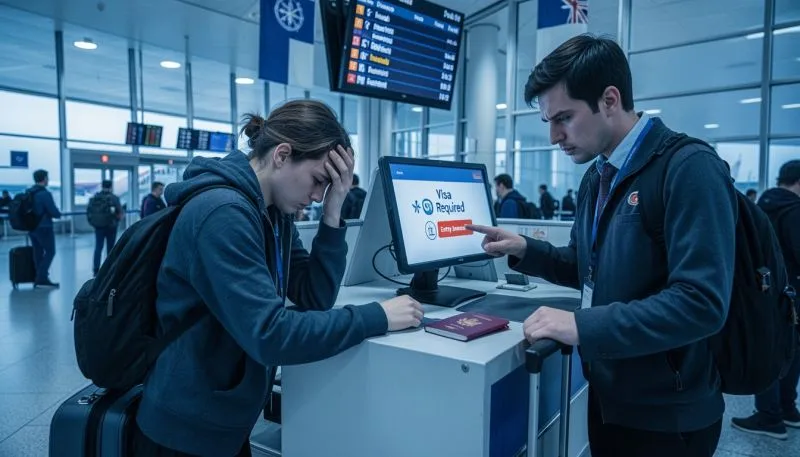
I almost missed a flight to São Paulo last year because of one assumption: “Americans don’t need a visa for Brazil.” That used to be true. Then it wasn’t. Then there was a whole eVisa portal I’d never heard of, an $80 fee, and a five-day wait I hadn’t budgeted for.
That trip taught me something every frequent traveler eventually learns the hard way: visa-free status for US passport holders isn’t a fixed list you memorize once. It shifts. Sometimes it shifts twice in the same year. And in 2026, there’s a bigger shift coming for anyone who loves Europe.
So instead of giving you another generic “here are 180 Visa-Free Countries” list copy-pasted from a government PDF, I want to walk through this the way I actually handle it before every trip including the mistakes, the apps Visa-Free Countries I now use, and the regions where things look simple but aren’t.

First, let’s clear up the confusing numbers
If you’ve Googled this topic already, you’ve probably noticed something weird: every site quotes a different number. One says 117 Visa-Free Countries. Another says 149. Another says 188.
They’re not lying to you, they’re just measuring different things. The Henley Passport Index counts pure visa-free entry only. Other trackers lump in visa-on-arrival and electronic travel authorizations (like an ETA) under the “visa-free” umbrella because, practically speaking, you’re not sitting in an embassy waiting room for those.
The honest, useful way to think about it: the US passport gets you into somewhere around 175-185 destinations without a traditional embassy visa, once you count Visa-Free Countries entry, visa-on-arrival, and electronic authorizations together.
How to Use Google Maps Offline While Traveling
That puts the US passport solidly in the top 10-15 globally for travel freedom strong, but no longer the outright #1 it was a decade ago, as Visa-Free Countries like Singapore, Japan, and South Korea have climbed past it.
That number matters less than this question: what does YOUR specific trip actually require? That’s what trips people up.
The big one for 2026: ETIAS is finally (almost) here
If you’re planning any trip to Europe this year, this is the part to actually pay attention to.
For years, US citizens just showed up in Paris, Rome, or Lisbon and walked through passport control. No paperwork, no fee, nothing. That’s still true right now, but it’s ending.
The EU has been building a system called ETIAS Visa-Free Countries (European Travel Information and Authorisation System) — basically Europe’s version of the US ESTA. It’s not a visa. It’s a quick online screening you complete before you fly, and once approved, it’s tied electronically to your passport for three years.
Here’s where things stand as I’m writing this:
- ETIAS is not live yet. The current confirmed window is Q4 2026 (October to December), after several previous delays.
- There’s a transition period of roughly six months after launch where border officers will still let travelers in without it, as long as everything else checks out but I wouldn’t rely on that. Airlines will start refusing boarding to anyone without an approved ETIAS once enforcement kicks in, and that’s the bigger risk than the actual border crossing.
- The fee is expected to land around €20 for adults (it was originally proposed at €7, then revised upward).
- It covers all 30 Schengen-area Visa-Free Countries the 27 EU members participating, plus Iceland, Norway, Switzerland, and Liechtenstein.
A quick warning that’s genuinely worth repeating: there are already scam websites charging people for “ETIAS applications” months before the real system even opens. If a site is taking your money for ETIAS right now, in mid-2026, walk away. The only legitimate source will be the official EU travel portal when it actually launches.
Separately and this confuses almost everyone the EU rolled out a different system called EES (Entry/Exit System) back in October 2025, which became fully operational across all Schengen borders in April 2026. EES is the biometric fingerprint-and-photo scan you do at the border when you land.
ETIAS is the thing you apply for before you fly. They work together but they’re not the same system, and you’ll hear both names thrown around interchangeably in travel forums, which doesn’t help anybody.
My practical advice: if you’re booking Europe travel for late 2026 or 2027, build five extra minutes into your pre-trip checklist to check whether ETIAS has launched yet, and apply as soon as the portal opens rather than waiting until the week before your flight.
The UK already did this and it’s live now
While Europe is still finishing its system, the UK jumped ahead. The UK ETA (Electronic Travel Authorisation) is already required for US citizens visiting Britain. Visa-Free Countries It costs about £20, lasts two years (or until your passport expires), and you apply online before you travel similar idea to ESTA, just for the UK instead of the US.
I applied for mine on my phone at a coffee shop the morning before a London layover. Took about ten minutes, approval came through in under an hour. Just don’t wait until you’re at the gate give it at least a few days of buffer in case extra checks are needed.
The Brazil lesson (my actual mistake)
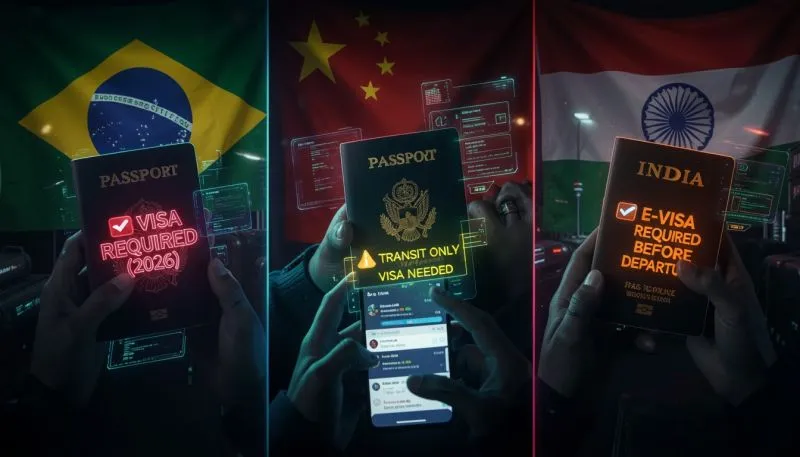
Back in 2019, Brazil dropped its visa requirement for Americans, and for years it stayed that way. Then, as of April 10, 2025, Brazil reinstated the visa requirement for US, Canadian, and Australian citizens calling it a reciprocity move, since those Visa-Free Countries still require Brazilians to get visas too.
That rule is still in effect through 2026. You now need an eVisa before you fly, applied for online through the official VFS eVisa portal, costing roughly $80, and it’s genuinely tied into airline check-in systems now meaning some airlines won’t even issue your boarding pass without a valid eVisa code on file.
Is Turkey Safe to Visit in 2026? Here’s What Nobody Tells You Before You Book
Meanwhile, in March 2026, Brazil opened Visa-Free Countries entry for citizens of eight other Visa-Free Countries (China, France, Ireland, and a few others) as part of a tourism push just not for Americans. So depending on which blog post you read, you’ll get completely contradictory answers about Brazil, and most of them are dated.
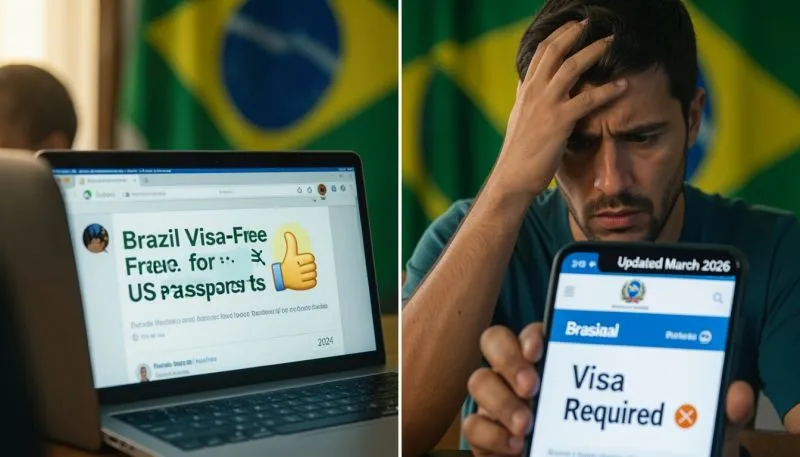
The lesson here isn’t really about Brazil specifically. It’s that any country’s visa policy toward Americans can flip in either direction, and travel blogs (including, frankly, ones like this) go stale fast. Always check the date on what you’re reading.
Region by region what it actually looks like on the ground
Western Europe and the Schengen Area
Still visa-free for stays up to 90 days within any 180-day period that 90/180 rule is the same across all Schengen countries combined, not 90 days per Visa-Free Countries. I learned this the slow way after assuming I could “reset the clock” by hopping to a non-Schengen country and back.
Visa-Free Countries You can’t; immigration counts your total days across the whole Schengen zone. Once ETIAS launches, add that step before departure, but the 90/180 day limit itself isn’t changing.
The UK and Ireland
UK requires the ETA mentioned above. Ireland is not part of Schengen and currently has no equivalent requirement for US citizens just a passport check at arrival.
Mexico, the Caribbean, and Central America
This is genuinely the easiest region for Americans. Mexico, Costa Rica, Panama, Jamaica, the Bahamas, the Dominican Republic all visa-free for tourism stays, usually 30 to 180 days depending on the country.
One detail people miss with Mexico: if you’re flying in (not driving), you’ll get a tourist permit called the FMM, either filled out on the plane or done online beforehand through INM’s portal it’s not a visa, but it’s a real document immigration checks, and losing it before your departure flight can cause a headache.
South America
Mostly visa-free or visa-on-arrival Argentina, Chile, Colombia, Peru, Ecuador all welcome US passports without advance paperwork for short stays. Brazil, as covered above, is the outlier requiring an eVisa.
Asia
Japan and South Korea remain visa-free for short tourist stays, and both consistently rank near the top of global passport-power indexes themselves. Thailand allows Visa-Free Countries entry for tourism (typically 30-60 days depending on current policy Thailand has adjusted this a few times in recent years, so check close to your trip). Vietnam offers an e-visa system that’s straightforward to apply for online ahead of arrival.
China generally requires a visa arranged in advance, though it has expanded transit-without-visa windows for travelers connecting through certain cities for under Visa-Free Countries 72-144 hours. India requires an e-visa, applied for online before departure.
Middle East and North Africa
The UAE allows visa-free entry for US citizens for tourism. Saudi Arabia has opened up significantly with an e-visa system for tourism. Egypt offers a visa-on-arrival or e-visa option.
Israel currently allows visa-free tourist entry for Americans, but if your itinerary also includes countries like Lebanon, Libya, or Yemen, know that evidence of travel to Israel can cause real entry problems there it’s an old issue that still trips people up on multi-country Middle East itineraries.
The Visa-Free Countries to just skip
North Korea is not a “get a visa and go” situation for Americans US citizens are legally barred from travel there without special State Department validation, a rule that’s been in place since 2017. Iran, Syria, and a handful of others come with their own complications layered on top of any visa requirement, generally tied to current State Department travel advisories rather than the visa policy itself.
My actual pre-trip checklist (steal this)
I used to just Google “do I need a visa for [country]” and trust whatever popped up first. After Brazil, I built an actual process:
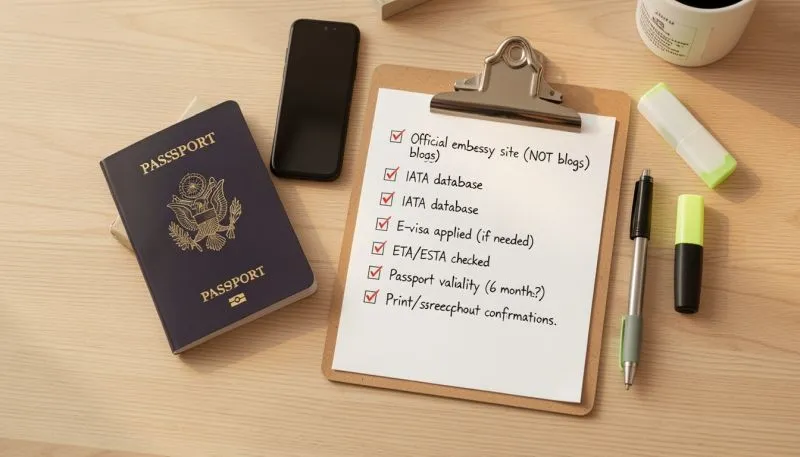
Step 1: Start at travel.state.gov.
Every country has its own page under “International Travel” with current entry requirements straight from the State Department. It’s not the prettiest website, but it’s the most reliable source and gets updated when policies change.
Step 2: Cross-check with the destination country’s own immigration site.
The US State Department reports what it’s been told; the actual immigration ministry of the country you’re visiting is the final word. For e-visas, only apply through the official government portal every popular destination now has at least one convincing scam site mimicking the real one.
Step 3: Run it through an app for a sanity check.
I use iVisa’s visa checker tool just to compare against what I found in steps 1 and 2. If all three sources agree, I feel confident. If they don’t, I dig deeper before booking anything non-refundable.
Step 4: Check your passport, not just the destination.
Pull out your passport and check two things expiration date and blank pages. A huge number of Visa-Free Countries require at least six months of validity remaining beyond your travel dates, and several (Brazil included) want a genuinely blank page for stamps, not just unused space near other stamps. If you’re inside that six-month window, renew before you book flights, not after.
Step 5: Confirm exactly how long you’re allowed to stay, and whether extensions exist.
“Visa-free” doesn’t mean unlimited it’s usually 30, 60, or 90 days, and overstaying even by a day can mean fines or future entry bans, depending on the country.
Step 6: For e-visas and ETAs, apply with breathing room, not the night before.
Most approve within minutes to 96 hours, but flagged applications can take weeks. I apply at least two weeks ahead for anything that isn’t instant.
Step 7: Enroll in STEP (Smart Traveler Enrollment Program) for the trip.
It’s free, takes five minutes, and means the nearest US embassy can actually reach you if something changes mid-trip which, given how often these rules move lately, isn’t a hypothetical anymore.
Eco-Friendly Travel Tips for 2026: What Actually Works
Mistakes I see people make constantly (and made myself)
Trusting a “Top Visa-Free Countries” listicle with no visible publish date. If you can’t tell when it was written, assume it’s outdated. Policies on Brazil, Turkey, India, and several Gulf states have all changed multiple times in the past five years alone.
Confusing an ETA with a visa. An ETA (like ESTA, the UK ETA, or the upcoming ETIAS) is a quick security screening, not an embassy visa application. People sometimes panic and think they need to go through a consulate when they really just need ten minutes online.
Assuming the 90-day Schengen allowance is per country. It’s not it’s 90 days total across the entire Schengen zone within any rolling 180-day window. Country-hopping doesn’t reset it.
Central America
Forgetting proof of onward travel. Several Visa-Free Countries including some in Central America and Southeast Asia can ask for a return or onward ticket at the border, even for visa-free entry. I’ve had this checked exactly twice in the last few years, and both times it would’ve been a real problem without a printed itinerary.
Not checking the actual current fee and validity for Visa-Free Countries. Fees and validity periods get revised (Brazil’s eVisa, ETIAS itself, several Gulf state e-visas) more often than people expect, and an old fee number floating around online can throw off your budget or make you think you got scammed when the price legitimately went up.
Where this actually leaves you in 2026
The US passport still opens an enormous number of doors without a single embassy visit that part hasn’t changed. What’s changed is that “Visa-Free Countries” increasingly means “visa-free, but bring your phone and ten minutes for an online form.” ETIAS is about to make that the norm for Europe too, joining the UK, the US’s own ESTA, and a growing list of Visa-Free Countries worldwide that have shifted from open borders to pre-screened ones.
None of this makes travel harder, really it just means the planning happens a little earlier than it used to. The trip that almost got derailed in Brazil ended up being one of my favorites once I actually had the paperwork sorted. I just wish I’d checked three weeks earlier instead of three days.

Check your specific destination close to your departure date, not months in advance and never again. That single habit will save you more stress than memorizing any list of Visa-Free Countries names ever will.

Michael James is an American travel writer and Europe visa specialist with 7+ years of experience helping U.S. citizens stay longer in Europe. Through real conversations with digital nomads, retirees, and expat families, he delivers clear, no-fluff guides on the latest 2026 Schengen rules, ETIAS, and the best long-stay visas. Follow his practical advice at TravelTipHub.