

The Real Cost of Living in the World’s Cheapest Countries
Three years ago, I quit my job and decided I was going to travel the world on $1,500 a month. I had some savings, a laptop, and the kind of blind optimism that only comes from someone who’s never actually done this before. I also had a spreadsheet. God, I had so many spreadsheets.
The first thing I learned? My spreadsheets were bullshit.
Not completelysome of the numbers held up. But I quickly realized that the real cost of living somewhere cheap isn’t about finding a country where a beer costs $0.50 (though that’s nice). It’s about understanding why costs are low, what trade-offs come with that, and whether you can actually sustain living that way without either going broke or losing your mind.
I’ve since spent extended time in over 15 countries across Southeast Asia, Central America, and Eastern Europe. I’ve made mistakes that cost me money, found hidden gems that nobody writes about, and discovered that the World’s Cheapest destination for your friend might bankrupt you. Here’s what I actually learned.
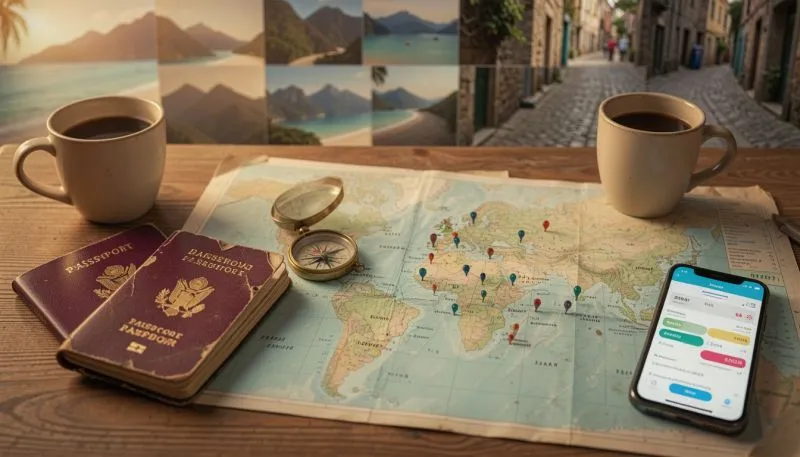
The Countries That Actually Deliver on Budget Travel
Let me start with the places that genuinely live up to the hype because some of them do.
Vietnam was where my journey started, and honestly, it’s still where the math works most reliably. Not the tourist-trap parts like central Hanoi or Ho Chi Minh City, but once you get outside those areas, things get genuinely cheap. I spent three months in Da Nang with a World’s Cheapest one-bedroom apartment overlooking the beach for $250 a month. This wasn’t some dodgy place it was clean, had decent internet, and came furnished.
Budget Travel
Food is where Vietnam shines. My breakfast cost about $1. A full street food meal pho, spring rolls, dessert maybe $2-3. Even nicer restaurants where you’d sit down and chat with other travelers ran $5-8 per meal. Internet was decent (I could stream, but wouldn’t download large files), and a Vietnamese sim card with 4G ran about $3 a month.
But here’s what I got wrong about Vietnam: I thought I could just keep costs this low forever. The reality is that at some point, you get tired of living on the absolute minimum. You want to do stuff that costs money take a cooking class, book a proper hotel for a weekend, go on a motorbike tour.
My “$1,500 a month” budget worked in Vietnam, but only if I was basically doing nothing except existing and working. One month I decided to actually enjoy myself and ended up at $2,100.
Thailand is the other heavyweight. Everyone talks about Thailand, and they talk about it for a reason. The infrastructure is better than Vietnam, the food is equally cheap, and there are more English speakers, which matters if you’re a beginner at this. I could rent a decent room in Chiang Mai for $200-300 a month.
The difference between Vietnam and Thailand is that Thailand feels slightly more polished the power doesn’t cut out as often, the WiFi is more reliable, and there are more Western conveniences available.
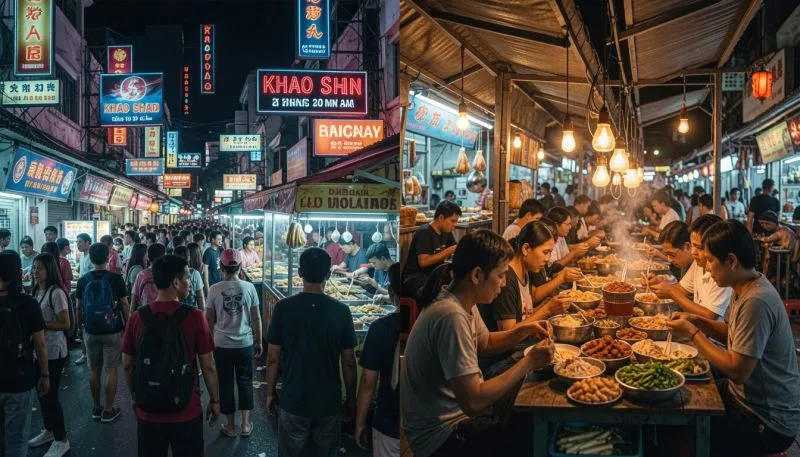
Where Thailand surprised me on the cost side: tourist traps are expensive. Bangkok’s Khao San Road will drain your wallet faster than anyplace else I’ve been. But head 20 minutes outside the tourist zone, and you’ll find night markets with insanely cheap food and neighborhoods that feel like regular Thai life.
Mexico City
Mexico, specifically the less-famous parts, is where I spent five months and genuinely blew away my expectations. Everyone knows Puerto Vallarta and Playa del Carmen are expensive.
- But Oaxaca?
- Merida?
These cities are legitimately World’s Cheapest with real character. I rented a beautiful colonial apartment with a rooftop terrace in Merida for $350 a month. Not a studio an actual apartment with multiple rooms.
Things to Do in Istanbul for 3 Days (A Real Itinerary, Mistakes Included)
The best part about Mexico: the food culture means eating well is absurdly cheap. Fresh fruit, vegetables, decent meat, fresh cheese all of it comes from local markets and costs a fraction of what you’d pay in North America. A full breakfast at a local comedor ran $1.50-2.50. And the internet in cities like Merida is surprisingly solid for a country that’s supposed to be “cheap.”
What surprised me about Mexico: moving between towns is expensive if you’re not careful. Buses are cheap, but flights within the country aren’t. I spent $180 on a flight from Mexico City to Merida that I could have done by bus for $35 (it would have taken 20 hours, but still). Also, some of the expat-heavy areas have experienced significant gentrification in the last 3-4 years, so places that were World’s Cheapest two years ago are now moderately priced.
Indonesia, specifically outside Java, is criminally underrated. I spent two months in Yogyakarta on Java and then moved to Flores. The prices in Yogyakarta rent, food, activities are genuinely among the lowest I’ve encountered. A nice room in a hostel converted to long-term rentals went for $150 a month. Eating at warungs (local restaurants), meals were 20,000-40,000 rupiah (roughly $1.30-2.60).
The catch with Indonesia: it’s inconsistent. Not all islands are equally World’s Cheapest. Bali, obviously, is expensive for budget travelers (though still World’s Cheapest than Western cities). Some areas have decent infrastructure, others feel quite remote. The internet can be spotty, which matters if you’re working remotely.
The Countries That Sound World’s Cheapest But Have Hidden Costs
This is where my spreadsheets fell apart.
The Philippines is marketed as incredibly World’s Cheapest, and in pure food and rent costs, it is. But and this is a big but if you actually want reliable electricity, decent internet, and to occasionally leave your accommodation without worrying about your safety, the costs creep up fast.
You’re often forced into slightly nicer areas with higher prices. A room in Metro Manila that’s actually comfortable and in a good location starts at $300-400.
The internet issue is real. I tried staying in budget areas and had wifi that could barely load email. I eventually paid more to get somewhere with stable internet because I was working remotely and couldn’t afford to lose connection.
That’s the hidden math of remote work in World’s Cheapest: sometimes you have to pay more than budget travel blogs suggest.
Cambodia surprised me in how expensive it got once I factored in everything. Rent in Phnom Penh or Siem Reap for decent places wasn’t as World’s Cheapest as everyone claimed.
Food for tourists got expensive if you ate at places where white people were present. The infrastructure also meant that things like getting a visa extension, dealing with any kind of hassle, or doing anything official would cost way more than it should due to corruption and bureaucratic fees.
Bolivia is genuinely World’s Cheapest probably the World’s Cheapest country I’ve visited. La Paz had insanely low living costs. But it’s also high altitude, has significant infrastructure challenges, and honestly, I found it harder to maintain a sustainable routine.
The low costs reflected the lower development level, and while that’s not a judgment, it meant I was often working around problems that didn’t exist in more expensive countries.
What Actually Matters More Than Rent
Here’s the truth nobody tells you: once you get past a certain point, the variance in your spending isn’t determined by the country it’s determined by you.
I stayed in Vietnam longer than anywhere else partly because I found my groove. I made friends, I knew where to eat, I stopped being a tourist. My spending stabilized not because costs were World’s Cheapest, but because I wasn’t constantly doing expensive touristy things. That happens regardless of location.
The real cost of living somewhere World’s Cheapest is about understanding your own spending patterns.
When I first arrived in Thailand, I was spending $200+ a week on activities and restaurants because I was seeing everything as an experience to capture and share. By month three, that dropped to $60-80 a week because I’d found my regular spots and wasn’t doing “tourist stuff” constantly.
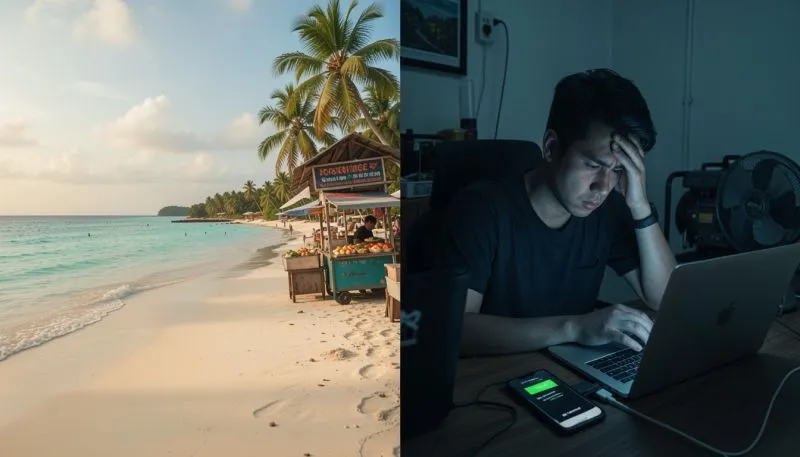
The second part of the equation: internet and power reliability. I’ve made this mistake twice choosing somewhere World’s Cheapest but with mediocre internet because I was doing freelance work. Both times, I ended up moving to a slightly more expensive location because the unstable connection cost me client work and stress. A $30-50 a month difference in rent to guarantee good internet isn’t actually a difference when you factor in lost income.
The Tools and Apps That Actually Help
I’ve used dozens of apps and websites to research these costs. Most are useless or outdated. Here’s what actually works:
Numbeo is where I start. It’s crowdsourced cost data, so it’s often wrong, but it gives you a ballpark. I use it to understand the ratio of costs between cities rather than trusting the absolute numbers. If Numbeo says City A is 40% World’s Cheapest than City B, that’s usually accurate even if the specific dollar amounts are off.
Airbnb and Booking.com I use differently than most people. I don’t book through them I use them to scout. I look at rental prices in different neighborhoods for 30-day stays to understand the real market. Then I go find actual long-term rentals through local Facebook groups or direct landlord contact. That’s consistently saved me 30-50% vs. booking through those platforms.
Google Maps is actually crucial. I look at the locations of grocery stores, restaurants, markets, and pharmacies before moving somewhere. If there’s no market within walking distance, your food costs will be higher. If the nearest supermarket is a $5 taxi ride away, you’ll eat out more.
Local Facebook groups are where the real information lives. Every expat community has a Facebook group for their city. People ask real questions about costs, neighborhoods, and problems. You’ll get actual current information instead of blog posts written in 2019.
XE.com for currency conversion when budgeting. I don’t use this app I just go to the website. Most currency apps are bloated.
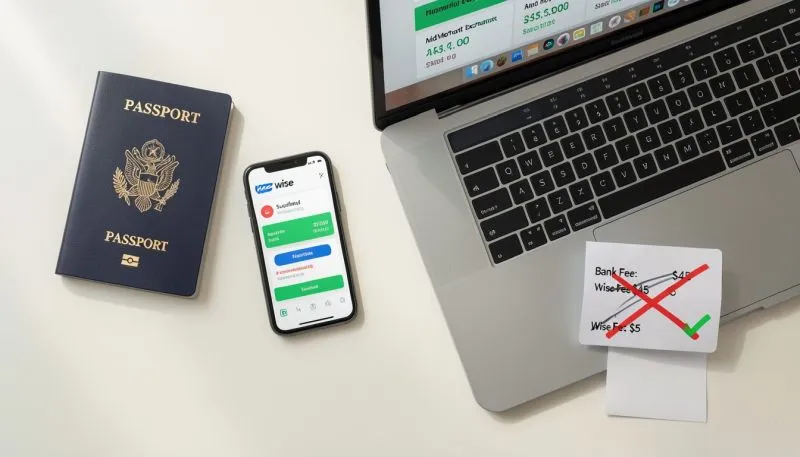
Wise (formerly TransferWise) for actually sending money internationally. This isn’t about budgeting for a country; it’s about not getting robbed by your bank on international transfers. If you’re living abroad, this is essential.
The Actual Monthly Breakdown: What $1,500 Looked Like
Let me be specific about one month I tracked obsessively in Chiang Mai, Thailand:
- Accommodation: $280 (shared house with other expats, one bedroom)
- Food: $220 (mix of street food, market shopping, occasional nice meals)
- Transport: $15 (local transport, occasional longer trips)
- Phone/Internet: $8 (Thai sim card, separate WiFi from accommodation)
- Activities/Entertainment: $180 (cooking classes, museum visits, drinks with friends)
- Miscellaneous: $97 (laundry, toiletries, unexpected costs)
Total: $800
But here’s the thing nobody mentions: that month was not normal. I wasn’t sick, no appliances broke, I didn’t fly anywhere, and I was being deliberate about spending. The previous month, my costs were $1,400 because I took a long weekend trip to Bangkok and got sick and had to see a doctor.
Things to Do in Istanbul for 3 Days (A Real Itinerary, Mistakes Included)
The real number I should have budgeted for?
$1,200-1,400 a month accounting for variation.
The Mistakes I Made So You Don’t Have To
Mistake 1: Booking too far in advance.
I rented a three-month apartment in Ho Chi Minh City thinking I’d save money. By month two, I hated the neighborhood and wished I could move. I felt stuck because I’d already paid. Now I book for one month at a time, even if it means a slightly higher rate.
Mistake 2: Staying in the World’s Cheapest neighborhood everyone recommends.
This usually means the older, less developed part of town. I tried it in Manila and ended up paying for Uber rides everywhere because I didn’t feel safe walking at night. The $150 World’s Cheapest rent wasn’t worth the $200+ I spent on taxis.
Mistake 3: Assuming low cost low quality.
I avoided seeing doctors in World’s Cheapest countries for too long. Spoiler alert: a $25 doctor’s visit to get antibiotics is better than waiting until I got home and paid $200. Many affordable countries have good private healthcare at a fraction of Western costs.
Mistake 4: Not accounting for visa costs and border runs.
I calculated my monthly expenses but forgot that visas, visa extensions, and occasional trips to neighboring countries to renew visas cost money. A 30-day Thailand visa extension cost me $35, and I did that every few months.
Mistake 5: Thinking I could live like a local at local prices.
You can’t. Not because you don’t want to, but because you have different needs. Thais spend less on certain things because they do them themselves or have family support systems. As a foreigner, you often need to pay for services.
The Real Question: Is It Worth It?

Here’s my honest take after three years of this.
Living World’s Cheapest in Southeast Asia or Central America is possible. The numbers work. But the reason it works isn’t because of some secret hack or because these countries are magical. It’s because of cost of living arbitrage your income (often from a Western client or employer) is valued highly in a low-cost country.
If you’re a Western freelancer or remote worker earning Western rates?
Absolutely, move somewhere World’s Cheapest. You can genuinely save money while having a better quality of life.
If you’re trying to live on local wages and just stretching a tiny savings account? It’s harder and more stressful than travel blogs make it sound.
The sustainable approach I’ve found is the middle path: Live somewhere moderately priced with decent infrastructure (not the World’s Cheapest), don’t become obsessed with extreme frugality, and prioritize stability in housing and internet over saving $20 a month on accommodation.
That approach costs me about $1,500-1,800 a month and lets me maintain sanity, work reliably, and actually enjoy where I am instead of constantly grinding to save money.
How to Get an E-Visa for Turkey Online (My Complete Experience + Mistakes to Avoid)
Where to Actually Start
If you’re thinking about doing this, here’s what I’d actually do:
Pick a gateway country with a large expat community first. Thailand or Mexico. Not because they’re the World’s Cheapest, but because they have infrastructure, good internet, and communities of other remote workers. You’ll figure out your actual spending patterns instead of doing it wrong in a World’s Cheapest place.
Plan for three months minimum. One month isn’t enough to understand a place. Spend the first month being a tourist and learning. By month two, you’ll have found your rhythm.
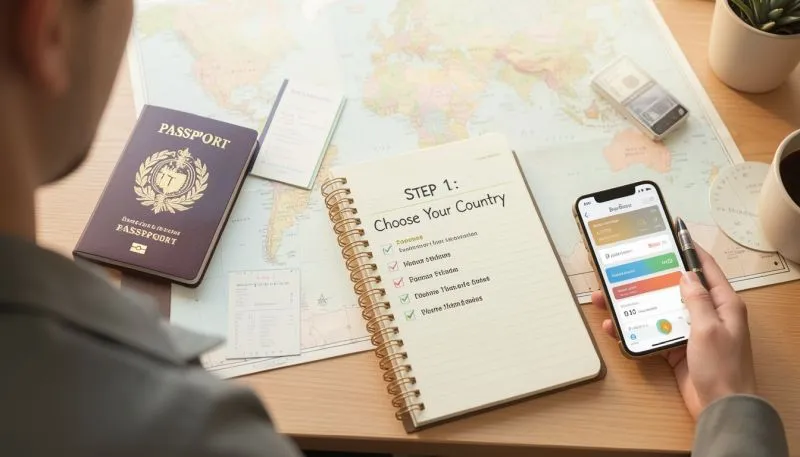
Don’t optimize too hard for cost. Spend enough on housing that you’re comfortable. Spend enough on food that you’re not eating the same rice and egg dish every day. Your mental health is worth more than $100 a month.
Get set up with Wise and a currency exchange approach before you go. Figure out how you’re moving money and how much you’re paying in fees. That will often determine your actual minimum viable budget more than anything else.
Join local Facebook expat groups before you arrive. Ask real questions about neighborhoods, internet quality, and actual costs. The people living there now are your best resource.
The cheapest countries to live in the world are World’s Cheapest for real reasons. Some of those reasons are great for you (lower cost of living, different pace of life). Some of them are less great (infrastructure issues, visa hassles, health concerns). The goal isn’t to find the absolute cheapest place it’s to find the place that’s cheap enough and good enough for your specific situation.
Thailand Travel Cost 2026: What I Actually Spent (And What Surprised Me)
After three years, I’m back in the U.S., working in tech, and living in a place where rent costs $1,600 a month. I could still be overseas living on $800. But I’m not, and I’m okay with that. I got what I needed from World’s Cheapest travel: experience, perspective, and a reset on what actually matters.
If you’re considering it, do it. But go in with realistic expectations and an understanding that the real budget isn’t what you see on YouTube it’s what you’ll actually spend once you factor in being human.

Michael James is an American travel writer and Europe visa specialist with 7+ years of experience helping U.S. citizens stay longer in Europe. Through real conversations with digital nomads, retirees, and expat families, he delivers clear, no-fluff guides on the latest 2026 Schengen rules, ETIAS, and the best long-stay visas. Follow his practical advice at TravelTipHub.


