

The International Travel Packing List
I once stood in a hotel bathroom in Lisbon at 11pm, holding a UK plug adapter that I’d bought specifically for a trip to Portugal, realizing it didn’t fit a single outlet in the room. My phone was at 4%. My laptop was dead. And the front desk was closed for the night.
That’s the moment I started taking International Travel Packing seriously.
Before that trip, I packed the way most people do throw clothes in a bag the night before, grab a charger, hope for the best.
After three International Travel Packing trips where something always went wrong (a missing adapter, a passport photo page that wasn’t visible enough, a carry-on that didn’t fit the “personal item” sizer at the gate and cost me $75), I finally built a system. I’ve used some version of this list for trips to Portugal, Thailand, Mexico, Japan, and the UK, and it’s saved me more than once.
This isn’t a generic “don’t forget your toothbrush” list. It’s the stuff I actually learned the hard way, plus the boring-but-important details that most lists skip.
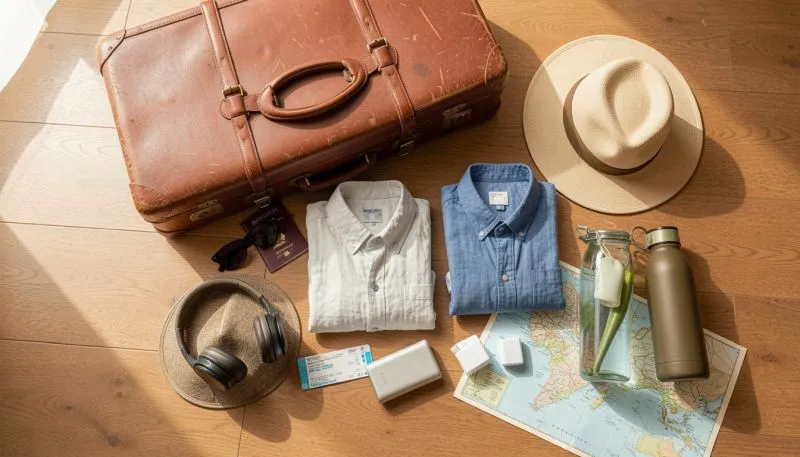
Why a Packing List Actually Matters (More Than You’d Think)
International Travel Packing for a domestic trip and packing for an International Travel Packing one are not the same game.
Domestically, if you forget your phone charger, you walk into a Target. International Travel Packing, you might be in a country where the plugs are different, the store hours are different, or you simply don’t speak enough of the language to explain what you need.
How to Use Google Maps Offline While Traveling (Without Getting Lost Like I Did)
The stakes are higher because the fixes are harder. That’s really the whole reason a real International Travel Packing list matters it’s not about being “extra organized,” it’s about not losing two hours of your one vacation day hunting for a SIM card or a specific medication.
Start With Documents This Is Where Real Disasters Happen
I’m going to be blunt: the document mistakes are the ones that actually ruin trips. Forgetting socks is annoying. Forgetting your visa confirmation is a five-hour problem.
Here’s what I keep in a single folder (physical) and a backup folder (digital):
- Passport — and check the expiry date months in advance. Many countries require at least 6 months of validity remaining just to let you in. I almost got denied boarding to Thailand because my passport had 5 months and 3 weeks left.
- Visa or entry confirmation, if required. Some countries now require an online entry form before you even land (Japan’s Visit Japan Web, for example, or Australia’s ETA). Check this at least two weeks out, not the night before.
- Printed and digital copies of your hotel bookings and flight itinerary. Wi-Fi at immigration counters is not guaranteed.
- Travel insurance policy number and emergency contact. I use SafetyWing for longer trips since it’s easy to buy online and the documents are PDF-based, so I just save them to my phone.
- A photo of your passport stored in Google Photos or a note app, separate from the physical one. If your bag gets stolen, this alone saves you days at the embassy.
- Driver’s license, if you plan to rent a car or just want a backup ID.
- Vaccination certificates, if your destination requires them (still relevant for places like parts of South America and Africa with yellow fever requirements).
My actual rule now: everything important gets a photo in a dedicated “Travel Docs” album on my phone, and I email myself a PDF copy too, just in case my phone dies or gets stolen. Sounds paranoid. Has saved me twice.
Electronics The Category Everyone Underestimates
This is the section where I’ve personally made the most mistakes, so let me save you some pain.
The plug adapter thing. Don’t just buy “a universal adapter.” Look up the actual plug type for your destination country before you go. Portugal, Spain, and most of Europe use Type C/F. The UK and Ireland use Type G (totally different). Thailand uses a mix of Type A, B, C, and O.
I now just search “[country name] plug type” before every trip and buy accordingly, or get one universal adapter that explicitly says it covers 150+ countries (the Epicka Universal Travel Adapter has worked well for me across four continents).
Voltage matters too, though less than people think. Most modern phone and laptop chargers are dual voltage (100–240V), so they’ll work anywhere. But if you’re bringing something like a hair dryer or curling iron from home, check the label those are often single voltage and can literally smoke if plugged into the wrong system. Learned that one from a friend, not myself, but it stuck with me.
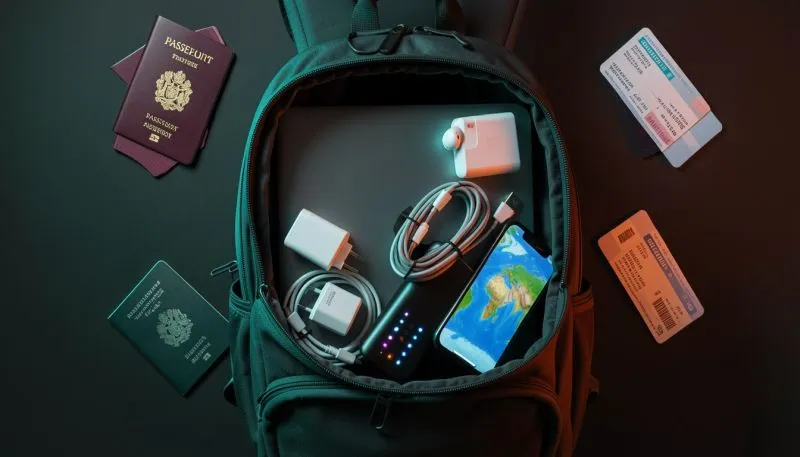
Power bank. Non-negotiable now. I bring a 10,000mAh Anker power bank on every trip. Airport delays, long train rides, and days of sightseeing drain your phone faster than you expect, especially if you’re using GPS the whole time.
Offline maps and translation. Before I land, I download the offline map for the city in Google Maps (you can literally search “download offline maps” in the app and select the region). I also download the offline language pack in Google Translate. This has bailed me out in areas with no signal more times than I can count.
eSIM instead of a physical SIM. This one changed my travel life. I used to spend my first hour in a new country hunting for a SIM card kiosk. Now I just buy an eSIM through Airalo or Holafly before I even leave home, and it activates the moment I land. No kiosk, no language barrier, no hassle.
Camera gear, if you use one separate from your phone don’t forget the charger and at least one spare battery. I once spent a whole day in Kyoto with a dead camera battery because I assumed the charger was in the bag. It wasn’t.
How to Get an E-Visa for Turkey Online (My Complete Experience + Mistakes to Avoid)
Clothing Pack Less Than You Think You Need
Every single trip I’ve ever taken, I’ve overpacked clothes. Every single time, I come home having worn maybe 60% of what I brought.
Here’s the approach that actually works for me now:
The 5-4-3-2-1 rule (loosely). For a week-long trip: 5 tops, 4 bottoms, 3 pairs of socks/underwear beyond what you’re wearing (you’ll wash some), 2 pairs of shoes, 1 jacket or layer piece. Adjust based on climate, but this stops the “just in case” spiral.
Check the actual weather, not the season. I got caught off guard in Mexico City once because I assumed “Mexico = hot” and didn’t account for International Travel Packing how cold it gets at night in that altitude in winter. Now I check a real weather app (I like Weather.com or just Apple Weather) for the actual week I’m traveling, not a general assumption about the country.
One “nice” outfit. Even on International Travel Packing, I bring one outfit that can pass for a nice dinner or an unexpected event. You never know when you’ll get invited somewhere that your hiking clothes won’t work for.
Layers over bulk. A packable rain jacket and a thin fleece take up way less room than one bulky coat and do more for you in changing weather.
Laundry plan. If your trip is longer than a week, plan to do laundry instead of International Travel Packing for every single day. Most hostels and even mid-range hotels have laundry service or a nearby laundromat. This alone cuts your suitcase weight by a third.
Toiletries and Health Items The Boring Stuff That Actually Matters
This category isn’t exciting to write about, but it’s where small oversights cause real problems abroad.
- Prescription medications in original packaging, with a copy of the prescription if you’re carrying more than a small supply. Some countries are strict about what you can bring in, and unmarked pills in a random container can actually cause issues at customs.
- A basic first aid kit — band-aids, anti-diarrheal medication (Imodium has saved more trips than I’d like to admit), pain relievers, and any allergy medication you might need.
- Hand sanitizer and a small pack of tissues — not every public restroom abroad has soap or toilet paper, especially in parts of Asia and South America.
- Sunscreen, bought before you go if you’re International Travel Packing picky about formulas some countries have different regulations on what’s sold locally, and finding your preferred brand isn’t guaranteed.
- Travel-size toiletries in TSA-approved sizes (3.4 oz / 100ml or under) if you’re only doing carry-on. I learned this the hard way when security in Bangkok confiscated a full-size shampoo bottle I forgot to check.

The Practical Step-by-Step International Travel Packing Process
Here’s the actual process I follow now, two weeks out from any International Travel Packing trip:
- Two weeks before: Check passport expiry, visa/entry requirements, and book or confirm your eSIM.
- One week before: Check the weather forecast for your actual travel dates and start laying out clothes on the bed (not in the suitcase yet just laying them International Travel Packing out to see the full picture).
- 5 days before: Buy or pack travel-size toiletries, refill prescriptions if needed, charge all electronics once just to test they still work.
- 2 days before: Download offline maps, translation packs, and any travel/transit apps for your destination. Save digital copies of documents.
- The night before: Pack the suitcase using International Travel Packing cubes (I use Eagle Creek ones — they genuinely make a difference in keeping clothes from turning into a tangled mess). Weigh your bag if you’re flying a budget airline with strict limits.
- Morning of: Do a final pocket check passport, wallet, phone, charger, headphones. I literally say these five words out loud before I leave the house. Sounds silly, works every time.
Real Examples From Actual Trips
Trip to Japan: I relied entirely on offline Google Maps and the Suica IC card (loaded onto my phone via Apple Pay) for transit. Saved me from fumbling with cash and ticket machines in a language I couldn’t read well. Also packed compression socks for the long flight, which made a noticeable difference in how my legs felt after 13 hours.
Thailand Travel Cost 2026
Trip to Thailand: Overpacked clothes, underpacked common sense about mosquito protection. Came home with half my suitcase unworn and several bites that could’ve been avoided with a $6 bottle of repellent I didn’t bother bringing.
Trip to the UK: Assumed my US plug adapter would “just work” everywhere in Europe since I’d used it in Portugal. It didn’t completely different plug type. Spent my first morning in London at a Boots pharmacy buying the right one instead of seeing Big Ben.
Each of these turned into a lesson that’s now baked into my list.
Common Mistakes to Avoid
International Travel Packing your power bank in checked luggage. Most airlines require lithium batteries and power banks in your carry-on, International Travel Packing not checked bags, for safety reasons. I almost had mine taken at security in Mexico City before I learned this.
Assuming your debit card will just work abroad. Call your bank before you travel to let them know your destination and dates. I had a card frozen in Thailand because my bank flagged the transactions as suspicious an easy problem to avoid with one phone call.
Not checking baggage weight limits for the specific airline. Budget airlines in Europe and Asia (Ryanair, AirAsia, etc.) have notoriously strict International Travel Packing and sometimes pricier limits than US carriers. Check before you pack, not at the counter.
Bringing too many “just in case” items. That extra pair of shoes, the third jacket, the backup backup charger most of it stays in the bag the whole trip. International Travel Packing for the trip you’re actually taking, not every possible scenario.
Forgetting to check plug type and voltage separately. They’re two different things, and both matter.
Skipping travel insurance because “nothing will happen.” I didn’t buy it for years. Then a friend broke her ankle in Vietnam and the hospital bill International Travel Packing plus medical evacuation insurance saved her about $4,000. It’s usually $30-60 for a short trip. Worth it.
A Few Tools and Apps That Genuinely Help
- PackPoint — generates a International Travel Packing list based on your destination, weather, and trip type. Good starting point if you’re staring at an empty suitcase with no idea where to begin.
- TripIt — pulls your flight, hotel, and rental car confirmations into one itinerary automatically from your email.
- Airalo or Holafly — eSIM providers, no physical SIM swap needed.
- XE Currency or Wise — for checking real exchange rates and avoiding bad airport currency exchange counters.
- Google Translate — download the offline pack for your destination’s language before you land.
Final Thoughts
After enough trips and enough small disasters, International Travel Packing stopped feeling like a chore and started feeling like part of the trip planning I actually enjoy. There’s something satisfying about landing somewhere new and realizing you have exactly what you need no scrambling, no last-minute pharmacy runs, no dead phone in a hotel bathroom at 11pm.
Adventure Travel Insurance Requirements: What I Learned the Hard Way
You don’t need a perfect system. You just need one that accounts for the stuff that’s actually gone wrong before yours or someone else’s. Steal what’s useful from this list, adjust it for your own trip, and you’ll probably avoid at least one of the headaches I’ve already gone through so you don’t have to.

Michael James is an American travel writer and Europe visa specialist with 7+ years of experience helping U.S. citizens stay longer in Europe. Through real conversations with digital nomads, retirees, and expat families, he delivers clear, no-fluff guides on the latest 2026 Schengen rules, ETIAS, and the best long-stay visas. Follow his practical advice at TravelTipHub.