

How to Travel Cheap in Europe
I still remember standing on a train platform in Prague at 11pm, watching the last connection to Vienna pull away without me on it, because I’d spent forty minutes trying to find a ticket machine that took cards instead of coins. I had exactly 18 euros in cash, a phone at 9% battery, and zero idea where I was going to sleep.
That trip taught me more about Travel Cheap in Europe than any blog post ever could. And honestly, most of what I’d read before going was either outdated, written by someone who clearly had a sponsor paying for half their trip, or just plain wrong.
So this isn’t a “top 10 tips” listicle pulled from other articles. This is what actually worked for me across four trips to Europe over six years, including one stretch where I backpacked for 11 weeks on less than 35 euros a day, food and accommodation included.
If you’ve been told Europe is too expensive for a Travel Cheap, I’m here to tell you that’s mostly a myth but only if you know where the money actually goes.
Why People Overspend in Europe (And Don’t Even Realize It)
Here’s the thing nobody tells you: it’s not the big stuff that drains your budget. It’s not the flights, and it’s usually not even the hostels.
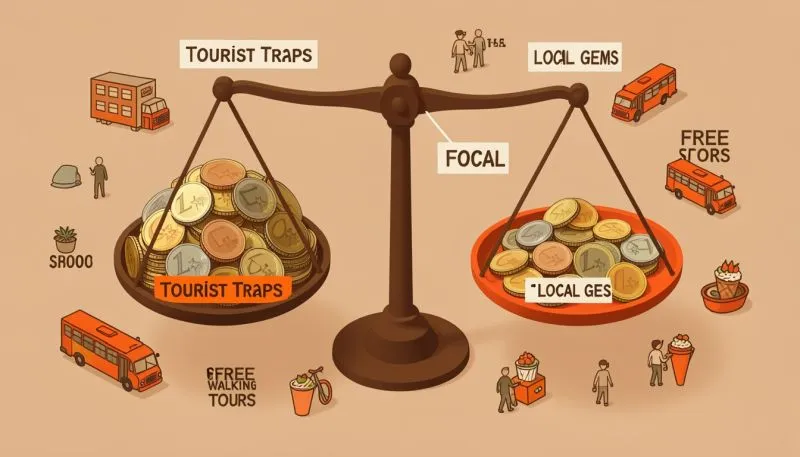
It’s the small leaks. The 4-euro bottle of water at the train station because you forgot to fill yours. The taxi from the airport because you didn’t check if there was a bus. The “tourist menu” lunch near a famous landmark that costs three times what locals pay two streets over.
I tracked every single euro I spent on my second trip through Europe using a simple notes app, and the results genuinely shocked me. Almost 30% of my spending was on stuff I didn’t even remember buying snacks, random souvenirs, “just this once” cab rides.
How to Use Google Maps Offline While Traveling
Once I saw that, fixing my budget became way easier. It wasn’t about depriving myself. It was about plugging the leaks.

Step 1: Get Your Timing Right
This one sounds obvious, but it’s the single biggest lever you have.
Flying into Rome, Paris, or Barcelona in July is going to cost you double or triple what it costs in late October or early March. I’m not exaggerating I once paid 340 euros for a one-way flight into Athens in August, and the exact same route in late September the following year cost me 89 euros.
The sweet spot is what Travel Cheap call “shoulder season” roughly April to early June, and September to mid-October. The weather is still good, the crowds thin out, and prices on everything (flights, hostels, even walking tours) drop noticeably.
If you genuinely don’t care about weather and just want the Travel Cheap possible trip, winter (excluding Christmas/New Year week) is even Travel Cheap. I did a January loop through Budapest, Krakow, and Vienna and paid hostel prices that were almost half of summer rates.
Step 2: Booking Flights Without Overpaying
I use Skyscanner with the “Everywhere” search option turned on. You put in your departure airport, leave the destination blank, and it shows you the Travel Cheap places to fly that month. This alone has saved me hundreds of euros because it shows options I never would have thought to search for.
A few things I learned the hard way about budget airlines like Ryanair, Wizz Air, and EasyJet:
- They make their actual profit on baggage fees, not tickets. I once paid more for a “priority boarding + cabin bag” add-on than I did for the flight itself.
- Always check the bag size rules on the airline’s own website before you fly, not what Google tells you. Ryanair’s allowed cabin bag size has changed more than once, and gate staff will make you pay on the spot if it doesn’t fit their sizer.
- Tuesday and Wednesday flights are consistently cheaper than Friday or Sunday ones, because weekend leisure Travel Cheap pushes demand up.
One mistake I made early on: I booked a flight that landed at a “secondary airport” that was technically near a city but actually 90 minutes away by bus. I saved 40 euros on the flight and then spent almost that much getting into the city, plus two hours of my day. Always check exactly which airport you’re flying into some budget airlines use airports that share a city’s name but are nowhere close to it.

Step 3: Getting Around Once You’re There
This is where I’ve seen people waste the most money without realizing it.
Trains are the classic way to move around Europe, and they’re genuinely a nice experience — but they’re not automatically Travel Cheap. A last-minute train ticket from Paris to Amsterdam can cost more than a flight on the same route. The trick is booking in advance through sites like Trainline or Omio, which let you compare and book across multiple countries’ rail systems in one place.
If you’re doing a lot of train Travel Cheap across multiple countries, a Eurail Pass can save money, but only if you actually run the numbers. I bought one for a trip where I ended up taking just four train rides, and I would have paid less booking each ticket separately. Passes make sense if you’re hopping between 6+ cities by train; otherwise skip it.
Buses are the real Travel Cheap secret weapon. FlixBus connects most of Europe at a fraction of train prices. Yes, it’s slower. But I’ve done overnight FlixBus rides from Berlin to Prague for under 20 euros that saved me an entire night’s accommodation cost since I slept on the bus.
Ride-sharing through BlaBlaCar is something a lot of first-time Travel Cheap don’t even know exists. You literally share a car with a local driver going the same direction and split the fuel cost. I went from Lyon to Barcelona for about 25 euros this way, chatting with a French guy who gave me better restaurant recommendations than any guidebook.
Things to Do in Istanbul for 3 Days
Within cities, skip taxis and Ubers unless it’s genuinely necessary. Most major European cities have excellent, Travel Cheap public transport, and many sell multi-day tourist passes that include unlimited metro/bus/tram rides plus discounts on some attractions. Vienna, Lisbon, and Berlin all have versions of this, and they paid for themselves within a day or two of use.
Step 4: Where to Sleep Without Wrecking Your Budget
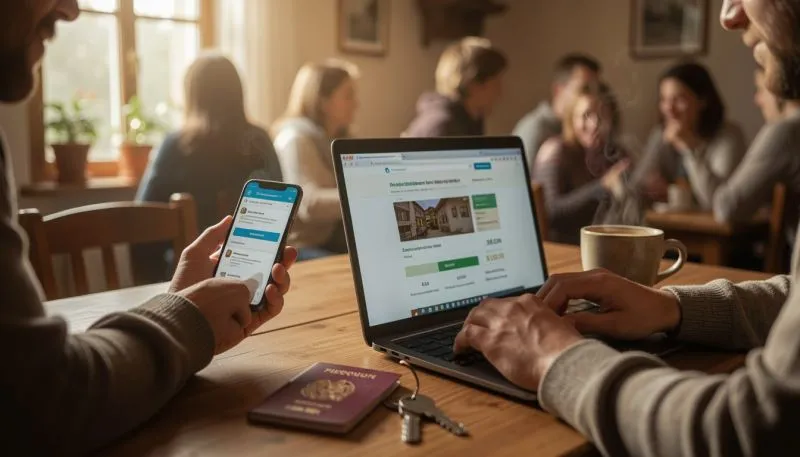
Hostels get a bad reputation from people who’ve never actually stayed in a good one. The trick is reading recent reviews carefully not the overall star rating, but the actual comments from the last month or two, since hostel quality can shift fast with new management.
I use Hostelworld for browsing and reading reviews, then sometimes book directly through the hostel’s own website if it’s Travel Cheap (some hostels charge less if you skip the booking platform’s commission).
A few real lessons from my own bookings:
Private rooms in hostels are often cheaper than you’d expect, sometimes only 10-15 euros more than two dorm beds combined, which is great if you’re Travel Cheap with one other person.
Always check if breakfast is included. I once picked a hostel that was 3 Travel Cheap a night but didn’t include breakfast, while the one next door included a solid breakfast once you factor that in, the “cheaper” one actually cost more.
Free walking tour meetups are almost always organized through hostels, so staying central isn’t just about location it connects you to free activities too.
Couchsurfing still exists and still works, though it’s smaller than it used to be. I’ve stayed with hosts in Krakow and Porto for free, and both times ended up getting better local insight than any tour guide gave me. It’s not for everyone you need to be comfortable staying in a stranger’s space but it’s a legitimate way to cut accommodation costs to zero.
If you’re Travel Cheap for a longer stretch, Trusted Housesitters is worth looking into. You stay in someone’s home for free in exchange for looking after their place (and sometimes their pet) while they’re away. I haven’t used this one personally, but two friends have used it across Italy and Portugal and said it cut their accommodation budget to almost nothing for weeks at a time.
The Best Solo Female Travel Destinations in Europe: A Real Woman’s Guide
Step 5: Eating Without Spending Like a Tourist
Restaurants near major landmarks are a trap. Every single time. The food is rarely better than what’s two or three streets away, and the prices are inflated because they know tourists won’t walk further.
My rule became: if I can see a famous monument from my table, I’m probably overpaying.
Local markets became my best friend. In Barcelona, the Boqueria market has tourist-priced stalls right at the entrance and much Travel Cheap, equally good stalls if you walk fifteen meters further in. Same pattern repeats in pretty much every major European city’s market.
Lunch specials, called things like “menu del día” in Spain or “plat du jour” in France, are genuinely one of the best budget hacks in Europe. Restaurants offer a full meal often starter, main, and sometimes a drink for a fraction of the dinner price, because they’re trying to fill seats during slow afternoon hours. I ate three-course lunches in Madrid for 11 euros that would have cost 30+ at dinner.
Hostel kitchens are underrated. Buying pasta, eggs, and vegetables from a local grocery store and cooking a simple meal cuts your food budget dramatically compared to eating out every meal. I’m not saying never eat out food is part of the experience but mixing in self-cooked meals stretches your money a long way.
Step 6: Managing Your Money the Smart Way
This is the part that cost me real money before I figured it out.
Currency exchange counters at airports and train stations are almost always a bad deal — the rates are noticeably worse than what you’d get elsewhere. I learned to avoid them entirely after losing almost 15 euros on a small exchange just because I needed cash quickly at an airport.
What actually worked: getting a Wise or Revolut card before the trip. Both let you hold and spend in euros (and other currencies) at close to the real exchange rate, with little to no foreign transaction fees. I switched to this after my first trip and noticed an immediate difference in how far my money stretched.

ATM withdrawals can also sting if you’re not careful. Some ATMs, especially standalone ones in touristy areas, charge ridiculous withdrawal fees and offer a bad “guaranteed rate” conversion that you should always decline if asked always choose to be charged in the local currency, not your home currency, since the bank’s conversion rate is usually worse than your card provider’s.
Step 7: Free and Nearly-Free Things That Don’t Feel Like Cutting Corners
A lot of the best experiences I had in Europe didn’t cost anything.
Free walking tours run on a tip-based model in almost every major city you join, walk around with a knowledgeable local guide for a couple of hours, and pay what you think it was worth at the end. I’ve had some of my best city orientations this way, way better than the audio guide apps I tried.
Many major museums have free entry days or free evening hours once a week or month. The Louvre, for example, has reduced or free entry windows depending on the time you visit definitely worth checking the official museum website before you go, since these schedules shift.
Just walking is underrated. Some of my favorite moments in Europe were wandering through random neighborhoods in Lisbon or Ljubljana with no plan, finding a quiet square or a tiny café that wasn’t in any guidebook.
Step 8: Staying Connected Without Paying Roaming Fees
Getting data sorted before you land saves a surprising amount of stress and money. I personally use a local prepaid SIM bought at the airport or a convenience store in the first country I land in — usually around 15-20 euros for several gigabytes of data, far Travel Cheap than my home carrier’s roaming rates.
Some EU countries fall under “Roam Like Home” rules if your SIM is from another EU country, meaning your normal plan works across the EU without extra charges but this only applies if your home SIM is from an EU country, so it won’t help most Travel Cheap coming from outside Europe.
eSIM apps like Holafly or Airalo are an easier option if you don’t want to deal with physical SIM swaps. I used Airalo on my last trip and it took about five minutes to set up before I even left the airport.
A Real Two-Week Budget Breakdown
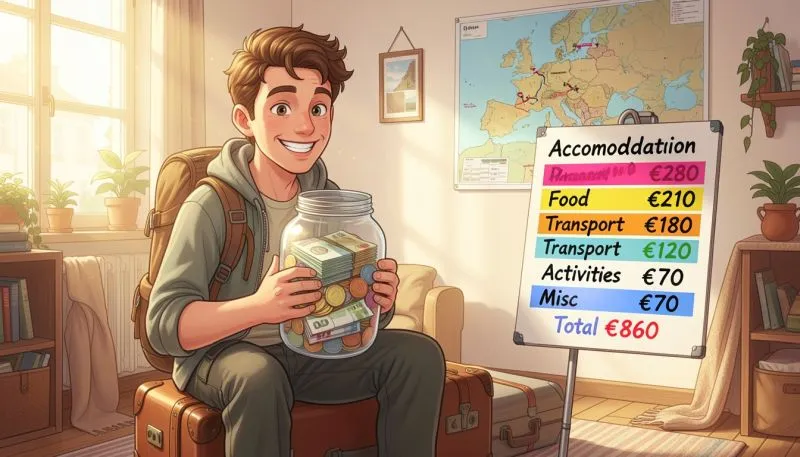
Just to make this concrete, here’s roughly what I spent on a two-week trip through Portugal, Spain, and a quick hop into Morocco, prices in euros:
- Flights (round trip + one budget hop): 180
- Accommodation (mix of hostels and one Couchsurfing stay): 210
- Local transport (trains, buses, metro passes): 95
- Food (mix of cooking and eating out): 220
- Activities and entry fees: 60
- SIM card / data: 18
- Miscellaneous (laundry, snacks, small mistakes): 40
Total: roughly 823 euros for two weeks across three countries, not including Travel Cheap insurance. That’s not “extreme budget backpacker living off bread” territory that included real meals, some museum visits, and a couple of nice dinners.
Common Mistakes I See People Make (Because I Made Most of Them)
Overpacking. I once dragged a suitcase that didn’t fit budget airline cabin size limits, paid a hefty fee at the gate, and then struggled with it on cobblestone streets for two weeks. One backpack, packed light, makes everything easier and Travel Cheap.
Not validating train or bus tickets. In Italy especially, some regional trains require you to validate (stamp) a paper ticket before boarding, even if you already bought it online or in advance. Skip this and you risk a fine on the spot, even with a valid ticket in hand.
Booking non-refundable everything to save a few euros. I once booked a non-refundable hostel for a date that I later needed to change because of a delayed flight, and ended up paying for two nights of accommodation I never used. Sometimes the slightly pricier flexible option is worth it.
Thailand Travel Cost 2026: What I Actually Spent (And What Surprised Me)
Assuming all EU countries use the euro. This sounds basic, but I’ve watched fellow Travel Cheap get caught out in places like Czechia, Hungary, or Croatia, all of which use their own currency, not the euro. Always check before you land.
Ignoring city tourist taxes. Several cities, including Barcelona, Amsterdam, and Venice, charge a small nightly tourist tax that’s often not included in the price you see when booking accommodation online. It’s usually only a few euros a night, but it can catch you off guard if you weren’t expecting an extra charge at check-in.
Final Thoughts
Travel Cheap in Europe isn’t really about being Travel Cheap. It’s about being intentional with where your money goes, so you have more left over for the stuff that actually matters to you — whether that’s a really good meal, a museum you’ve wanted to see your whole life, or just an extra few days on the road instead of cutting the trip short.
I’ve made plenty of mistakes along the way, lost money to bad exchange rates, missed a train or two, and once ate the same bag of Travel Cheap pasta four nights in a row because I’d blown my food budget on a fancy dinner in Florence. None of that ruined the trip. If anything, those moments are what I remember most clearly now.

Start with the timing, sort your transport and accommodation early, keep an eye on the small daily leaks, and the rest tends to fall into place. Europe doesn’t have to be the expensive dream trip people make it out to be it just takes a bit of planning to Travel Cheap it on your own terms.

Michael James is an American travel writer and Europe visa specialist with 7+ years of experience helping U.S. citizens stay longer in Europe. Through real conversations with digital nomads, retirees, and expat families, he delivers clear, no-fluff guides on the latest 2026 Schengen rules, ETIAS, and the best long-stay visas. Follow his practical advice at TravelTipHub.