

I Did 10 Days in Japan for Under $2000
A couple years ago, I told a friend I wanted to visit Japan and he laughed. Not in a mean way, just the “oh that’s a rich person trip” kind of laugh. And honestly, I believed him. Every blog I found was either a luxury ryokan review with $400-a-night rooms, or some vague “Japan is cheaper than you think!” post with zero actual numbers.
So I did what I always do when nobody gives me real information I just booked the flight and figured it out as I went.
Ten days, Tokyo to Kyoto to Osaka and back, and when I added up every single yen at the end (flights, hotels, food, trains, that one regrettable arcade claw machine session), I landed just under $2000. Not “if you eat instant noodles the whole time” under $2000. Actual meals, actual sightseeing, one real splurge dinner, under $2000.
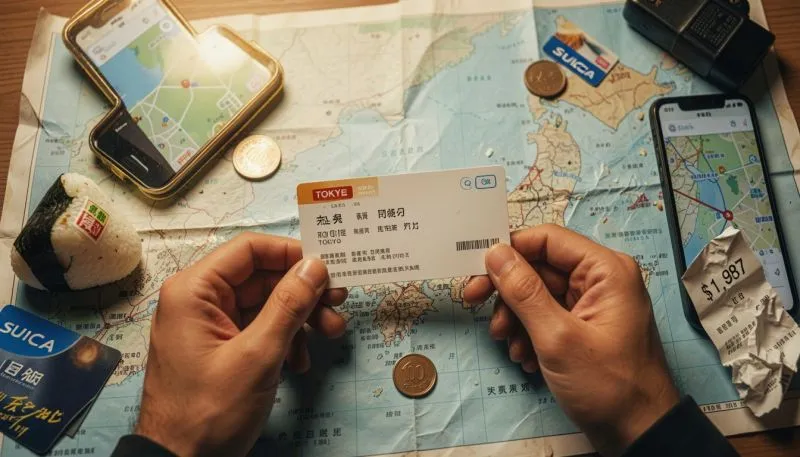
This isn’t a theory post. This is the actual playbook, mistakes included.
Quick reality check before we start
Two things that matter more than anything else for keeping Japan cheap:
When you go. Cherry blossom season (late March/early April) and the fall foliage weeks in November are gorgeous and also when flight and hotel prices spike hard. I went in late October, right before the leaves turned, and paid almost half what a friend paid two weeks later for the same route.
Where you’re flying from. I’m going to break this down assuming a round-trip flight in the $600–900 range, which is realistic from a lot of major US and Canadian hub cities if you book 2-3 months out and aren’t picky about layovers. If you’re coming from somewhere with pricier routes to Japan, the flight eats more of your budget and you’ll want to be tighter on the ground costs. I’ll flag where you can trim.
Affordable Beach Destinations: What I Learned After Blowing My Budget (Twice) Before Getting It Right
The 10-day route I actually used
Tokyo (4 nights) → Hakone day trip → Kyoto (3 nights) → Osaka (2 nights) → fly out of Osaka (Kansai Airport)
I flew into Tokyo and out of Osaka instead of doing a round trip through one city, and that alone saved me a full day of backtracking on trains. Most international carriers let you fly into one Japanese city and out of another for little to no extra cost — just ask or check the multi-city option when you search flights. I use Google Flights for this because the multi-city search is genuinely painless.
Here’s the day-by-day:
Day 1 : Arrive Narita or Haneda, get your SIM/pocket wifi and IC card at the airport, crash early to fight jet lag.
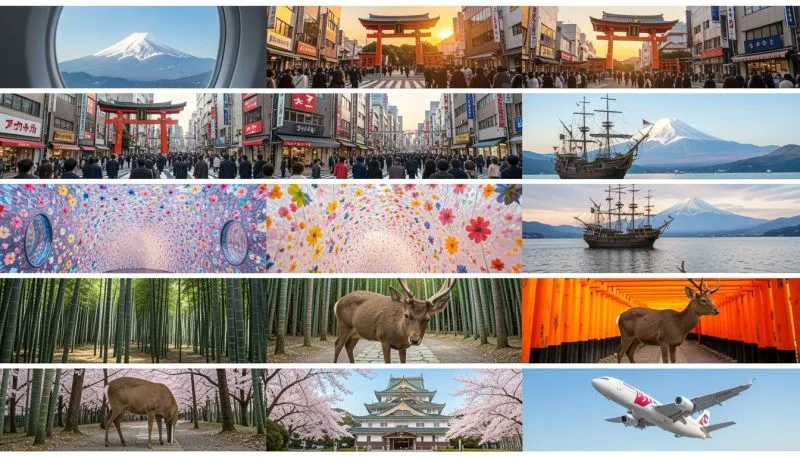
Day 2 :Asakusa (Senso-ji temple), Ueno Park, ramen for dinner, walk around Akihabara at night.
Day 3 :Shibuya crossing, Harajuku/Takeshita Street, Meiji Shrine, Shinjuku at night for the skyscraper views and the tiny bars in Golden Gai.
Day 4 :Day trip to Hakone (hot springs town, views of Mt. Fuji if you’re lucky, the pirate ship boat ride across Lake Ashi is touristy but fun).
Day 5: Morning in Tokyo (I did TeamLab Planets, worth every yen), then Shinkansen to Kyoto in the afternoon.
Day 6 : Fushimi Inari (go at sunrise, I cannot stress this enough), Gion district in the evening.
Day 7 : Arashiyama bamboo grove, Kinkaku-ji (Golden Pavilion), Nishiki Market for dinner.
Day 8 : Day trip to Nara to feed the deer, back to Kyoto for the evening, then train to Osaka.
Day 9: Osaka Castle, Dotonbori for street food, Shinsaibashi shopping.
Day 10: Slow morning, last-minute souvenir run, fly out of Kansai Airport.
Where the money actually went
Let me just lay out the real numbers instead of dancing around it.
| Category | Cost (USD) | Notes |
|---|---|---|
| Round-trip flight | ~$750 | Booked 10 weeks out, one layover |
| Accommodation (9 nights) | ~$310 | Mix of capsule hotels and one guesthouse |
| Local transport + trains | ~$220 | See the JR Pass section below |
| Food | ~$260 | About $26/day, convenience stores + local spots |
| Pocket wifi | ~$32 | Rented online, picked up at airport |
| Attractions & activities | ~$140 | Temples, TeamLab, Hakone ropeway/boat |
| Souvenirs & misc buffer | ~$140 | This always goes over, budget for it |
| Total | ~$1,852 |
That leaves a little cushion under $2000 even with some rounding. Your numbers will shift depending on season and how much you shop, but this is a genuinely realistic spread, not a best-case fantasy.
The JR Pass mistake I almost made (and you should skip it too)
Every single Japan travel guide from a few years back will tell you to buy the Japan Rail Pass the second you land. I almost did the same thing out of habit, and it would have cost me money I didn’t need to spend.
Here’s the thing the nationwide JR Pass got a lot more expensive back in October 2023, and it’s stayed at that higher price since. A standard 7-day pass runs around ¥50,000, which is roughly $330. That used to be an easy “yes, buy it” because a single Tokyo-to-Kyoto round trip alone almost covered the cost. Not anymore.
How to Use Google Maps Offline While Traveling (Without Getting Lost Like I Did)
If your route is the classic one most first-timers do Tokyo, Kyoto, Osaka, maybe a Nara or Hakone day trip mixed in individual point-to-point Shinkansen tickets usually come out cheaper than the pass. A one-way Tokyo to Kyoto ticket runs around ¥14,000, so even a round trip plus a couple of local hops doesn’t get close to $330.
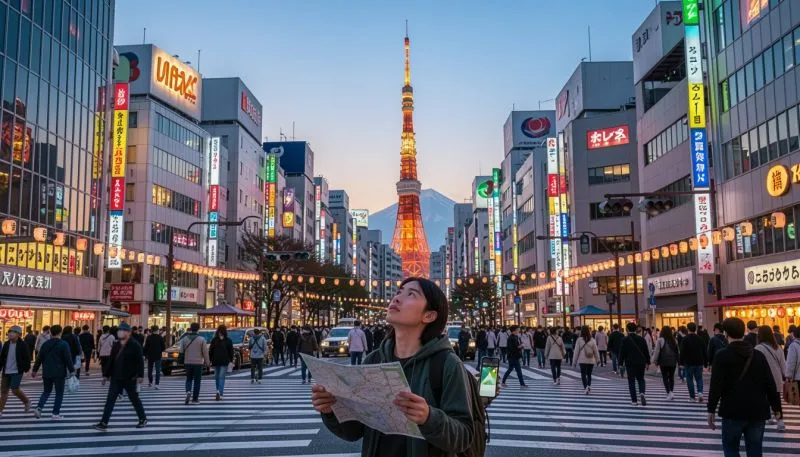
What I actually did instead:
- Bought individual Shinkansen tickets for the two long-haul legs (Tokyo→Kyoto, and later Kyoto→Osaka is short enough I just used a regular limited express).
- Got a Suica card (the rechargeable IC card) at the airport for every local subway, JR local line, and bus ride in each city. Tap in, tap out, no thinking required.
- Used the Kansai regional pass for a couple of days hopping between Kyoto, Nara, and Osaka, since regional passes are still genuinely good value and didn’t get hit with the same price jump as the nationwide one.
- The rule of thumb I now use: only get the nationwide JR Pass if your itinerary has you doing three or more long-distance bullet train legs inside one 7-day window like Tokyo to Hiroshima and back, plus a stop somewhere else. If you’re just doing the Tokyo-Kyoto-Osaka triangle, skip it and buy tickets as you go.
- I saved close to $100 doing this, and honestly the app I used for checking train times (Navitime and Google Maps both work fine for Japan) made buying individual tickets barely any more effort than the pass would’ve been.
Sleeping cheap without it feeling miserable
I know “capsule hotel” sounds like a gimmick until you actually stay in one, and then you realize it’s just a really efficient hotel room. Mine in Tokyo had a curtain instead of a door, a personal TV, charging outlets, and a shared bathhouse-style bathroom that was cleaner than most hotel bathrooms I’ve used back home. Ran me about $28 a night.
In Kyoto I switched to a small guesthouse near the station because I wanted a real bed and a bit more space after a few nights in a capsule that one was closer to $40 a night but included breakfast, which balanced out.
I booked everything through Booking.com since it lets you filter by “free cancellation,” which matters because Japan’s weather (and your own energy levels halfway through a trip) can change your plans. Agoda is also solid and sometimes has better rates specifically for Japan and other parts of Asia — worth comparing both before you commit.
One thing I’d genuinely recommend: don’t try to save money by staying way outside the city center. I looked at a guesthouse 40 minutes from central Tokyo that was $10 cheaper a night, and by the time you add up the extra train fares and lost time, it wasn’t actually saving anything. Central, small, and basic beats far, spacious, and inconvenient almost every time on a trip this short.
Eating well without blowing the budget
This is the part people worry about most and it’s honestly the easiest part to keep cheap. Japan does budget-friendly food better than almost anywhere I’ve traveled.
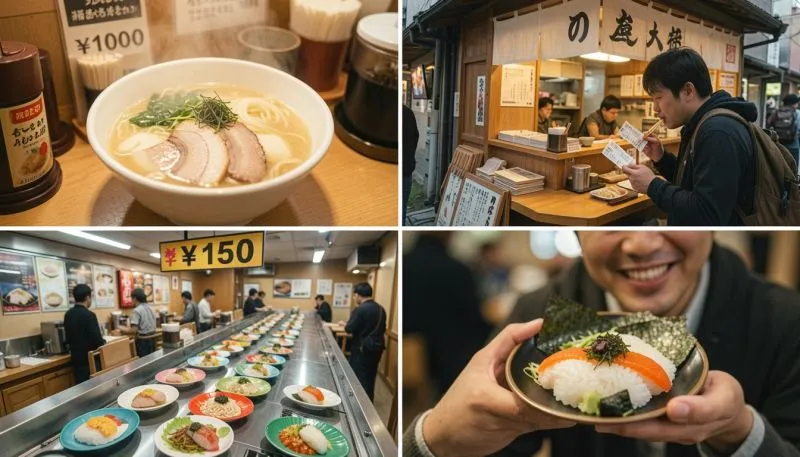
Convenience stores 7-Eleven, Lawson, FamilyMart are not the sad gas station food you’re picturing. Their onigiri (rice balls), sandwiches, and hot food counter items are genuinely good and run $2-4 each. I ate breakfast from a convenience store almost every single day and never felt like I was compromising.
Food Counter
For lunch and dinner, I mostly hit small ramen counters, standing soba shops, and conveyor belt sushi places (Kura Sushi and Sushiro are chains you’ll see everywhere, plates start around $1.50-2 each). A full ramen meal was usually $7-9. I splurged once on a proper sushi omakase dinner in Osaka for about $60, which was the single most expensive meal of the trip and worth every cent.
Depachika the basement food floors of department stores are also worth wandering through even if you’re not buying anything, but fair warning, they’re dangerous for your wallet because everything looks incredible.
Mistakes I made so you don’t have to
I didn’t get a pocket wifi or SIM sorted before landing. I figured I’d sort it at the airport, and the line for pocket wifi pickup at Narita took Japan almost 45 minutes after an already long flight. Order it online ahead of time (Ninja WiFi and Sakura Mobile are two solid options) and just pick it up at a designated counter — much faster.
I overpacked cash. Japan has gotten a lot more card-friendly in recent years, but I still walked around with way more yen than I needed out of old habit. If you do need cash, 7-Eleven ATMs reliably accept foreign cards when other ATMs sometimes don’t that one tip would’ve saved me some stress on day one.
Is Turkey Safe to Visit in 2026? Here’s What Nobody Tells You Before You Book
I tried to cram in too many neighborhoods on day one. Jet lag is real. I had this ambitious plan to hit four Tokyo neighborhoods on my first full day and by 3pm I was useless. Give yourself one easy day to adjust before you start power-walking across the city.
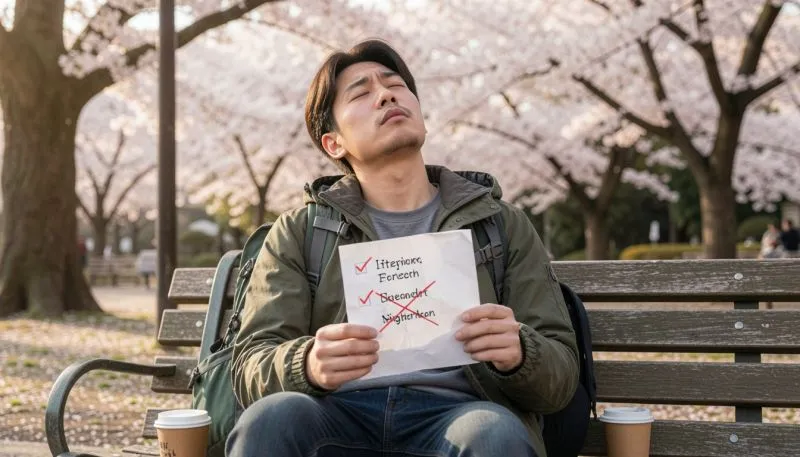
I underestimated how much walking there is. Bring shoes you’ve already broken in. I did not, and my feet hated me by day 3.
I almost skipped travel insurance to save money. Don’t do this. A basic policy costs $40-60 for a trip this length and it’s the cheapest peace of mind you’ll buy the entire trip.
A few tools that actually made a difference
- Google Maps: works shockingly well for Japanese train schedules, including which platform and car to stand at for your connection.
- Suica app / physical Suica card : you can now add Suica to your phone wallet if you have a compatible device, which meant one less card to dig for.
- Google Translate’s camera feature : point it at a menu or sign and it translates in real time. Used this constantly, especially at smaller restaurants without English menus.
- Klook: good for booking things like the TeamLab tickets or the Hakone pass ahead of time at a slight discount versus buying same-day.
Final thoughts
The version of Japan people imagine as unaffordable is usually built around peak-season prices, five-star ryokans, and the assumption you have to buy Japan every pass and pre-booked package a travel site tries to sell you. None of that is required to have an incredible trip.
Eco-Friendly Travel Tips for 2026: What Actually Works
What actually made this work was simple: travel in shoulder season, sleep in small clean places instead of fancy ones, eat like a local instead of only Japan hitting the restaurants every blog recommends, and do the math on transport instead of defaulting to the pass everyone assumes you need.
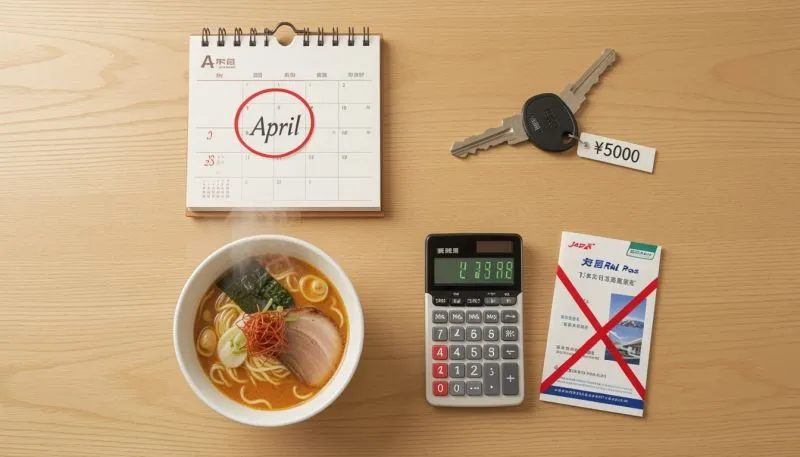
If you’re sitting there thinking Japan is out of reach this year, it probably isn’t. It just takes an afternoon of actually planning instead of scrolling “Japan top 10” lists that never mention real prices.

Michael James is an American travel writer and Europe visa specialist with 7+ years of experience helping U.S. citizens stay longer in Europe. Through real conversations with digital nomads, retirees, and expat families, he delivers clear, no-fluff guides on the latest 2026 Schengen rules, ETIAS, and the best long-stay visas. Follow his practical advice at TravelTipHub.