

Okinawa or Tokyo
My first Japan trip was a disaster not the bad kind, but the “I planned for the wrong Japan entirely” kind. I’d been dreaming of temples, neon signs, and ramen at 2 a.m. for years. My friend, who’d been three times, kept saying “just go to Okinawa first.” I ignored her completely.
I booked Okinawa or Tokyo. Spent 10 days in a city so dense and stimulating that I came home genuinely exhausted — but also completely electrified and immediately desperate to go back. Then I finally listened and did Okinawa the following year. It was so different it almost felt like a different country.
These are two completely separate travel experiences, and depending on who you are and what you need in 2026, one will serve you infinitely better than the other. Let me break both down properly not in a brochure way, but in the honest, slightly chaotic way that actually helps you decide.

First: Stop Treating These as Equals
The biggest mistake people make in this comparison is treating Tokyo and Okinawa as two flavors of the same thing — like choosing between two ramen shops. They’re not. They’re fundamentally different travel philosophies.
Tokyo is Japan at maximum intensity. It’s the world’s most populated metro area running at full tilt, 24 hours a day. It’s overwhelming in the best and worst ways. Okinawa is Japan at its most un-Japanese — subtropical, slow, sea-soaked, and deeply influenced by its Ryukyuan history and proximity to mainland China and Taiwan.
Tokyo Urban overdrive
World-class food, infinite neighborhoods, Shinkansen access to all of Japan. Never runs out of things to do. Sleep is optional.
Okinawa Tropical reset
Tokyo in 2026: What’s Actually Changed
I went back to Tokyo in early 2026 and things have shifted noticeably since the post-pandemic tourism boom. The yen is still relatively weak, which means the city remains exceptionally affordable by major-city standards but the crowds in the obvious spots have returned with a vengeance.
- 37M Tokyo metro population
- ¥155 Approx USD exchange (2026)
- 47 Distinct Tokyo neighborhoods
- 200K+ Restaurants citywide
What Tokyo does better than anywhere on Earth
The food scene is genuinely unmatched. I know everyone says this, but until you’ve had 7-Eleven onigiri at midnight and realized it’s better than most restaurant food back home, you don’t really get it. Tokyo has more Michelin-starred restaurants than Paris and New York combined but the deeper magic is in the ¥800 lunch sets at tiny counter restaurants with no English menu.
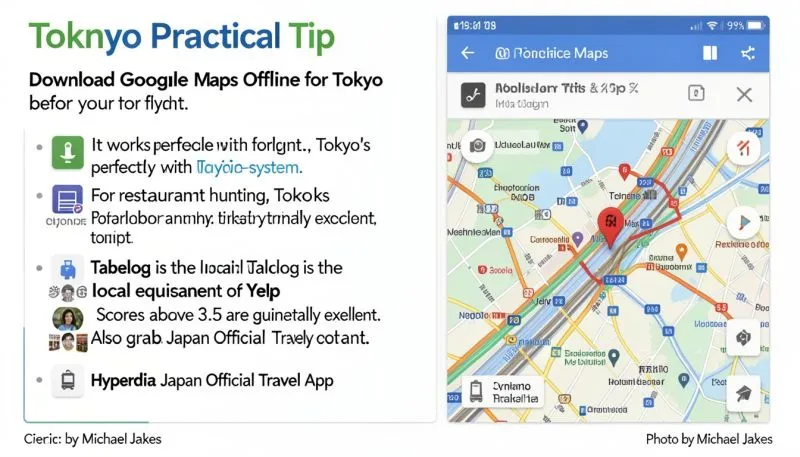
The transit system is still the greatest public transport achievement in human history. The Suica card (an IC card you load with yen) works on virtually every train, subway, and bus and now even at most convenience stores and vending machines. Get one at Haneda or Narita as your first act in Japan.
The neighborhood question nobody answers properly
Where you stay in Tokyo completely shapes your experience. This is worth thinking about properly, not just defaulting to Shinjuku because it shows up in every blog.
Shinjuku is great if you want maximum convenience and don’t mind chaos. Shibuya is younger-skewing with the famous crossing nearby. But my honest recommendation now is to stay in Shimokitazawa or Nakameguro if it’s your second trip quieter, genuinely local, and you’ll see a Tokyo that feels nothing like the tourist track.
For first-timers with limited time, Shinjuku or Asakusa are still the right calls. Asakusa especially gives you that classic Japan feeling — Senso-ji temple at 6 a.m. before the tour groups arrive is one of the best experiences Japan offers.
“The mistake isn’t going to the famous places. The mistake is only going to the famous places.”
What Tokyo gets wrong (nobody talks about this)
Build in nothing days. One full day with no plans, no spots to tick off. Just walk a neighborhood, eat when hungry, sit in a konbini, watch people. This wasn’t in any guide I read before my first trip, and I paid for it.
Also: August is brutal. Tokyo in August is 35°C with 80% humidity and subway cars full of people. If you have any flexibility, visit in late March (cherry blossom season go early in your trip before they peak and die fast), October, or November.
How to Travel on a Budget in 2026: The Real Stuff That Actually Works
Okinawa in 2026: The Japan Most Tourists Still Sleep On
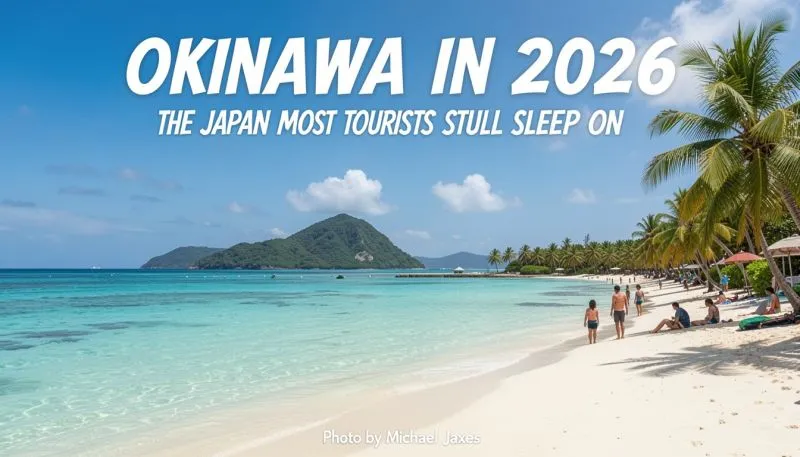
Okinawa is the southernmost prefecture of Japan — a chain of islands that stretches nearly to Taiwan. Most people only visit Okinawa Main Island (Okinawa Hontō), which is fine, but missing the outer islands is genuinely one of the bigger travel mistakes you can make in Japan.
- 160 Islands in Okinawa Prefecture
- 28°C Average summer sea temp
- 3hrs Flight from Tokyo
- #1 World longevity region (Blue Zone)
The culture gap that surprises people
Mainland Japanese people will tell you Okinawa or Tokyo doesn’t feel like Japan, and they’re not wrong. The Ryukyu Kingdom existed as a completely separate civilization until 1879. The food is different (goya champuru, rafute pork belly, sea grapes), the music is different (sanshin a three-stringed instrument related to the Chinese sanxian), and the pace of life is wildly different.
There’s a concept called “Okinawa or Tokyo time” meetings and plans that start roughly when everyone feels like it. Coming from Tokyo, where train timetables run to the minute, this culture shock is real and welcome.
The beaches: honest expectations
Okinawa or Tokyo Main Island beaches are gorgeous — but if you’ve been to the Maldives or Bali, the main island beaches might actually underwhelm you slightly. They’re clean, the water is clear, the snorkeling is decent. But the real magic is in the Kerama Islands, specifically Zamami and Tokashiki, reachable by ferry from Naha in about 1.5 hours.
I made the mistake of spending all my Okinawa or Tokyo time on the main island my first visit. When I went back and took the ferry to Zamami, I genuinely couldn’t believe I’d missed this. The water clarity is on a different level. If you’re going to Okinawa or Tokyo for beaches, the Keramas are non-negotiable.
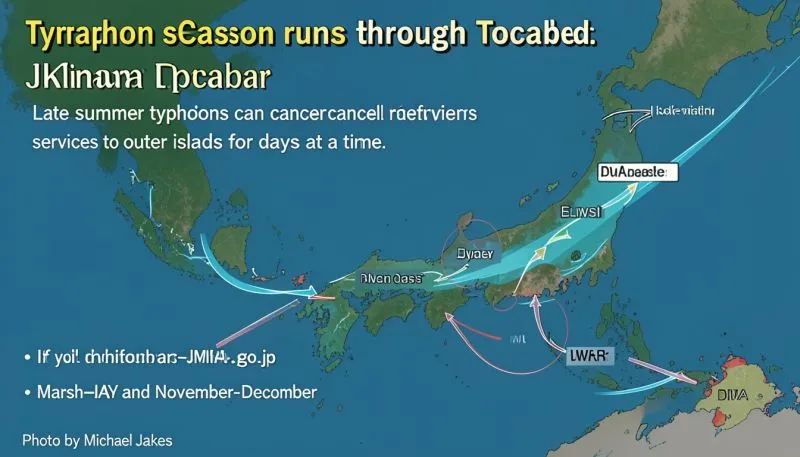
- Important: Timing for Okinawa or Tokyo Typhoon season runs June through October. Late summer typhoons can cancel ferry services to outer islands for days at a time. If you’re visiting July–September, build in weather buffer days and always check JMA.go.jp (Japan Meteorological Agency) for typhoon forecasts. The best months are March–May and November–December.
Naha: better than its reputation
Naha, the capital, gets dismissed as just a transit point, and that’s unfair. Kokusai-dori (International Street) is touristy in the obvious way, but the covered market arcades behind it — Makishi Public Market in particular — are incredible. Go for breakfast and watch locals buying fresh fish, then eat whatever looks alive that morning.
Shuri Castle is also unmissable it was destroyed in WWII and then by a fire in 2019, but reconstruction is ongoing and the complex itself is still deeply atmospheric. The Ryukyuan architecture looks nothing like anything else in Japan.
Best Time to Visit Big Sky: What Three Years of Trial and Error Taught Me
The Head-to-Head: How to Actually Choose
Tokyo for… Culture & food depth
First-time Japan
Second trip or detox
Budget city life
Families & seniors
Gentle pace, warm water, accessible historical sites, and some of the healthiest people on earth to learn from.
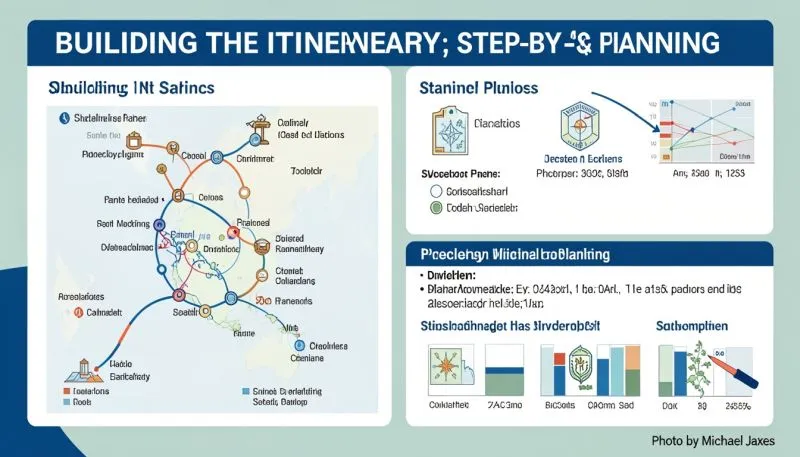
Building the Itinerary: Step-by-Step Planning
If you only have 7–10 days
- 1Choose a base, not a split. Splitting 5 days Tokyo / 5 days Okinawa or Tokyo sounds ideal but is exhausting. You’ll spend two days recovering from each move. Pick one or do 7 days one place, 3 days another — with the short stint first so you’re not jet-lagged for your “main” destination.
- 2Book accommodation early in 2026. Japan’s tourism infrastructure is under genuine pressure. Tokyo especially — capsule hotels and affordable hostels book out 3+ months ahead during cherry blossom (late March/early April) and Golden Week (late April/early May). Use Booking.com or Jalan (Japanese OTA with more local options).
- 3Sort SIM or pocket WiFi before you land. Get an eSIM from IIJmio or Mobal, or grab a physical SIM at the airport. Data connectivity in Japan is effectively flawless everywhere — even rural Okinawa or Tokyo outer islands have surprisingly good coverage.
- 4For Tokyo: Pre-book the experiences with limited slots. Teamlab digital art museums sell out weeks ahead. Popular sushi omakase counters in Ginza or Nakameguro — book via Tableall or Omakase (apps designed specifically for this).
- 5For Okinawa or Tokyo : Check ferry schedules to the Kerama Islands the moment you land in Naha. Ferry to Zamami from Tomari Port takes ~90 min (slow ferry) or 50 min (high-speed). Buy tickets at the terminal — they don’t typically sell out unless it’s a holiday weekend.
If you have 14+ days (do both properly)
- 1Tokyo first, 7 days. You’ll be jet-lagged and overstimulated — that’s fine for Tokyo, which can absorb both. Hit the “musts” in days 1–3 (Senso-ji, Shinjuku, Shibuya, at least one teamLab), then spend days 4–7 going deeper into neighborhoods: Yanaka, Koenji, Sangenjaya.
- 2Consider the train journey south rather than flying. The Shinkansen to Osaka, then a stop in Kyoto, then fly to Okinawa or Tokyo from Osaka’s Kansai Airport — this turns the transit into part of the trip.
- 3Okinawa or Tokyo for 7 days minimum. Days 1–2: Naha + Shuri Castle + Makishi Market. Days 3–5: Rent a car and drive north to Cape Hedo, Nakijin Castle ruins, and Motobu. Days 6–7: Overnight ferry trip to Zamami Island. Don’t rush this.
Common Mistakes to Actually Avoid
Useful Apps for Both Destinations
- Google Maps (offline)
- Suica / IC Card app
- Hyperdia (trains)
- Google Translate
- Tabelog
- Booking.com / Jalan
- JMA Weather (typhoons)
- Wise (money transfer)

The Honest Final Recommendation
Choose Tokyo if you…
- Haven’t been to Japan before
- Love urban energy and density
- Are a serious food traveler
- Want to day-trip (Nikko, Kamakura, Hakone)
- Thrive on stimulation and input
- Are traveling in winter or autumn
Choose Okinawa or Tokyo if you…
- Want beach + sea as your core activity
- Travel as a family or slower pace needed
- Are fascinated by distinct local culture
- Have been to Tokyo already
- Want to snorkel, dive, or kayak
- Are visiting March–June or November
My actual suggestion?
Do Tokyo first, always, for your inaugural Japan trip. It’s the orientation layer. Everything else in Japan, including Okinawa or Tokyo , makes more sense after you’ve absorbed Tokyo’s particular intensity and then watched it dissolve as you fly three hours south into the tropics.
The contrast is part of the point. Japan contains multitudes — a country that somehow contains one of the world’s most relentless megacities and one of its most serene island archipelagos simultaneously, both running on their own internal logic, both unmistakably Japan.
Best Summer Vacation Ideas for Large Families in the USA 2026 (Budget-Friendly & Stress-Free)
“First-time Japan is Tokyo. The Japan that changes you is everything you discover after.”
- Whichever you choose: buy the train pass at the airport, try the vending machine coffee on your first night, never rush a meal, and leave at least one full day with nothing on the calendar. Japan rewards that kind of patience in ways that are hard to explain until you’ve experienced them.

Michael James is an American travel writer and Europe visa specialist with 7+ years of experience helping U.S. citizens stay longer in Europe. Through real conversations with digital nomads, retirees, and expat families, he delivers clear, no-fluff guides on the latest 2026 Schengen rules, ETIAS, and the best long-stay visas. Follow his practical advice at TravelTipHub.