

I Drove to Yosemite in July and Learned a Hard Lesson About Timing
Last summer, I made a rookie mistake that cost me about $20 in parking fees, three hours of my life sitting in traffic, and worse missing the golden hour at El Capitan because I was stuck in a parking lot. I had one day to visit Yosemite, I was excited, and I figured “how bad can it be?” Spoiler: really, really bad.
That experience turned into an obsession. I spent the last year researching crowd patterns, testing different visiting strategies, talking to park rangers, and yes, going back to Yosemite more times than my bank account appreciated. What I learned completely changed how I approach visiting one of America’s most crowded national parks.
If you’ve ever considered visiting Yosemite, or you’re planning a trip right now and worried about dealing with mobs of tourists, this guide is based on what actually works. Not theoretical advice—real, tested strategies that I’ve used successfully.
Why Yosemite’s Congestion Problem Is Actually Getting Worse
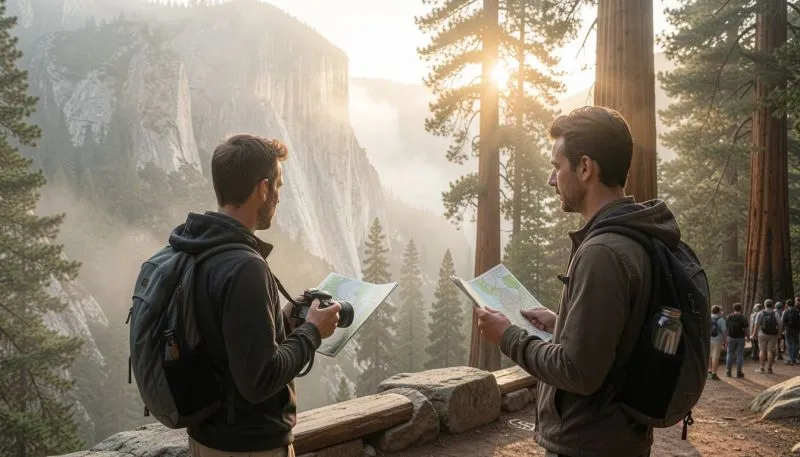
Here’s the thing that surprised me: Yosemite isn’t just busy it’s experiencing record-breaking crowds year after year. The park welcomes about 4-5 million visitors annually, and most of them show up between May and September. During peak season (especially July and August), the park regularly hits capacity limits.
When I talked to a ranger in Moody Meadow, she told me something I hadn’t considered: “People don’t realize that when we say the parking lots are full, we literally mean full. There’s nowhere to go.” That’s not exaggeration. The park service has parking reservation systems and shuttle buses specifically because of this.
The core problem isn’t just that lots of people visit. It’s that they all visit at the same times. June weekends are slammed. July is a nightmare.
August slightly better, but still packed. Even spring and fall have busy periods now. And here’s what makes it worse: most people don’t plan around this. They just show up expecting to find parking and take their Instagram photos.
I Blew My “Europe Budget” on Southeast Asia Instead
My Biggest Mistakes (So You Don’t Have to Make Them)
Mistake #1: Showing up on a Saturday in summer
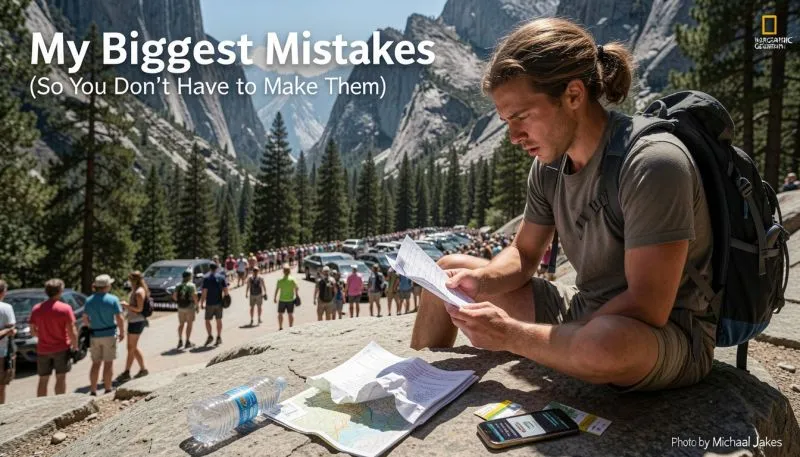
I thought I was being clever by going on the second Saturday in July. “Everyone will be doing family stuff,” I reasoned. Wrong. Everyone had the exact same idea. I arrived at 8:30 AM and the parking areas near Valley Loop Trail already had “Lot Full” signs.
Mistake #2: Using Google Maps for real-time traffic
Google Maps said I’d hit “moderate traffic” on the highway. What I hit was a parking lot on Highway 120. Google doesn’t track congestion inside the park itself, so the app was useless.
Mistake #3: Banking on evening exploration
I thought if I couldn’t explore during the day, I’d just come back at 5 PM when crowds would thin out. Instead, I found myself in an even bigger parking nightmare because everyone had the same evening idea, and now all the morning people were leaving while evening people were arriving.
Mistake #4: Not checking the park service website before leaving
Turns out the park service publishes actual, real-time capacity information. I could have avoided the entire situation by spending 30 seconds checking before I left home. I didn’t know this existed until my third visit.
The Tools That Actually Help (And Which Ones Don’t)
After my first disaster, I started testing different approaches and tools. Here’s what actually moved the needle:
NPS Reservation System – This is non-negotiable
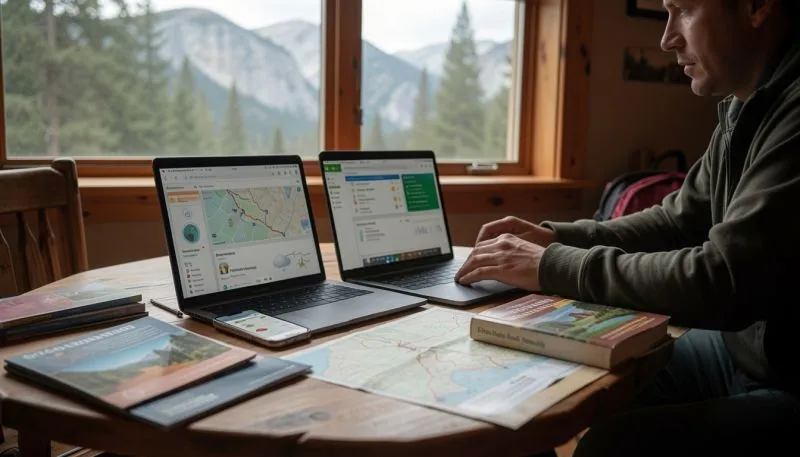
The National Park Service runs their own website (recreation.gov, but specifically the NPS section) where they publish real-time parking availability. You can literally see which parking areas have spaces available right now. This information updates every 5-15 minutes. It’s not fancy, but it’s the single most useful tool.
I started checking this the night before my visit, first thing in the morning, and again in real-time from my phone. The patterns became obvious: some parking areas emptied out between 2-4 PM as morning visitors left. Others stayed full all day. The west side of the valley had different patterns than the east side.
Yosemite NPS App – The official app is actually useful
The official National Park Service Yosemite app (available on iOS and Android) has crowding information, shuttle schedules, and real-time updates. It’s not as pretty as third-party apps, but it’s accurate because it’s coming straight from the park. I stopped relying on third-party Yosemite guide apps because their crowd predictions were consistently wrong.
AllTrails – For finding uncrowded hikes
Most visitors stick to the obvious trails. Mirror Lake, Yosemite Falls, Mist Trail—these are packed. I started using AllTrails to find less popular routes with similar views. I discovered that Sentinel Dome offers almost the same vistas as Half Dome but with about 10% of the crowds. It’s not a secret, but it’s also not the trail everyone gravitates toward.
Instagram Location Maps – This actually works (negatively)
When I saw where everyone was posting photos from, I’d avoid those spots during peak hours. If Glacier Point had 500 posts that morning, I’d skip it until evening. Sounds petty, but it worked. Fewer Instagram posts = fewer humans.
The Actual Strategy That Worked
After multiple visits and testing different approaches, here’s the system I use now:
Travel Safety Tips for USA Tourists: Your Complete Guide to Staying Safe Abroad
Step 1: Pick the right season (not just any summer week)
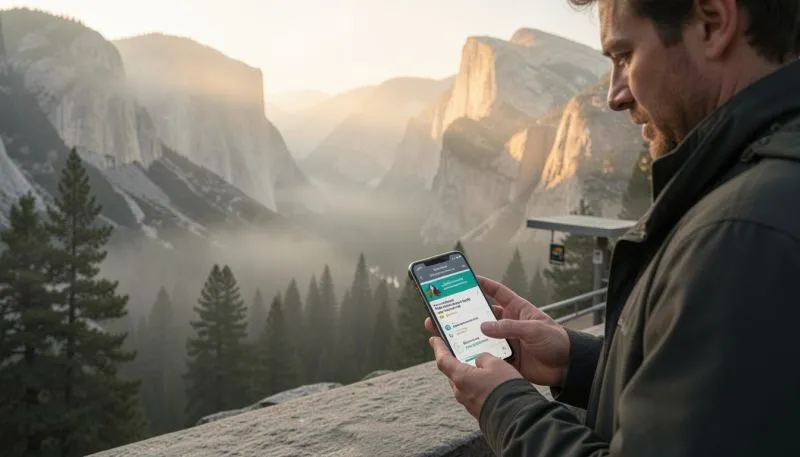
April-May and September-October genuinely have better conditions than peak summer. The weather is still nice, but crowds are significantly lighter. If you must visit in summer, early June or late August are better than July.
Step 2: Check capacity 48 hours before your trip
Visit the NPS Yosemite website and check parking availability trends. Go at night and in the morning for two days to spot patterns. You’ll notice that some days are predictably fuller than others. Midweek is almost always better than weekends this is consistent across seasons.
Step 3: Plan your arrival time strategically
This was my biggest revelation. Most people arrive between 8 AM and 10 AM. The parking lots are nearly empty from 6-7 AM. I mean actually empty. I started arriving at 6:45 AM, parked in a prime spot, and had the trail essentially to myself for the first hour.
Alternatively, arriving after 4 PM works well for many areas. But here’s the catch you need daylight. In winter, you only have maybe 90 minutes of reasonable light after 4 PM. In summer, you have three hours, which actually works.
Step 4: Take the shuttle system seriously
Most visitors drive their own car everywhere, which is why everyone’s trying to park. The valley shuttle system is free and actually moves faster than driving because drivers know the routes. I started using shuttles for valley exploration and driving only to trailhead parking areas outside the valley. This cut my stress level in half.
Step 5: Have a backup plan that isn’t in the valley
This is crucial. Tioga Pass area, Wawona, Hetch Hetchy these areas are frequently less crowded. When I arrived and found the valley too packed, I’d pivot to Hetch Hetchy Reservoir. It has incredible views with a fraction of the crowds. Not every trip needs to be the classic Half Dome experience.
Step 6: Eat before you come, or pack food
The food situation at Yosemite is rough. The Ahwahnee Hotel restaurant takes reservations far in advance. The casual food options get absolutely mobbed during meal times. I started bringing a cooler with sandwiches and snacks. This saved me 45 minutes of waiting and let me eat on my own schedule at a scenic spot.
Real Examples of What This Looks Like in Practice
The Weekend That Actually Worked
Last May, I went on a Saturday (bold choice, I know) but followed the system. I arrived at 6:50 AM, parked immediately in a nearly empty lot, and had Mirror Lake essentially to myself for 90 minutes. By 8:30 AM, the trail was getting busy, but I’d already taken my photos and logged two miles of quiet hiking.
Total time at the park before it got crowded: 2 hours of perfect conditions instead of 8 hours of fighting crowds.
Okinawa or Tokyo — I Got This Wrong the First Time
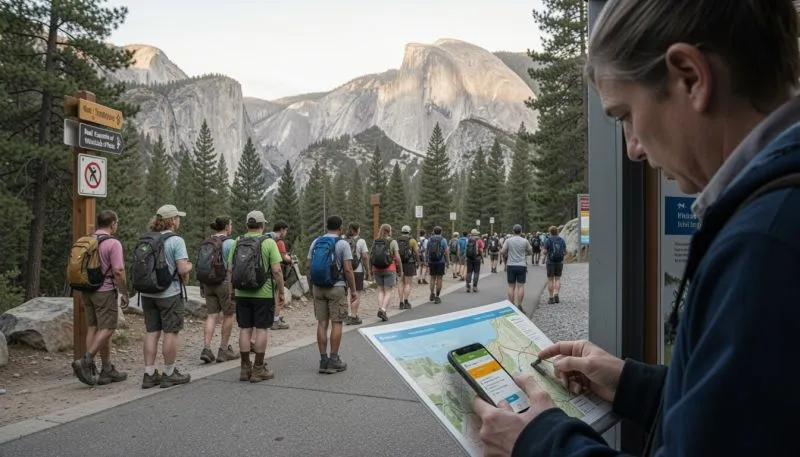
The Emergency Backup
Two weeks ago, I planned a Tuesday visit. Checked capacity the night before and it looked great. Got there at 9 AM and found out a large tour group had entered the park early (a special permit thing I wasn’t aware of). The lot I’d planned to use was full.
Instead of panicking, I drove to Wawona (about 30 minutes away), hiked Chilnualna Falls with maybe 20 other people total, and honestly had a better experience than I would have at Valley Loop Trail. The trail had more elevation gain, but it was worth it for the solitude.
The Mistakes Everyone Makes (And How to Avoid Them)
Thinking weekdays are always empty
They’re better than weekends, but not empty. June weekdays are still moderately crowded. Midweek in September? Yosemite Genuinely quiet.
Believing everything is accessible by car
The park is designed for driving, but popular spots have limited parking. Some of the best experiences require parking at a less popular spot and shuttling or hiking to the attraction.
Planning to “wing it” in high season
This almost never works. In May-September, you need to have your parking situation figured out before you arrive. Just winging it means you might spend more time parking than exploring.
Overestimating how much you can see in one day
I used to think I’d see the whole park in 8 hours. That’s… not realistic if you’re driving through crowds. Pick one or two areas and actually explore them well, rather than rushing around.
Ignoring the shuttle system
The shuttels run frequently, they’re free, Yosemite and drivers know where they’re going. In my latest visit, I saved probably 45 minutes of driving stress by just using shuttles within the valley.
What You Should Actually Pack (Beyond the Basics)
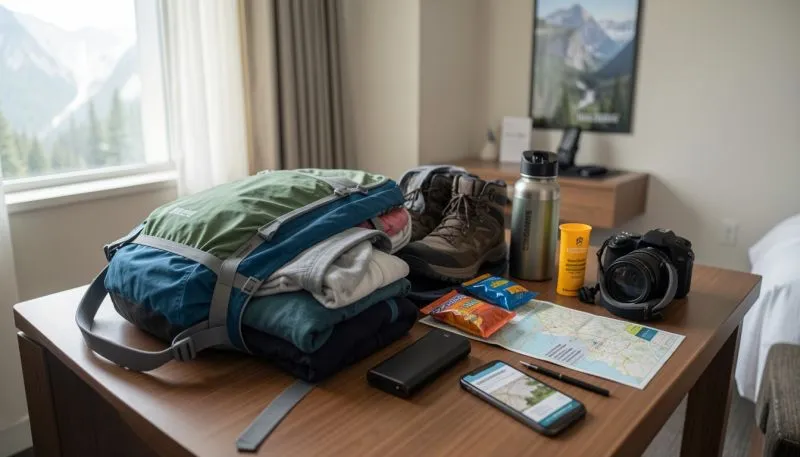
- A full cooler with lunch: Non-negotiable. You’ll save money and time.
- Sunscreen: At high elevation, sun exposure is intense. I got a burn in Tuolumne Meadows that I’m still annoyed about.
- A power bank: Your phone battery drains fast from maps, photos, and music. Bring a backup.
- Layers: Even in summer, Yosemite is cold at elevation. I packed a fleece that I wore every evening.
- A portable car fan or AC: If you’re arriving early and sitting in your car in warm months, this keeps it tolerable while you wait for the trail to open.
The Honest Truth About Yosemite’s Future
I talked to a park administrator about whether this would get better. The reality: probably not. More people are moving to California, more are discovering the park online, and demand just keeps increasing.
The park service is constantly trying new strategies reservation systems, shuttle expansion, alternate routes but fundamentally, Yosemite has a carrying capacity. You can’t fit 50,000 people a day into a valley and have everyone feel like they’re experiencing nature.
This means your best bet as a visitor is to accept the crowds and work around them, rather than hoping they’ll disappear. That’s actually what changed Yosemite my perspective. Once I stopped expecting empty trails and instead optimized for hitting trails at their least-crowded times, visiting Yosemite became genuinely enjoyable again.
The System I Actually Use Now
Here’s the exact process I follow for planning a Yosemite trip (it takes maybe 15 minutes):
- Pick a date (aim for September or May, or weekdays year-round)
- Check NPS website for real-time capacity data
- Arrive between 6:30-7:30 AM or after 4 PM
- Park at the first available spot, even if it’s not your ideal location
- Use shuttles if you’re exploring the valley
- Have a backup location ready if crowds are worse than expected
- Pack all food and water for the day
- Start hiking immediately, before mid-morning
This system has worked for my last five visits. The differences are dramatic. Instead of spending half my day frustrated about parking, I’m actually enjoying the park.
A Few Final Realistic Expectations
Yosemite is beautiful. It’s also genuinely crowded now. You won’t experience wilderness solitude unless you go off-season or put in Yosemite serious effort. But you can still have an amazing trip if you plan around crowds rather than hoping they don’t exist.
The park itself is still stunning Half Dome is still awe-inspiring, waterfalls are still beautiful, and the granite cliffs are still magnificent. Crowds don’t change that. What crowds do change is whether you’re annoyed or peaceful while you’re experiencing those things.
Best Time to Visit Big Sky: What Three Years of Trial and Error Taught Me
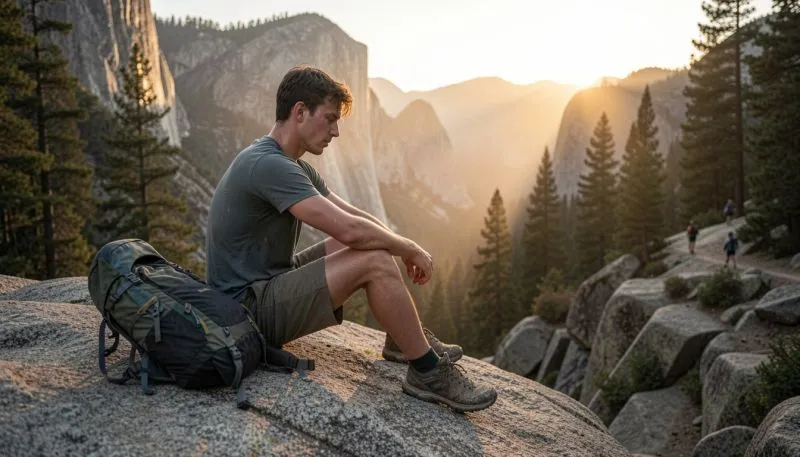
My last visit was in late May on a Tuesday. I arrived at 6:50 AM, parked immediately, hiked Sentinel Dome, had lunch at Glacier Point with exactly seven other people, explored the valley via shuttle with reasonable crowds, and spent the evening at Tuolumne Meadows watching golden light hit the peaks. I left the park feeling restored instead of frustrated.
That’s what’s possible when you work with the reality of Yosemite’s crowds instead of against them.
The park is worth the effort. It’s just worth being smarter about timing and expectations first.

Michael James is an American travel writer and Europe visa specialist with 7+ years of experience helping U.S. citizens stay longer in Europe. Through real conversations with digital nomads, retirees, and expat families, he delivers clear, no-fluff guides on the latest 2026 Schengen rules, ETIAS, and the best long-stay visas. Follow his practical advice at TravelTipHub.