

The Real Jaipur Guide
I arrived in Jaipur on a sweltering April afternoon with exactly zero expectations and a severe case of monsoon-season FOMO. My original plan was to spend 36 hours, knock out some Instagram shots of the pink buildings, and head to Udaipur. That was three weeks ago.
Here’s the thing nobody tells you about Jaipur it’s not some sterile museum city frozen in time. It’s absolutely chaotic, frequently frustrating, incredibly delicious, and honestly, one of the most underrated cities in India if you know where to look and how to navigate it.
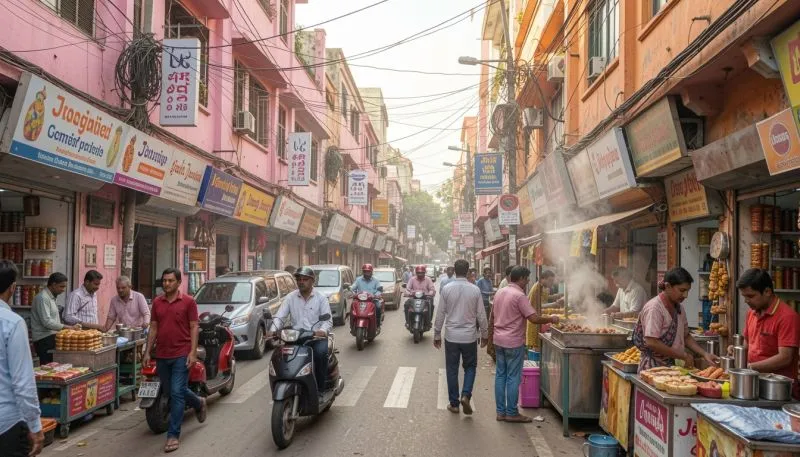
The First 24 Hours: Where I Got It All Wrong
My first mistake? Trying to do everything in day one.
I landed at Jaipur International Airport around 4 PM, hired an Uber (always use Uber or Ola here, not the random taxis outside), and headed straight to the Pink City’s old quarter. My hotel clerk enthusiastically rattled off a list of “must-sees” City Palace, Jantar Mantar, Hawa Mahal and I was determined to tick all of them off before dinner.
Rookie. Mistake.
By 6 PM, I was sweating through my third shirt, my phone battery was at 15%, and I’d underestimated how absolutely overwhelming the old city actually is. The streets are cramped, the traffic is unforgiving, and if you’re used to organized tourist infrastructure, Jaipur will humble you real quick. I ended up sitting at a random chai stall near the Bazaar, completely disoriented, watching a vendor argue with a cow about some vegetables.
The chai helped. So did accepting that I wasn’t going to see everything today.
What Jaipur Actually Is (And Why It Matters)
Before we dive deeper, let me give you the real backdrop here.
The Real Deal on Disneyland Ticket Prices: What I Learned After Six Visits
Jaipur was founded in 1727 by Maharaja Sawai Jai Singh II. He was basically the Steve Jobs of his time super interested in urban planning, mathematics, and creating something that actually worked. The entire old city (called the Pink City since the buildings were painted pink in 1876) is built on a geometric grid system based on ancient Hindu and Mughal architectural principles.
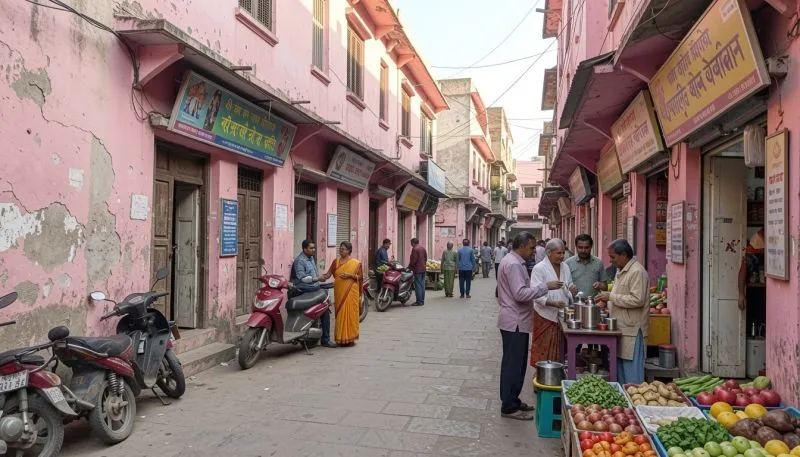
That pink color?
It’s everywhere, and it’s the thing that makes Jaipur instantly recognizable. But here’s what surprised me: the why behind it matters way more than the color itself. When the Prince of Wales visited in 1876, the city was painted pink as a gesture of welcome (pink symbolized hospitality). That single decision became part of the city’s permanent identity.
But Jaipur isn’t just a historical artifact. It’s home to nearly 4 million people. It’s got a thriving tech industry, world-class hospitals, and some of the best textile and gemstone work in India. The Pink City’s fame sometimes overshadows what’s actually happening in modern Jaipur the innovation, the growth, the real life.
Understanding this context changed how I moved through the city. Instead of just photographing buildings, I started noticing the people, the businesses, the actual heartbeat of the place.
Where to Actually Stay (And Why Location Matters More Than You’d Think)
This took me three nights to figure out, so let me save you the trial and error.
There are basically three zones in Jaipur:
The Pink City (Old City): This is the Instagram zone. Amazing for photos, exploring bazaars, and eating street food. It’s also incredibly dense, loud, and your hotel options are limited. Staying here means constant street noise, challenging WiFi, and navigating some intense traffic. But you’re basically living inside the cultural heartbeat, which is genuinely cool.
C-Scheme/Riico Industrial Area: This is where most backpackers stay. It’s literally called “C-Scheme” because it’s in the “C” sector of Jaipur’s grid system. Tons of hostels, budget hotels, and cafes full of travelers. It feels like a bubble, but a comfortable one. Easy access to the Pink City (20 minutes by auto-rickshaw), better restaurants, and way less chaos.
Malviya Nagar/Bani Park: If you want actual local Jaipur life, this is where it happens. Quieter, tree-lined streets, family-run guesthouses, real restaurants where locals eat. It’s less touristy but requires more effort to navigate.
Here’s my honest take: If it’s your first time, stay in C-Scheme for the first two nights to get oriented, then move to the Pink City for 2-3 nights to really explore it. By then, you’ll understand how the city works and won’t feel completely lost.
Practical tip: Book hotels on Google Maps, not just through booking apps. You’ll get better photos of the actual rooms and area, plus real reviews from people who’ve stayed there. I found my best guesthouse this way a little place called Kanovar Haveli run by this lovely couple who basically became my accidental Jaipur mentors.
I Drove to Yosemite in July and Learned a Hard Lesson About Timing
The Pink City Bazaar: Where Everything Happens (And How Not to Get Scammed)
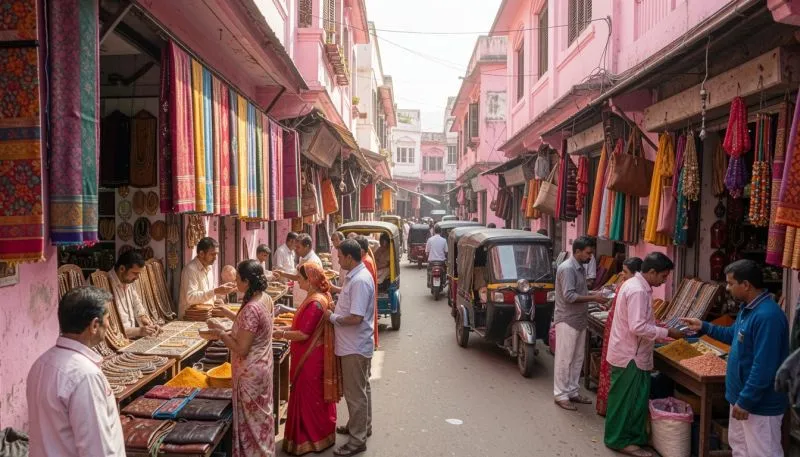
The old city’s bazaars are where Jaipur’s commercial soul lives. Johari Bazaar, Bapu Bazaar, Chaura Rasta these aren’t quaint heritage areas. They’re active, chaotic, and legitimately confusing if you don’t know what you’re doing.
I made the mistake of wandering into Johari Bazaar (the jewelry market) without any idea what I was looking for. Within five minutes, three different shopkeepers had tried to sell me “authentic Rajasthani gemstones” at wildly inflated prices. One guy swore up and down that a “rare blue sapphire” was worth $500 and offered me a special price of $200 if I bought it right then.
I learned a few hard lessons:
Don’t shop for gemstones or gold unless you know what you’re doing.
Seriously. There’s so much counterfeit stuff, and the margins for mistake are massive. If you must buy jewelry, stick to established shops in the New City, not the bazaars.
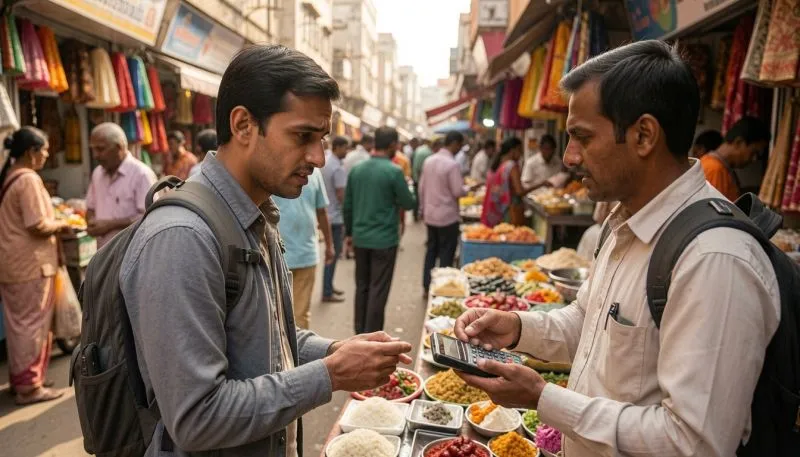
Negotiate, but know the boundaries. Haggling in Indian markets is normal. But there’s a difference between reasonable negotiation and the Western tourist expecting 70% off everything. I started asking for prices in rupees, which immediately made me seem less like a tourist (or at least a dumber one).
Go with a local if you can. When my guesthouse owner took me to Bapu Bazaar for textiles and spices, I got actual fair prices. More importantly, I learned why certain spices cost different amounts and what quality actually looks like.
Stick to specific items. If you’re buying textiles, textiles. If spices, spices. Jumping between 15 different categories means you’re peak tourist energy, and you’ll get preyed upon.
The bazaars are genuinely worth exploring for the experience, not necessarily for shopping. The sensory chaos is part of Jaipur’s identity. Just go in with realistic expectations and a healthy skepticism.
The Actual Monuments (And Why Hawa Mahal Isn’t Even the Best One)
Okay, let’s talk about the famous stuff since that’s probably why you’re coming here.
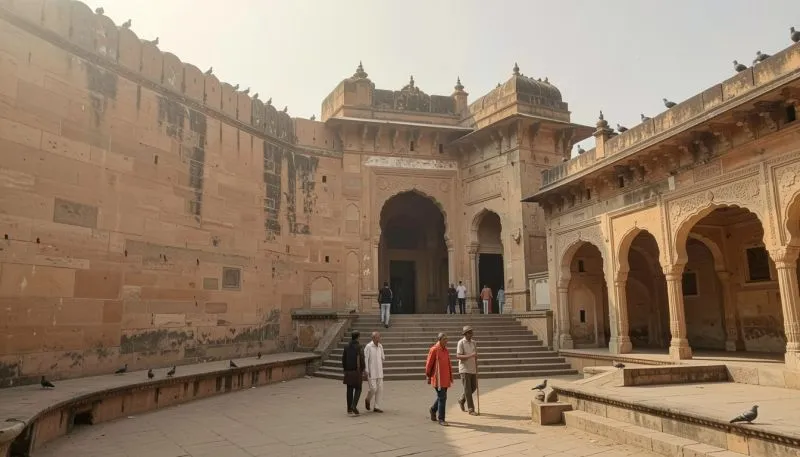
Hawa Mahal (Palace of Winds): This is the money shot. Everyone’s seen it. It’s pink, it’s got a thousand little windows, and it’s absolutely ridiculous in person. Here’s what surprised me: it’s tiny from the inside. Like, shockingly small. The interior is basically a narrow staircase with a couple of rooms. Most visitors spend 20 minutes max inside.
Get there before 7 AM or after 4:30 PM to avoid the worst crowds. The light is also way better. And yes, go to the top the view of the Pink City’s grid layout is genuinely beautiful and helps you understand the city’s structure.
City Palace: This is actually the most impressive monument because it’s still partly in use. Parts of it are owned by the royal family and actually occupied. There’s a museum section open to the public, and it’s way more interesting than Hawa Mahal because you’re actually inside a functioning palace with real artifacts.
Pro move: hire a guide for City Palace. I resisted this at first because I wanted to be independent, but honestly, a good guide ($10-15 for 90 minutes) explains the architecture, history, and design choices in ways that make everything 10x more interesting. Plus, you get into private courtyards that independent visitors miss.
Jantar Mantar: This is the dark horse. It’s an astronomical observation site built in the 1700s, and it’s genuinely fascinating. It’s a collection of 19 geometric instruments built to measure angles and predict celestial bodies.
Most tourists skip it because it sounds boring. They’re wrong. Standing in front of something that accurately predicted eclipses centuries ago, with no modern technology, is legitimately mind-bending. Spend at least 90 minutes here.
Ranthambore National Park (90 km away): Okay, this isn’t technically in Jaipur, but it’s the most common day trip. If you want to see tigers, this is your best bet in India. Fair warning: you might not see a tiger. I went on two safaris and saw zero tigers, but I saw leopards, wild boar, and a ridiculous number of deer. Still worth it, honestly.
FIFA World Cup 2026 Travel Guide: Everything I Learned Planning My First Tournament Trip
The secret?
Go on the early morning safari, not the afternoon one. More active animals, better light, and fewer tourist jeeps.
Food: The Thing Nobody Talks About
This is where Jaipur actually blew my mind.
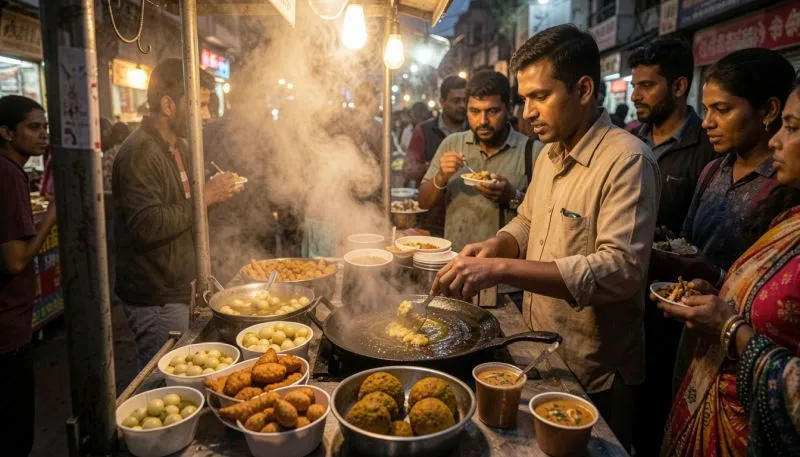
Everyone knows about Rajasthani cuisine in theory dal baati churma, gatte ki sabzi, laal maas. But actually eating it in Jaipur, from people who’ve been making it their entire lives, is different.
Street food I got embarrassingly obsessed with:
- Malpua: These are these little pancake-like discs soaked in sugar syrup and topped with condensed milk. They’re sickeningly sweet and I ate them for breakfast three mornings in a row. Janpath has the best ones.
- Kachauri: A spicy, crispy pastry filled with moong dal and onions. Get them from the street vendor near your hotel, not from restaurants. Way better.
- Chikhalwali ke Pakore: These are, improbably, the best pakoras I’ve ever had. They’re just potatoes, but fried in a specific way with specific spices. There’s literally a vendor on Johri Bazaar who’s famous for these. I probably spent $2 on her pakoras over five days.
Actual restaurants worth your time:
- Niros: This is the old-school fine dining option. It’s been around since 1949. Order the dal baati churma and the laal maas. Expensive by local standards (~$8-10 per person) but genuinely good.
- Surya Niwas: More casual, better vibes, authentic Rajasthani food at half the price. Go for lunch when locals are eating there.
- The Peacock Rooftop (or any rooftop restaurant in C-Scheme): These are more for the experience of eating with the city in the background. Food is middle-of-the-road, but the atmosphere is nice.
The Real Move?
Eat where you’re staying if it’s a guesthouse. Kanovar Haveli’s owner, Reena, made me home-cooked Rajasthani meals that beat any restaurant.
One honest mistake I made: I got food poisoning from something I ate near Bapu Bazaar. Nothing dramatic, but it knocked me out for a day. Lesson learned: if it’s sold by a vendor with dubious food storage practices, maybe don’t eat it, no matter how good it smells. Street food is usually fine if it’s being cooked in front of you, but day-old stuff sitting in the sun? Nah.
Getting Around (And When to Actually Just Give Up)
Jaipur’s traffic is something. There are no lanes. Apparently, “lanes” are suggestions. Cows roam freely. Traffic laws are… creative interpretations.
Here’s what actually works:
- Uber/Ola: Download both. Uber sometimes seems to have better pricing, but Ola is more established here. Factor in 1.5x the estimated time for any journey. Share rides with other travelers if you need to split costs. This is how you do most point-to-point transport.
- Auto-rickshaws: These are the three-wheeled taxis. They’re cheaper than Uber and faster through congested areas. Negotiate prices beforehand. A ride from C-Scheme to the Pink City should cost 150-200 rupees (~$2-2.50). If they ask for more, walk away—plenty of other autos.
- The local bus system: Honestly? Don’t bother. It’s chaotic, and you’ll end up on a route you didn’t intend. Uber is only slightly more expensive and way less stressful.
- Walking: Only walk within a specific zone. Don’t try to walk between zones. The distances are deceiving, and the traffic is genuinely dangerous. I watched a tourist get clipped by a scooter on MI Road because he thought he could just walk against traffic like he was in his hometown.
- Renting a scooter/motorcycle: Maybe if you’re an experienced rider in chaotic environments. I considered this and absolutely chickened out the moment I got on one. Not worth the risk for casual sightseeing.
Timing Your Visit (The Thing Nobody Gets Right)
Jaipur gets absolutely stifling from mid-April through August. I was there in April, and by noon, it was literally 42°C (107°F).
- Best time: October-March. Seriously, book this window. Weather is perfect, and it’s not monsoon season.
- Second best: Late February-March. Jaipur is hosting flower shows and cultural events. More tourists, but genuinely vibrant atmosphere.
- To avoid: May-August. Unless you explicitly want a sauna with Sanskrit monuments, skip this.
- September-October: Monsoon season is ending. Sometimes rainy, sometimes perfect. It’s a gamble. This timing thing changes everything. I visited in April, so I spent half my days hiding from the heat. If I’d gone in February, I probably could’ve done way more. Don’t make my mistake—plan around the weather.
I Blew My “Europe Budget” on Southeast Asia Instead
Common Mistakes (And How to Avoid Them)
- Expecting it to be like Delhi or Agra: It’s not. Those cities have more international tourism infrastructure. Jaipur is more authentic but also more chaotic. Adjust expectations accordingly.
- Thinking you can see everything in 2 days: You can’t. Pick 3-4 things you genuinely care about, do those, and actually enjoy them instead of rushing.
- Going to every single temple: Jaipur has tons of temples. Most tourists hit 4-5 and call it a day. Pick the ones that actually interest you. Don’t go just because a guidebook said you should.
- Not carrying cash: Most bazaar vendors don’t take cards. ATMs are everywhere, but there’s often a line. Carry 2000-3000 rupees on you at all times.
- Booking tours with random people on the street: If someone approaches you offering a “special tour,” just say no. Use Viator or local tourism websites instead. There’s a reason they’re approaching you, and it usually involves taking you to shops where they get commission.
- Drinking tap water: Just don’t. Bottled water is cheap (~15 rupees, $0.20) and everywhere.
What to Actually Bring
Skip the bulky guide books. Use Google Maps offline mode and the Jaipur City Guide app (it’s decent).
Carry:
- Sunscreen (honestly, every day)
- A scarf or shawl (temples require covered shoulders, and it’s useful for sun protection)
- Comfortable walking shoes (you’ll walk more than you think)
- A smaller backpack or crossbody bag (easier to navigate crowds)
- Earplugs (the city is loud)
- A portable phone charger (your battery will die faster than expected)
Don’t bring expensive watches, cameras, or jewelry. Not because Jaipur is dangerous, but because it just invites unnecessary attention.
The Real Jaipur (The Part That Actually Matters)
Here’s what I didn’t expect: the people.
Jaipur locals, once you get past the initial “you’re a tourist” assessment, are genuinely warm. They’re not jaded like you’d find in Delhi or Mumbai. My hotel owner basically adopted me. The chai vendor near my guesthouse learned my name and started making my drink exactly the way I liked it without asking by day four.
I spent an entire afternoon just sitting in a neighborhood park near Bani Park, watching cricket games, kids playing, couples sitting together. Nobody bothered me. I was just… there. That’s when Jaipur stopped being a tourist destination in my head and became an actual place where actual people lived their actual lives.
That’s the Jaipur that stays with you. Not the monuments those are cool, sure. But it’s the randomness, the chaos, the unexpected kindness, and the absolutely incredible food that makes you realize why people actually choose to live here despite the heat, despite the traffic, despite everything.
How to Travel Europe on a Budget Without Missing the Best Experiences
Final Thoughts
I came for the pink buildings. I stayed for everything else.
Jaipur isn’t a perfectly packaged tourist experience. It’s messy and contradictory and sometimes frustrating. But if you approach it with realistic expectations, a decent sense of humor, and genuine curiosity about how a real Indian city actually functions, it’s genuinely remarkable.
Would I go back?
I already have. I spent two weeks last year exploring neighborhoods I’d skipped, eating at restaurants I’d never heard of, and basically just existing in the city instead of checking boxes on a to-do list.
That’s the real Jaipur. The one that gets you.
Start with the pink, but stay for everything else. You’ll probably end up staying way longer than you planned too and unlike my accidental three-week stint, you’ll actually be prepared for it.
Go. Eat the pakoras. Get lost in the bazaars. Talk to random people. And whatever you do, don’t rush it. Jaipur rewards people who actually slow down.

Michael James is an American travel writer and Europe visa specialist with 7+ years of experience helping U.S. citizens stay longer in Europe. Through real conversations with digital nomads, retirees, and expat families, he delivers clear, no-fluff guides on the latest 2026 Schengen rules, ETIAS, and the best long-stay visas. Follow his practical advice at TravelTipHub.