

Finding Your Perfect Nomad Base in Chiang Mai
I landed in Chiang Mai on a Tuesday afternoon with zero accommodation booked.
Sounds reckless, right?
But I’d done this before or so I thought. I had my laptop, a “flexible approach,” and the assumption that a city of 1.2 million people with a thriving digital nomad scene would have something available. Six hours of scrolling through Airbnb on spotty WiFi at Chiang Mai International Airport later, I was starting to second-guess that decision.
Here’s the thing nobody tells you about finding accommodation in Chiang Mai in 2026: it’s not actually that hard. It’s just different than it was three years ago. The scene has matured. Prices have shifted. Some neighborhoods that were sleepy in Chiang Mai 2023 are now buzzing with cafes and coworking spaces. And honestly? That’s made it both better and more competitive.
Over the past few years, I’ve done the full Chiang Mai accommodation tour. I’ve lived in everything from a 100-baht-a-night guesthouse (yes, really) to a private house with a pool. I’ve made mistakes, wasted money, and found some genuinely great situations. This is what I’ve actually learned.
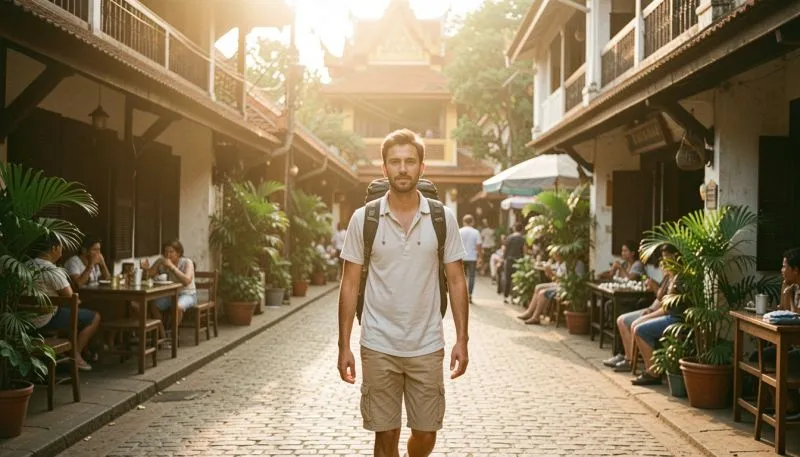
The Rookie Mistake I Made (So You Don’t Have To)
My first week in Chiang Mai, I booked a “luxury co-living space” through a platform that promised community, events, and the “perfect nomad experience.” The listing photos looked incredible design elements that would make any Instagram feed jealous, a rooftop workspace, private rooms with rainfall showers.
When I arrived, I found out why it was available last-minute: the WiFi maxed out at 3 Mbps during peak hours. That’s not an exaggeration. The “rooftop workspace” was a table next to an AC unit that sounded like a helicopter, and the rainfall shower had exactly two settings scalding or arctic.
Here’s what I learned from that mistake: stop being seduced by the aesthetics. When you’re evaluating an accommodation, the first question isn’t “does it look nice on Instagram?” It’s “can I actually work from here?”
For remote workers and digital nomads, accommodation isn’t just where you sleep. It’s your office, your meeting space, and sometimes your entire Chiang Mai social life. That changes the decision-making calculus completely.
What Actually Works in 2026
Fast forward to now, and I approach finding accommodation differently. I’ve narrowed it down to what actually matters for nomad life in Chiang Mai.
Reliable Internet Is Non-Negotiable
In 2026, Chiang Mai internet infrastructure has genuinely improved. Both major providers True and dtac now offer fiber connections in most central areas. But here’s the catch: just because fiber exists in the neighborhood doesn’t mean your specific accommodation has a good setup.
When evaluating a place, I ask three specific questions:
- What’s the actual provider, and what’s the advertised speed? (This matters because a “100 Mbps” fiber connection on paper might deliver 30 Mbps in reality)
- Is it single-line or backup? (The best places have two different providers as backup)
- Can I do a video call test before committing?
I’ve started using Speedtest during viewings both on WiFi and through my phone’s data. If I can’t run a video conference without the connection hiccupping, I’m out. Chiang Mai Non-negotiable.
The places I’ve had the best internet luck?
Surprisingly, mid-range serviced apartments often outperform the trendy co-living spaces. Companies like Citadines and Akyra have their infrastructure together because they cater to business travelers, not just Instagram aesthetics.
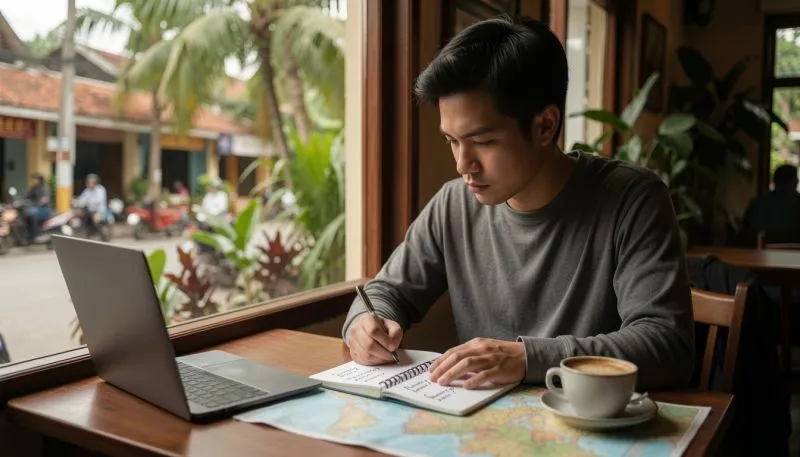
Location Determines Quality of Life (More Than Price)
Chiang Mai expanded enormously even in just the last three years. The digital nomad scene isn’t concentrated in one area anymore. You’ve got clusters scattered across multiple neighborhoods, each with different vibes.
Nimman (Huay Kaew Road) is what everyone knows about. It’s where the majority of Western nomads congregate, the biggest concentration of coworking spaces, and the most reliable restaurant/cafe infrastructure. Rents range from 15,000-35,000 baht per month for a decent one-bedroom depending on the building.
The trade-off? It’s crowded, touristy, and honestly, the food scene has gotten a bit cookie-cutter.
Thae Phae is quieter. It’s the old city charming, walkable, more integrated with Thai culture. Accommodation here is cheaper (8,000-18,000 baht for similar quality), but the WiFi situation is hit-or-miss because the buildings are older, and coworking spaces are fewer. Great if you work asynchronously, trickier if you have regular calls.
The Cheapest Month to Visit Prague: A Real Traveler’s Guide to Saving Big
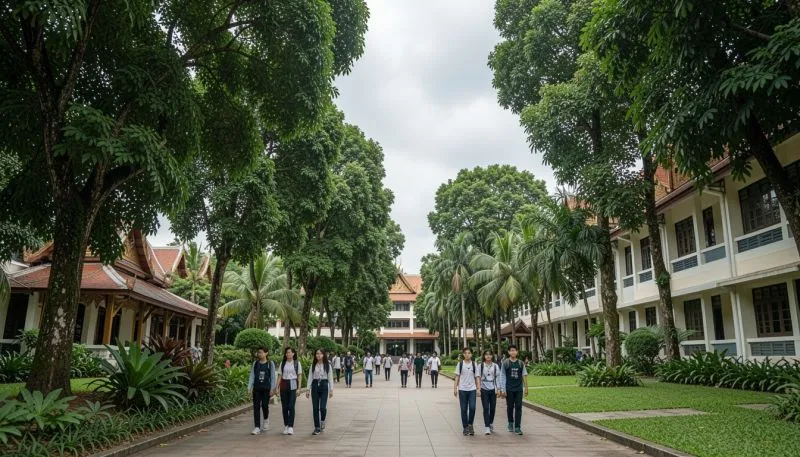
Chiang Mai University
Chiang Mai University area (around Suthep) has exploded recently. Young Thai professionals live here, there’s a massive mall with cafes, and it feels less “nomad bubble” and more like a normal city neighborhood. I’ve found some solid mid-range serviced apartments here, and since it’s less of a nomad hotspot, prices haven’t inflated as much. 30,000 baht gets you a proper two-bedroom with amenities.
Old City (around Phra Singh) is the romantic choice. It’s where the temple action is, sunrise morning runs take you through ancient streets, and you’ll actually interact with locals rather than always speaking English. The accommodation is mostly guesthouses and a few Airbnbs, so it’s better for shorter stays or if you’re okay with shared living.
Here’s my honest take: stop asking
- “where do digital nomads live?” and start asking
- “what’s actually convenient for how I spend my days?” If you need to be in constant video calls, Nimman or the university area.
If you want cultural immersion and don’t mind slower WiFi, Old City. If you want quiet and cheap, Thae Phae.
The Real Accommodation Options (And What They Actually Cost)
Coworking + Accommodation Packages
This is the fastest way to get set up without stress. Places like Hubba, Punspace, and North Gate Coworking now offer long-term package deals where accommodation is bundled with your membership.
I did this for my first month, and honestly?
It removed so much friction. WiFi is guaranteed (they specifically design for it), there’s an instant community of people in similar situations, and someone else is handling maintenance if something breaks.
The catch is price. These packages run 25,000-45,000 baht monthly for a private room, more for anything bigger. That’s not absurd it’s actually reasonable for included furniture, utilities, and membership but it’s the premium option.
Airbnb (Still Viable, But Different Than Before)
Airbnb works in Chiang Mai, but you need to shop differently than you might in Western cities.
The platform has gotten more expensive overall supply hasn’t kept pace with demand growth. A one-bedroom that might have been 500 baht per night in 2023 is now 650-750. What’s worked for me is looking for properties run by actual residents or small-scale owners rather than big operators managing dozens of units.
I filter by “entire place,” Chiang Mai then look at the last review dates and what people actually say. If reviews mention WiFi issues, I skip it immediately. If reviews mention the owner being responsive, I book it.
Dhara Dhevi
For stays longer than 30 days, messaging the host directly with a “I’m looking for monthly rate” often gets you 15-20% off. This isn’t negotiable; it’s standard practice. Some hosts list monthly rates separately, but many don’t, and they’re happy to accommodate if you ask.
One solid tip I’ve learned: book Airbnb for 30-35 days rather than month-to-month if possible. The platform calculates monthly rates differently, and sometimes a 35-day booking is actually cheaper than a 30-day one.
Cost range: 12,000-25,000 baht monthly for a solid one-bedroom in most central areas.
Serviced Apartments (The Underrated Option)
This is where I actually live most often, and I think more nomads should consider it.
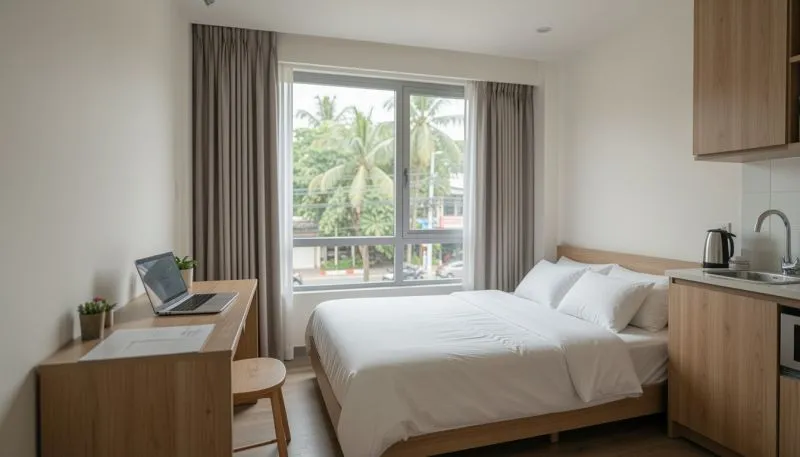
Serviced apartments are hybrid properties they look like apartments, operate like hotels. You get your own kitchen, washer, proper living space, but there’s a front desk, housekeeping, and maintenance on-call. Companies like Citadines, Chiang Mai Akyra, and smaller operations like Dhara Dhevi offer these.
The advantages for remote workers are substantial:
- Internet is a core service (they know it matters)
- When something breaks, you call the front desk and it’s fixed today
- Utilities are included in the price
- They often have gyms, rooftop areas, or common spaces
- Shorter commitment than traditional apartments
- They handle visa runs differently than hotels do
The disadvantages: slightly more expensive than comparable Airbnb, less “authentic” feeling, and you don’t get the connection to local landlords.
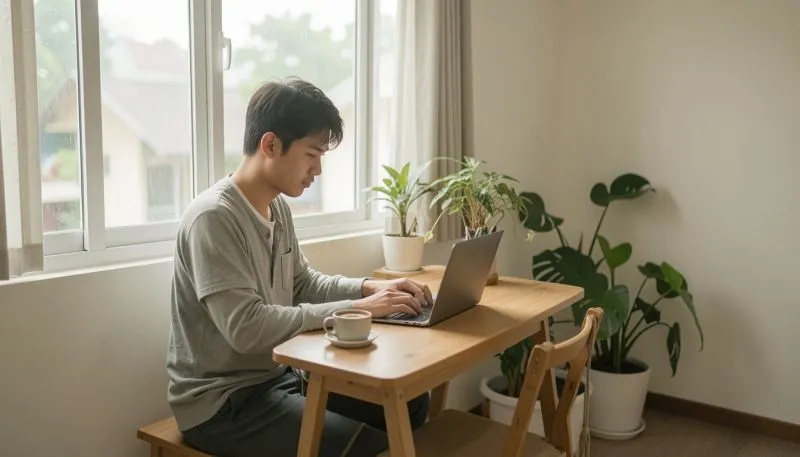
I’m paying 20,000 baht monthly for a one-bedroom at a mid-range serviced apartment in Chiang Mai University area. It includes utilities, WiFi, gym, and weekly housekeeping. When I compare that to the stress-factor of managing a private Airbnb or the limited privacy of co-living, it feels reasonable.
Affordable Travel Hacks 2026: How I Cut My Travel Costs in Half
Traditional Long-Term Rentals (Still the Cheapest)
If you’re staying 2-3+ months, you can find proper apartments or houses rented by Thai owners at genuinely cheap rates.
Sites like DDproperty and Thai-land.com (yes, that’s the real URL) list residential apartments aimed at Thais. Prices are 7,000-15,000 for a one-bedroom in decent areas. The catch? These come with challenges:
- Minimal English from landlords
- You’ll need to navigate Thai contracts or use a service
- Furniture might be minimal or questionable quality
- You’re navigating the Thai rental system with deposits, guarantors, etc.
I’ve done this route, and it works if you speak some Thai or have a Thai friend helping. If you don’t, it’s more stress than the 3,000-5,000 baht monthly premium is worth.
Coliving Spaces (But Choose Carefully)
The coliving space market in Chiang Mai has matured significantly. Early players like Sun Desk established the model, but now there are dozens.
Here’s my genuine take: most are fine, some are great, and a few are still trading on old reputation. The key difference between the space I had WiFi issues at and good ones is this: the mediocre ones optimize for Instagram aesthetics and “community vibes,” while the good ones optimize for actually living there.
The good ones (I’ve had luck with WIUP Residences and Lokaso) prioritize:
- Separate quiet work areas from social areas
- High-quality WiFi with backup
- Reasonable private room sizes (not shoebox closets)
- Screening for residents (actual professionals, not just tourists)
Cost is 20,000-35,000 baht Chiang Mai monthly. You’re paying more than a private Airbnb, but getting community, utilities included, and better infrastructure than you’d negotiate privately.
The Math That Actually Matters
Let me break down actual monthly costs for different scenarios:
Budget Option (Guesthouse + Coworking Space)
- Guesthouse room: 7,000-10,000 baht
- Coworking membership: 2,000-3,000 baht
- Food: 6,000-8,000 baht
- Transport/misc: 2,000-3,000 baht
- Total: ~17,000-24,000 baht ($470-660)
Mid-Range Option (Airbnb + Work Cafes)
- One-bedroom Airbnb: 15,000-20,000 baht
- Food: 8,000-10,000 baht
- Transport/misc: 2,000-3,000 baht
- Occasional coworking day: 200-500 baht
- Total: ~25,000-33,500 baht ($690-920)
Comfortable Option (Serviced Apartment)
- Serviced apartment: 20,000-25,000 baht (utilities included)
- Food: 8,000-12,000 baht
- Transport/misc: 2,000-3,000 baht
- Total: ~30,000-40,000 baht ($825-1100)
Premium Option (Co-living + Social Integration)
- Co-living with meals/events: 25,000-35,000 baht
- Food (partially included): 2,000-4,000 baht
- Transport/misc: 2,000-3,000 baht
- Total: ~29,000-42,000 baht ($800-1150)
The reality is that cost differences aren’t massive once you include everything. You’re often choosing between slight tradeoffs in comfort versus community versus convenience, not between vastly different price points.
What I’ve Learned About Actually Staying
Here’s what surprised me after spending time here: most accommodation problems don’t come from the physical space. They come from not thinking clearly about what you actually need.
Someone who says “I need to save money” might find themselves miserable in a 7,000 baht guesthouse room with questionable WiFi. That extra 8,000 baht monthly for a proper apartment isn’t luxury it’s stability. You’re trading monetary cost for mental/work cost.
Someone who books a beautiful coliving space thinking they need community might find the constant social obligation exhausting. An introvert paying a premium for “community vibes” they don’t want is money wasted.
Before you book anything, actually finish this sentence: “I will stay in Chiang Mai because I want to.” If you don’t have a clear answer, spend some time figuring it out. Your accommodation choice depends on that answer.
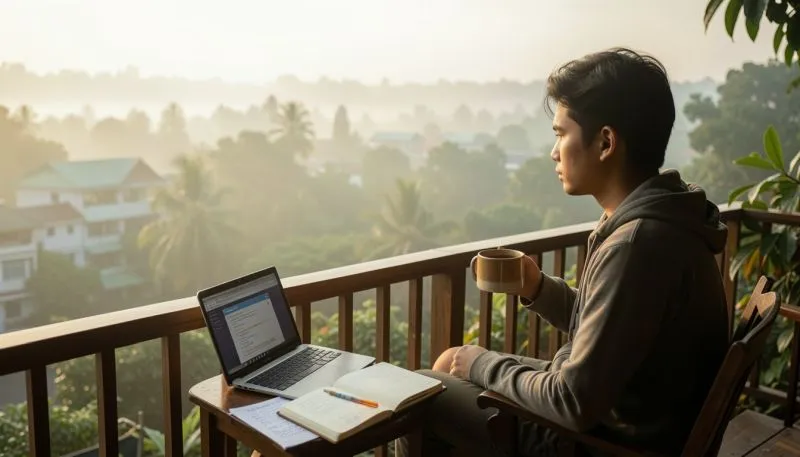
The Practical Booking Process That Works
Here’s how I actually book accommodation now in 2026:
Step 1: Pick your neighborhood based on lifestyle, not vibe
Not “where do cool people live” but “where is it convenient for my actual days?”
Step 2: Set your WiFi requirements
Write down your minimum internet needs. Are you doing 8-hour video days? Do you work async? This determines which options are even viable.
Step 3: Test before committing
Never book more than one month initially, even if there’s a discount. Use Airbnb or short-term serviced apartments to actually live there, test the WiFi, Chiang Mai understand the vibe, and confirm it works for you. One month is cheap insurance against a year-long mistake.
Step 4: Ask locals or other nomads specifically about that property
Not “how’s the neighborhood?” but “I’m looking at X apartment on X street—anyone lived there?” The digital nomad Facebook groups and Reddit communities are actually useful for this.
Step 5: If committing long-term, negotiate directly
Stop thinking of accommodation as fixed-price transactions. For stays 2+ months, there’s always negotiation room. A message to the host saying Chiang Mai “I’m looking to stay 3 months, what’s your best monthly rate?” often gets you 10-20% off.
Step 6: Sort out logistics proactively
Some accommodations need assistance for Thai bank accounts, TM.30 forms (for visa purposes), or pickup from the airport. Clarify what’s included before you book, not after.
FIFA World Cup 2026 Travel Guide: Everything I Learned Planning My First Tournament Trip
Common Mistakes I See Nomads Make
Booking the “Instagram-perfect” place without checking logistics
That rooftop pool is nice. The minimalist aesthetic is cool. But if you can’t get laundry done, the WiFi drops during your calls, and the Chiang Mai neighborhood is 20 minutes from anywhere useful, you’re paying for a problem.
Staying too long in the first place
Commit to one month initially. Your first impression will be wrong—either too negative (“this place is too touristy”) or too positive (“I’ve found paradise!”). Actually living there for a month will correct that impression. Then if you love it, extend.
Not testing WiFi before booking
This isn’t paranoia. This is basic due diligence for remote workers. Ask for a video call test or at least a speed test screenshot. If they won’t provide it, they either have something to hide or don’t understand what matters to their customers.
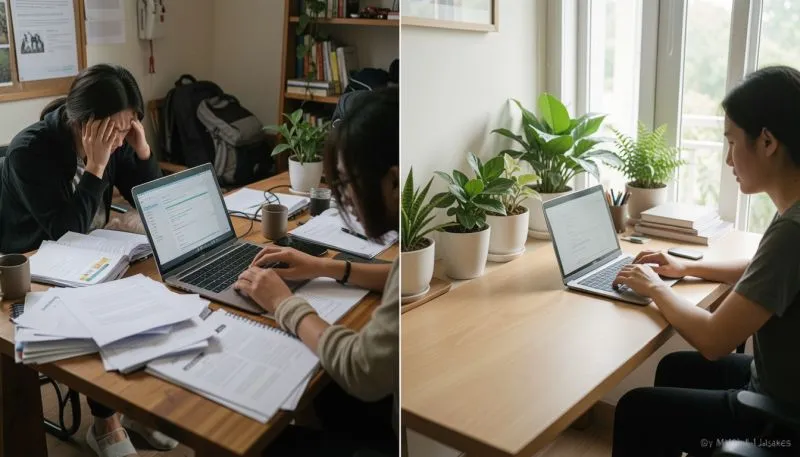
Choosing based purely on price
The difference between 10,000 and 15,000 baht is usually not money it’s avoiding problems. A cheaply maintained space with reliability issues costs you time, stress, and potential work problems. It’s not a savings; it’s a cost.
Underestimating the value of stability
Moving every month is romantic until it isn’t. Having a stable home base where you know how everything works and you’re integrated into the neighborhood is worth paying a bit more for. The mental stability translates to better work.
How to Travel on a Budget in 2026: The Real Stuff That Actually Works
What’s Actually Different in 2026
The Chiang Mai scene isn’t the frontier anymore. That changes accommodation reality.
Prices have gone up, but so has quality and standardization. There are fewer complete disasters because standards have risen. The “hidden gems” are Chiang Mai fewer because word spreads fast.
What’s actually improved: internet reliability, professional property management, clearer expectations, and less scamming. The infrastructure that makes long-term stays viable is better.
- What’s worse: less uniqueness, higher prices, and more competition for the good places.
The Actual Decision Framework
After all this, here’s what I use to Chiang Mai pick accommodation:
- Can I work reliably from here? (WiFi, desk space, noise levels)
- Is it reasonably convenient for my daily life? (Grocery, cafes, transport)
- Can I afford it without financial stress? (It’s not just rent; factor in total cost of life)
- Can I stand to live here for 1-3 months? (Will this be home, not just a place to sleep?)
- If something breaks, is it easy to fix? (Responsive landlord/management?)
If a place checks four or five of those boxes, it’s probably good enough. If it checks three or fewer, keep looking.
The Honest Truth About Living Here
Chiang Mai is still one of the best cities in the world for digital nomads. Accommodation is more straightforward than Thailand’s other major cities, the community is established, and you can genuinely find something that works for your budget and lifestyle.
But it’s not magical anymore. It’s just a really functional place to be a remote worker. The romance is in the temples and the mountains and the $2 massages, not in the accommodation situation itself.

Your goal shouldn’t be to find “the perfect accommodation.” It should be to find something functional enough that it fades into the background, and you can focus on actually living your life and doing your work.
Everything else is just deciding whether that functional base is in a coworking space, an Airbnb, a serviced apartment, or a coliving community. That’s about your priorities, not about the accommodation market.
Book a month somewhere reasonable, see if it works, then adjust from there. That’s genuinely the best strategy I’ve found. Everything else is Chiang Mai overthinking it.

Michael James is an American travel writer and Europe visa specialist with 7+ years of experience helping U.S. citizens stay longer in Europe. Through real conversations with digital nomads, retirees, and expat families, he delivers clear, no-fluff guides on the latest 2026 Schengen rules, ETIAS, and the best long-stay visas. Follow his practical advice at TravelTipHub.