

How TSA Gold+ Airport Screening Will Change Travel
TSA Gold+ is the biggest shake-up in U.S. airport security since PreCheck. Here’s exactly what it is, which airports will have it first, how it stacks up against TSA PreCheck, and how it will make your 2026 trips faster, smoother, and way less stressful—whether you’re flying domestic or heading to Europe.
The TSA just rolled out something called TSA Gold+, and it’s set to quietly revolutionize how we get through checkpoints across the United States. Launched in mid-May 2026, this new public-private partnership is basically the next evolution of airport security—and no, it’s not another membership program you have to pay for. It’s bigger than that.
What is TSA Gold+ and how does it work?
I’ve been flying a ton between the East Coast and Europe the last few years, and I can tell you firsthand how frustrating security can get—shoes off, laptops out, liquids in that tiny bag… you know the drill. But with TSA Gold+ rolling out, things are about to feel a whole lot more modern and efficient.
In this guide, I’m breaking down exactly what TSA Gold+ is, which airports will offer it, how it compares to TSA PreCheck, and—most importantly—how it’s going to change travel for all of us in 2026 and beyond.
What Is TSA Gold+ Airport Screening?
Screening Partnership Program (SPP)
In simple terms, TSA Gold+ is a brand-new public-private partnership that lets private companies handle both the people and the technology at airport security checkpoints.
It builds directly on the existing Screening Partnership Program (SPP), which already lets about 20 airports use private contractors instead of regular TSA employees.
- Here’s the big upgrade: Under the old SPP model, private companies only supplied the screeners. With TSA Gold+, those same contractors now get to manage the actual screening equipment—buying, installing, maintaining, and upgrading the scanners, software, and everything in between.
TSA Announced
TSA still sets the rules and oversees everything for security standards, but the private partners can move way faster on new tech without waiting around for federal budget approvals. Think of it like this: Instead of the government trying to upgrade scanners every five years, private companies can roll out cutting-edge biometric readers, smarter AI threat detection, and touchless systems almost as soon as the tech is ready.
TSA Gold+ participating airports list 2026?
Faster lines, fewer bottlenecks, and a smoother experience for everyone—while still keeping security rock-solid.
The program is completely voluntary for airports. They can opt in if they want better tech and potentially lower long-term costs. TSA announced it internally on May 14, 2026, and within days the pre-solicitation notice went out. It’s still super early days, but the momentum is real.
TSA Gold+ Participating Airports—Where You’ll See It First
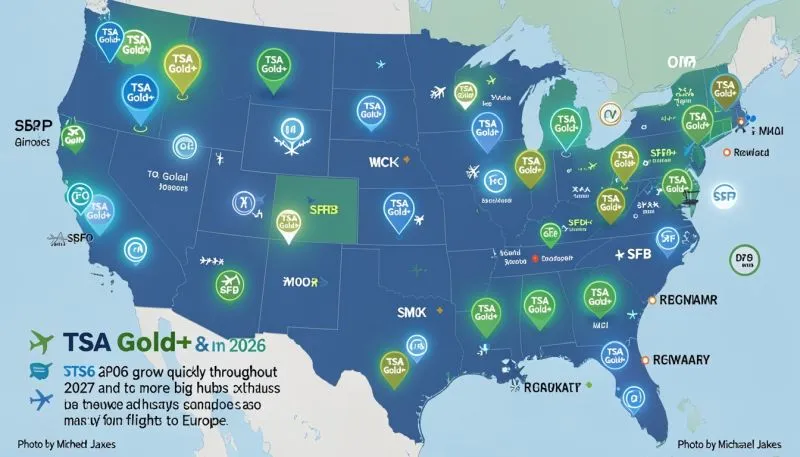
Right now (as of May 2026), TSA Gold+ is building on the existing SPP airports. These are the places most likely to adopt the enhanced Gold+ model first because they already have private screening experience.
Does TSA Gold+ cost extra?
Here’s a quick look at the current lineup of SPP airports that are prime candidates for full TSA Gold+ rollout:
| Airport Name | Code | Location | Notes on Current Status |
|---|---|---|---|
| San Francisco International Airport | SFO | California | Already private screening — Gold+ likely soon |
| Kansas City International Airport | MCI | Missouri | Strong candidate for early upgrade |
| Orlando Sanford International Airport | SFB | Florida | Popular leisure hub |
| Atlantic City International Airport | ACY | New Jersey | Smaller airport testing innovations |
| Greater Rochester International Airport | ROC | New York | Northeast coverage |
| Glacier Park International Airport | FCA | Montana | Regional hub |
| Charles M. Schulz–Sonoma County Airport | STS | California | Wine country traffic |
| Punta Gorda Airport | PGD | Florida | Growing leisure destination |
TSA Gold+ vs. TSA PreCheck – What’s the Real Difference?
-
Is TSA Gold+ better than PreCheck?
A lot of people are asking: “Is TSA Gold+ just like PreCheck but better?” Not exactly. They actually work together beautifully, but they solve different problems. Let me break it down side-by-side so it’s crystal clear:
| Feature | Traditional TSA Screening | TSA PreCheck | TSA Gold+ Airport Screening |
|---|---|---|---|
| Who runs the checkpoint? | Federal TSA employees | Federal TSA employees | Private contractors (with TSA oversight) |
| Technology upgrades | Slow federal process | Same as traditional | Fast private investment & innovation |
| Dedicated lanes for members | No | Yes | Potentially more efficient overall lines |
| Keep shoes, belt, and laptop in bag | No | Yes | Likely expanded with new scanners |
| Cost to traveler | Free | $78–$85 for 5 years | No extra cost to travelers |
| Main benefit | Standard security | Faster personal screening | Faster, smarter airport-wide screening |
| Availability (2026) | All airports | 200+ airports | Starting with ~20 SPP airports, expanding |
How TSA Gold+ Will Actually Change Travel in 2026
Here’s where it gets exciting.
- Shorter Wait Times: Private operators can deploy AI-powered scanners and automated lanes much faster than the federal government. Experts predict that Gold+ checkpoints could eventually cut average wait times by 30-50% compared to traditional lines once fully rolled out.
- Less “Take Everything Out” Drama: Newer CT scanners (already being introduced but accelerating under Gold+) will let you leave laptops, liquids, and many electronics in your bag more often.
- Better International Experience: If you’re flying from the U.S. to Europe (London, Paris, Amsterdam, Frankfurt, and beyond), a smoother departure from airports like SFO, MCI, or other early Gold+ hubs means you’ll start your trip far less stressed. No more missing that 7 a.m. flight because security took forever.
- More Predictable Travel: Consistent staffing and better tech will keep lines moving at a steadier pace—even during holiday rushes.
- Potential for Touchless & Biometric Perks: Private partners are already discussing seamless facial recognition and phone-based boarding passes.
- Real talk: I flew out of SFO last year before Gold+ was even announced, and the line was brutal. Imagine showing up in 2026 and breezing through in under 10 minutes. That’s the kind of change we’re talking about.
Cost Breakdown – Who Pays and What It Means for You
Here’s a simple breakdown of who actually pays under traditional TSA versus TSA Gold+ and what it means for everyday travelers:
Knowmore: Best Summer Vacation Ideas for Large Families
| Category | Traditional TSA | TSA Gold+ | What It Means for Travelers |
|---|---|---|---|
| Airport operating cost | Fully federal | Private investment lowers airport burden | No direct fee increase |
| Technology upgrades | Federal budget cycles | Private companies fund & deploy faster | Faster rollout of better scanners |
| Traveler membership | N/A | None required | Free improvement for everyone |
| PreCheck add-on | $78–$85 / 5 years | Works even better with Gold+ airports | Higher value for your existing PreCheck |
How to prepare for TSA Gold+ in 2026
TSA Gold+ pros and cons
Pros and Cons of TSA Gold+ in 2026
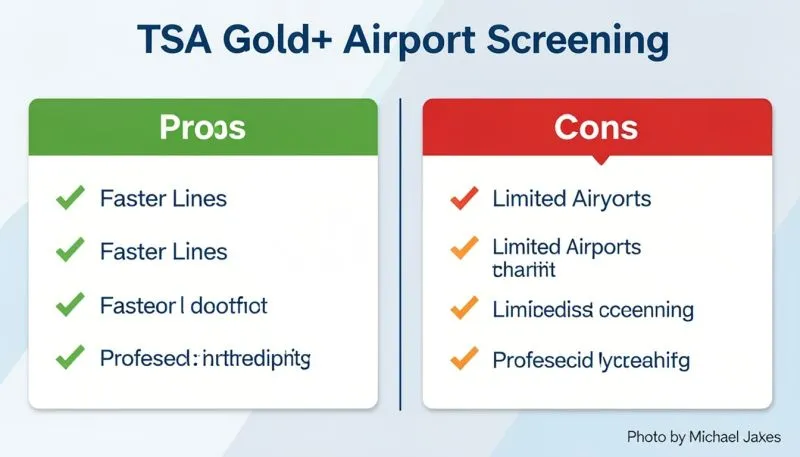
Pros
- Faster tech adoption (biometrics, smarter AI scanners, and touchless systems)
- Potentially shorter lines across the board
- More consistent and professional service at participating airports
- Better experience for international travelers heading to Europe
- No extra cost to passengers
Cons
- Still very new — full rollout will take time
- Only starts at ~20 airports (with expansion planned throughout 2026)
- Some travelers worry about “privatization” affecting consistency
- Union concerns about federal jobs (though TSA maintains full oversight)
How to Prepare for TSA Gold+ Travel in 2026
Here are a few simple tips to make sure your first Gold+ experience is smooth and stress-free:
- Get TSA PreCheck if you don’t have it already — it pairs amazingly with Gold+ airports.
- Check your departure airport’s status before booking — see if it has already rolled out Gold+.
- Keep your REAL ID or passport ready — new TSA ConfirmID fees ($45) start in 2026 if you forget or don’t have an acceptable form of ID.
- Download your airline app for mobile boarding passes — many Gold+ checkpoints are moving toward touchless and biometric options.
- Arrive 15–20 minutes earlier than usual the first time you hit a Gold+ airport — just to be safe while everything is still bedding in.
FAQ – Everything Else You Wanted to Know About TSA Gold+
Here are the most common questions travelers are asking about TSA Gold+ in 2026:
Q1: Is TSA Gold+ the same as TSA PreCheck?
No. PreCheck is a trusted traveler program for individuals. Gold+ is about who operates the entire checkpoint.
Q2: Do I have to pay anything extra for Gold+ lanes?
Nope. It’s available to all passengers at participating airports — no extra fees.
Q3: Which airports will definitely have TSA Gold+ by the end of 2026?
The original SPP airports (SFO, MCI, SFB, etc.) are the first wave. More airports will be announced throughout the year.
Q4: Will Gold+ replace PreCheck?
Absolutely not. They work together perfectly.
Q5: Is security still as safe?
Yes. TSA maintains full regulatory oversight and sets all security standards.
Q6: How does this affect flights to Europe?
It’s a huge win for transatlantic travelers. A smoother U.S. departure means less stress before your long-haul flight.
Q7: Can smaller airports join too?
Yes. Any airport can opt in voluntarily.
Q8: When will I actually notice the difference?
Most travelers will start seeing improvements at the first 10–15 airports by late 2026.
Q9: Does Gold+ mean fewer TSA employees?
Private contractors will handle day-to-day operations, but TSA still oversees everything.
Q10: Should I get PreCheck now or wait?
Get it now. It only gets better with Gold+ airports.
Q11: Will my shoes still come off?
Probably less often as new scanners roll out.
Q12: Where can I follow updates?
Keep an eye on the official site: tsa.gov/goldplus and your airline’s travel alerts.
Final Thoughts: 2026 Is Going to Feel Different (In a Good Way)
TSA Gold+ isn’t flashy marketing hype — it’s a practical, behind-the-scenes upgrade that’s finally going to make airport security less of a headache.
For those of us who fly regularly between the U.S. and Europe, it could easily save hours of cumulative stress every single year. Whether you’re a business traveler rushing through SFO or a family heading to Paris from Kansas City, the difference will be noticeable: shorter lines, smarter tech, and a little more human touch in the whole process.
So go ahead and book that 2026 trip with confidence. The airport experience is finally catching up to the rest of modern travel.

Michael James is an American travel writer and Europe visa specialist with 7+ years of experience helping U.S. citizens stay longer in Europe. Through real conversations with digital nomads, retirees, and expat families, he delivers clear, no-fluff guides on the latest 2026 Schengen rules, ETIAS, and the best long-stay visas. Follow his practical advice at TravelTipHub.