

How Americans Can Legally Stay
Americans traveler. If you’ve ever stood on the balcony of a Lisbon apartment, sipping coffee while watching the sunrise over the Tagus River, and thought, “Man, I wish I didn’t have to leave in two months,” you’re definitely not alone. Thousands of us hit that same wall every year thanks to the famous Schengen 90/180-day rule.
But here’s the good news: in 2026, there are more legal, straightforward ways than ever for U.S. passport holders to stay in Europe longer—legally, comfortably, and without the stress of overstaying. I’ve spent the last few years talking to dozens of Americans who’ve successfully made the jump—remote workers, retirees, digital nomads, and even families.
This guide pulls together everything you need for 2026: the updated rules, the new tech at the borders, and the best visa options that actually work right now. No fluff, no outdated info. Just real, actionable steps so you can plan your longer European dream without worrying about getting banned from the continent.
Schengen 90/180-Day Rule in 2026
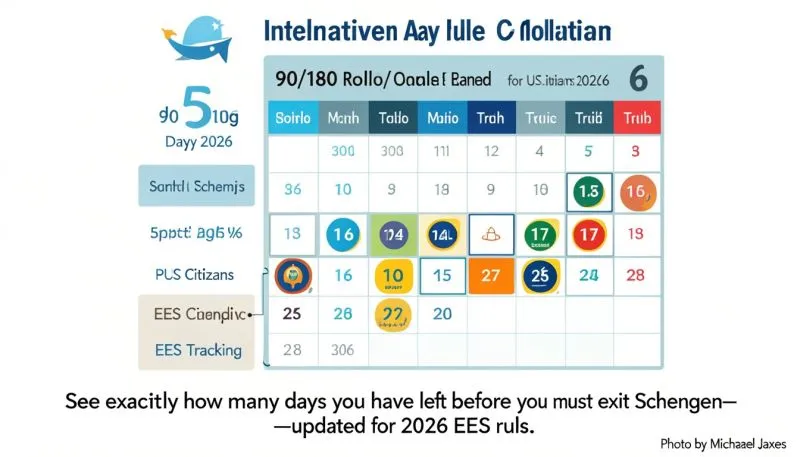
- The core rule hasn’t changed: As a U.S. citizen, you can spend up to 90 days in any rolling 180-day period across the entire Schengen Area. That’s 29 countries total—from Portugal to Poland, including France, Italy, Spain, Greece, and more.
- Important note: It’s not “90 days per country” or “90 days per trip.” It’s one single rolling total for the whole zone. Step into Germany on Day 1, fly to Spain on Day 30, and your clock keeps ticking the entire time.
- Big update for 2026: The EU’s Entry and Exit System (EES) is now fully operational. It started its progressive rollout in late 2025 and became completely active in April 2026. No more passport stamps you could try to “game.” Borders now automatically scan your biometrics (facial photo + fingerprints) and log every single entry and exit.
Overstay even by one day and the system instantly flags it across all 29 Schengen countries. The consequences are serious — fines can reach €3,000 or more, you could face up to a 5-year ban, and future travel to Europe can become a major headache.
What About ETIAS? The New Pre-Approval Americans Need Starting Late 2026
ETIAS (European Travel Information and Authorization System) is finally launching in Q4 2026. Think of it as Europe’s version of ESTA — a quick online pre-approval for visa-free short stays.
Here’s the quick rundown:
- Cost: About €7
- Valid for: 3 years or until your passport expires
- Processing time: Usually just a few minutes to 72 hours
Who needs it?
All U.S. citizens (and other visa-exempt travelers) for short tourism or business trips to the Schengen Area plus a few extras like Norway, Iceland, Switzerland, and Cyprus.
- Important note: ETIAS does not let you stay longer than the 90-day limit. It’s just the new entry ticket. If you’re planning a longer stay, you’ll still need a national long-stay visa or residence permit.
Can You Actually Extend Your 90 Days?
Short answer: Extensions for pure tourism or business reasons are extremely rare in 2026. You basically need a “force majeure” situation — think serious illness, natural disaster, or a real humanitarian emergency. Even then, you’ll usually only get a few extra days or weeks, not months.
Bottom line: If you want to stay legally longer in Europe, the real path is switching to a national long-stay visa (Type D) or a residence permit from the specific country where you plan to base yourself. These are issued by individual EU countries and often let you travel freely inside the Schengen Area afterward.
The Best Legal Ways Americans Can Stay Longer in 2026
Here are the realistic, proven paths that thousands of Americans are actually using right now in 2026:
- Digital Nomad Visas (The #1 choice for remote workers)
- Passive Income / Non-Lucrative Visas (Perfect for retirees and investors)
- Work, Study, or Family Visas
- Investment / Golden Visa Routes
- Smart Non-Schengen Looping (Using the UK, Ireland, and Balkans as “reset” bases)
Let’s dive deep into the most popular options with the latest 2026 numbers, requirements, and real-world tips.
Digital Nomad Visas: Work Remotely and Live Legally in Europe
These visas are tailor-made for Americans earning income from U.S. clients or remote jobs. You prove you work online, meet the income thresholds, and get 1–2 years of legal stay (renewable).
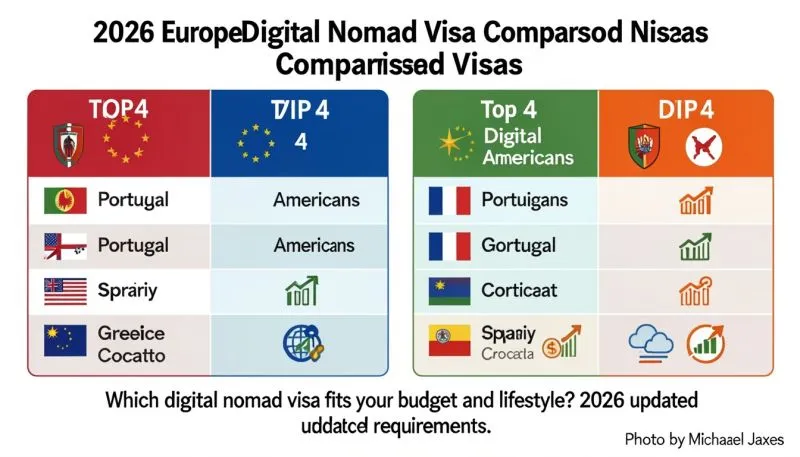
Here’s a clear comparison of the top programs in 2026:
| Country | Min. Monthly Income (Single Applicant) | Maximum Duration | Family Allowed? | Processing Time | Key Perks | Best For |
|---|---|---|---|---|---|---|
| Portugal (D8) | €3,680 | Up to 5 years | Yes | 3–4 months | Clear path to permanent residency & citizenship | Long-term lifestyle |
| Spain | €2,849 | Up to 5 years | Yes | 1–3 months | Beckham Law (24% flat tax option) | City life + culture |
| Greece | €3,500 (net) | 1 year (renewable) | Yes | 2–3 months | 50% tax break possible | Island living |
| Croatia | €3,295–€3,622 | Up to 18 months | Yes | 30–60 days | 0% tax on foreign income | Budget Mediterranean |
(Data compiled from official 2026 consulate guidelines and recent applicant reports.)
Passive Income Visas: Perfect for Retirees and Investors
Don’t have a remote job? No problem.
Countries like Portugal and Spain offer special visas that let you live there legally if you can prove steady passive income — think pensions, rental properties, dividends, investments, or any recurring income that doesn’t require you to work locally.
Readmore Digital Nomad Visa Guide – Which Countries Allow Easy Stay in 2026
Here’s the 2026 breakdown of the most popular options:
- Portugal D7 Visa (Passive Income Visa) Minimum: €920 per month for a single applicant (plus savings proof equal to one year of required income in a Portuguese bank account). Duration: Up to 5 years, renewable. Path to permanent residency: Yes, after 5 years.
- Spain Non-Lucrative Visa Minimum: €2,400 per month for a single applicant (€600 extra per dependent). Duration: Up to 5 years, renewable. Path to permanent residency: Yes, after 5 years. Approval is usually straightforward if your finances are clean.
Other Strong Options in 2026
- EU Blue Card – For skilled professionals in tech, engineering, or healthcare (fast-track work visa with EU-wide mobility).
- Student Visas – Enroll in a language school or university program for 1+ years of legal stay.
- Family Reunification – If you have a spouse or partner already living legally in Europe.
- Investment / Golden Visa Routes – Greece still offers residency-by-investment starting at €250,000 in real estate (thresholds vary by location and property type).
These visas often lead to permanent residency and, eventually, a path to EU citizenship for many Americans.
-
Non-Schengen Strategy: Reset Your Clock Without Breaking Rules
Want to stretch your time in Europe without going through a full visa process?
Here’s a smart, completely legal workaround that thousands of Americans use: spend your “off” 90 days in non-Schengen countries. Time spent there doesn’t count toward your Schengen 90/180 limit, so you can reset the clock and keep enjoying Europe longer.
Popular combos Americans love in 2026:
- United Kingdom – Needs its own ETA (Electronic Travel Authorisation) for entry, but time in the UK doesn’t count toward Schengen days.
- Ireland – Not part of Schengen and easy to combine with UK trips.
- The Balkans – Albania, Serbia, Montenegro, and Bosnia & Herzegovina are all outside Schengen (note: Croatia joined Schengen in 2023, so it does count).
- Cyprus – Requires ETIAS but stays here are completely separate from the Schengen 90/180 rule.
Many digital nomads and long-term travelers do the classic “90 in / 90 out” loop and legally live in Europe for 6+ months (or even more) every year.

Step-by-Step: How to Actually Apply and Move in 2026
Here’s exactly how thousands of Americans are successfully making the move right now:
- Decide your main base country and the best visa type that fits your situation (remote work, retirement, investment, etc.).
- Gather your documents — valid U.S. passport, proof of income or savings, comprehensive health insurance, clean criminal record (FBI background check), and proof of accommodation.
- Apply at the consulate in the United States (some countries also allow applications from inside Europe if you’re already there legally).
- Once approved, move to Europe and register locally to get your residence card.
- Settle in and start enjoying legal long-term life in Europe.
Real Talk: Costs, Challenges, and Success Stories
Moving isn’t cheap. Most Americans budget €2,000–€5,000 in upfront visa and legal fees, plus proof of savings. Health insurance is mandatory and usually costs $100–$300 per month.
But here’s the truth: the people I’ve spoken with say the payoff is huge — better quality of life, walkable cities, amazing food, and a healthier work-life balance. One couple from Texas I interviewed has been living in Portugal on the D8 visa for 18 months. They told me they have zero plans to return to the U.S. full-time.
Common Mistakes That Get Americans Denied or Banned in 2026
- Thinking “I’ll just hop Americans countries” still works (the new EES system kills that trick).
- Underestimating income or savings proof (they usually want 6+ months of clean bank statements).
- Applying for the wrong visa type.
- Overstaying even by a few days.
Do it right the first time and you’ll be set for years to come.
Ready to Make Europe Your Home Base?
The rules in 2026 are clearer and more digital than ever, but the opportunities for Americans have never been better. Whether you’re dreaming of sunny Spanish beaches, Portuguese wine country, or the Greek islands, there’s a real, legal path waiting for you.
- Start today: pick your main country, check the latest consulate website, and run your travel dates through a Schengen calculator.
The longer European chapter you’ve been dreaming about? It’s totally doable — and closer than you think.

FAQ: Your Top Questions About Staying
Can I still visit Europe visa-free in 2026?
Yes — up to 90 days in any 180-day period. Just apply for your ETIAS once it launches in late 2026. It’s a quick online approval and basically your new entry ticket.
Does the 90-day rule reset every calendar year?
No. It’s a rolling 180-day window. Always use a Schengen calculator to track your days accurately.
What’s the easiest digital nomad visa for Americans in 2026?
Portugal’s D8 or Spain’s digital nomad visa. Both have lower bureaucracy and clearer paths to long-term residency.
Will I pay U.S. taxes if I live in Europe?
Yes Americans you’re still a U.S. taxpayer on worldwide income. But many European countries have tax treaties and special regimes (like Portugal’s NHR or Spain’s Beckham Law) that can make it more favorable for nomads.
Can I bring my family?
Yes Americans most digital nomad and passive income visas allow family members, but you’ll need to show extra income for each dependent.
What happens if I overstay?
The new EES system will catch it automatically. Expect fines up to €3,000, possible 5-year ban, and major problems with future travel.
Is health insurance required?
100% yes — every long-stay visa and even short visits require proof of comprehensive coverage.
Can I work for European clients on a digital nomad visa?
Usually no. That’s one of the biggest rules — your income must come from outside the EU (U.S. clients or remote work for non-EU companies).
How long until I can get permanent residency?
Typically 5 years on most long-stay visa paths (Digital Nomad, Passive Income, etc.). After that, many countries offer a clear route to permanent residency and eventually EU citizenship.
Should I apply from the U.S. or while already in Europe?
Most Americans get smoother and faster approval when they apply from a U.S. consulate before they leave. Some countries do allow in-country applications later, but starting from the U.S. is usually the safest and least stressful option.

Michael James is an American travel writer and Europe visa specialist with 7+ years of experience helping U.S. citizens stay longer in Europe. Through real conversations with digital nomads, retirees, and expat families, he delivers clear, no-fluff guides on the latest 2026 Schengen rules, ETIAS, and the best long-stay visas. Follow his practical advice at TravelTipHub.