

ETIAS Requirements for US Citizens 2026
If you’re planning to travel to Europe in 2026, it’s important to understand the new ETIAS requirements for US citizens before your trip. The European Union is introducing a new travel authorization system that will become mandatory for most American travelers visiting participating European countries for short stays.
ETIAS requirements for US citizens.
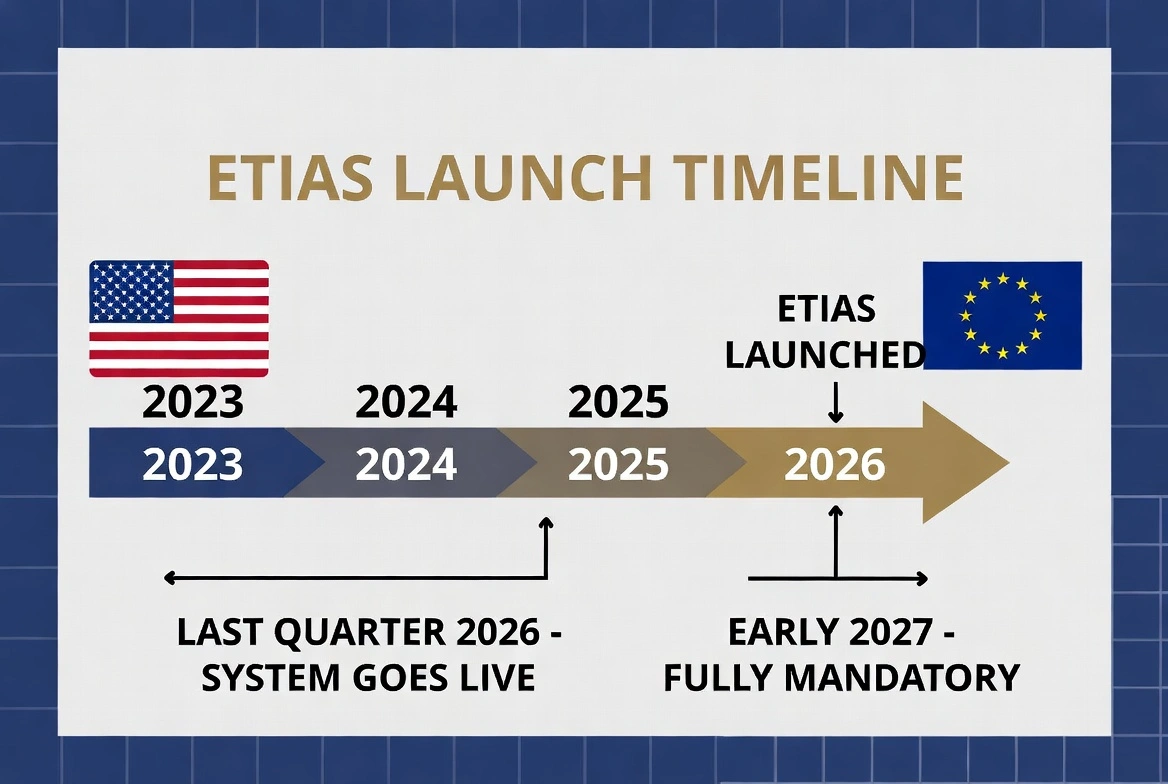
Although ETIAS is not a visa, travelers will need an approved authorization before boarding flights once the system officially launches in late 2026. Until then, US citizens can continue traveling to Europe under the current visa-free rules.
This guide explains everything travelers need to know about ETIAS requirements for US citizens, including application steps, fees, validity, required documents, participating countries, and common travel mistakes to avoid.

What is ETIAS and Why Does It Matter for US Travelers?
ETIAS stands for the European Travel Information and Authorisation System. It is a pre-travel authorization system introduced by the European Union for visa-exempt travelers, similar in concept to the US ESTA or Canada’s eTA.
Currently, US citizens can travel to most European countries without a visa for up to 90 days within a 180-day period. This rule will remain in place after ETIAS is introduced. However, starting in late 2026, travelers will need an approved ETIAS authorization before boarding flights to participating European destinations.
US Citizens ETIAS Authorization
ETIAS is not a visa. It does not replace passport control or add a physical stamp to your passport. Instead, it is a digital travel authorization linked to your passport that confirms you meet entry ETIAS Requirements before traveling.
The purpose of ETIAS is to improve border security while maintaining visa-free travel for eligible countries. It is expected to apply to millions of travelers from over 50 visa-exempt nations, including the United States.
- Key point for 2026 travelers: The system is scheduled to launch in the last quarter of 2026, with the exact start date to be announced closer to implementation. Until then, US citizens can continue traveling to Europe under existing visa-free rules. Once active, ETIAS will be required for all travelers, including minors, visiting the 30 participating European countries.
Which European Countries Require ETIAS for US Citizens?
ETIAS will apply to 30 European countries, covering most of the Schengen Area along with a few additional nations. Travelers planning trips to Europe should carefully check their destinations to confirm whether ETIAS Requirements is required.
Which European Countries Require ETIAS Requirements for US Citizens?
| Category | Countries |
|---|---|
| Core Schengen Countries | Austria, Belgium, Czech Republic, Denmark, Finland, France, Germany, Greece, Hungary, Italy, Latvia, Lithuania, Luxembourg, Malta, Netherlands, Poland, Portugal, Slovakia, Slovenia, Spain, Sweden |
| Additional Participating Countries | Estonia, Croatia, Cyprus, Iceland, Liechtenstein, Norway, Romania, Switzerland, Bulgaria |
Who Needs ETIAS Authorization in 2026?
Most US citizens who plan to visit Europe for short stays will need an approved ETIAS authorization starting in late 2026. This applies to trips for tourism, business, medical treatment, or transit purposes, with stays of up to 90 days within any 180-day period.
ETIAS is required for:
- Adult travelers from the United States
- Children and infants (every traveler must have their own authorization)
- Dual citizens (if entering Europe using a US passport)
Important exception:
If you already hold a valid Schengen visa or a long-stay residence permit for a European country, you do not need ETIAS.
ETIAS Requirements for US Citizens: What You Need to Apply
The ETIAS Requirements application process is designed to be simple and quick. Applicants will only need to provide basic information and meet standard travel eligibility ETIAS Requirements.
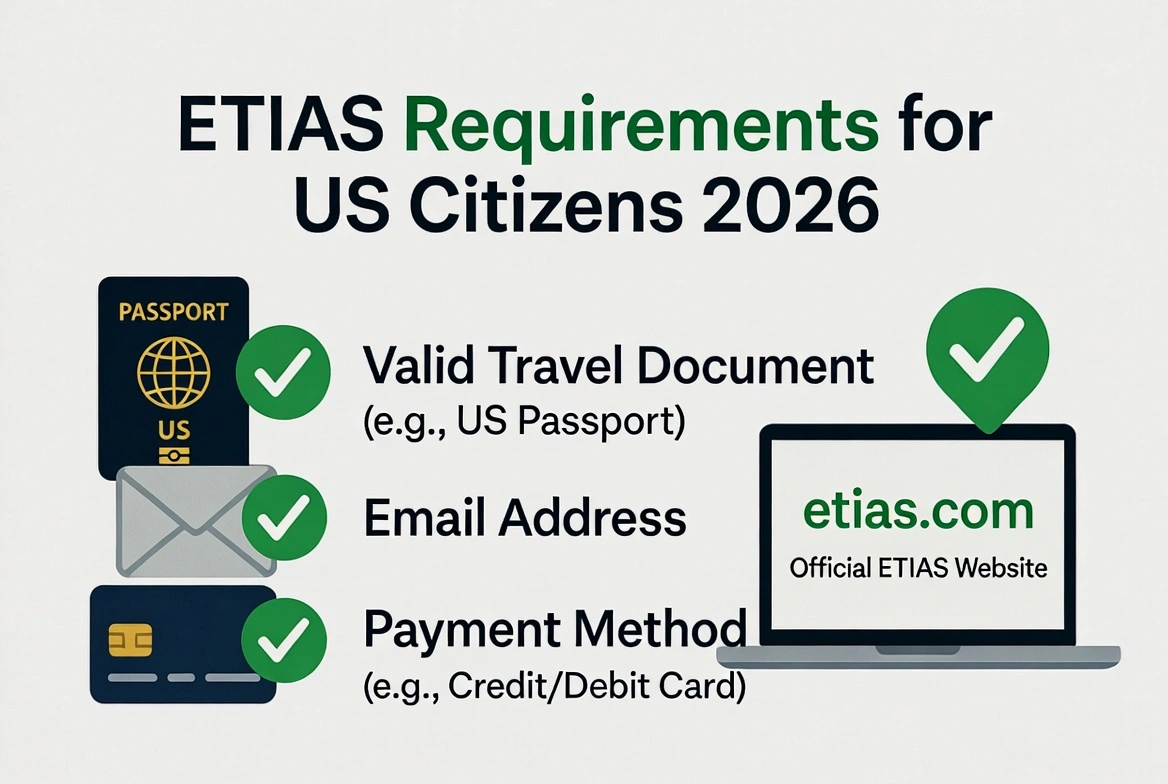
Required documents and information:
- A valid U.S. passport that is:
- Issued within the last 10 years
- Valid for at least 3 months beyond your planned departure from Europe
- A valid email address for receiving application updates and approval
- A credit or debit card to pay the application fee
- Basic personal details, including your home address, phone number, and travel history
Background information:
Applicants will also be required to answer a short set of security-related questions. These may include questions about criminal history, previous travel to conflict areas, and other standard eligibility checks used for border security screening systems such as ESTA.
All applications are automatically cross-checked against international security databases to determine eligibility.
How Much Does ETIAS Requirements Cost and How Long Is It Valid?
The ETIAS Requirements application fee is expected to be €20 (approximately $21–23 USD, depending on exchange rates). This fee applies to most travelers between the ages of 18 and 70.
Fee exemptions:
- Travelers under 18 years of age
- Travelers over 70 years of age
- In some cases, family members of EU citizens
Validity period:
Once approved, an ETIAS authorization will remain valid for up to 3 years or until the traveler’s passport expires, whichever comes first. During this period, travelers can enter participating European countries multiple times without reapplying.
ETIAS vs ESTA Comparison
| Feature | ETIAS (Europe) | ESTA (USA) |
|---|---|---|
| Cost | €20 (~$22 USD) | ~$21 USD (plus processing fees) |
| Validity | Up to 3 years or passport expiry | Up to 2 years or passport expiry |
| Processing Time | Minutes to a few days | Usually instant |
| Application Method | Online or official app | Online only |
| Coverage | 30 European countries | Entry to the United States |
| Purpose | Travel authorization for US citizens to Europe | Visa waiver for eligible travelers to USA |
How to Apply for ETIAS (Step-by-Step Guide)
Once the ETIAS system becomes active, the application process is expected to take around 10 to 15 minutes for most travelers. The entire process will be completed online through the official platform.
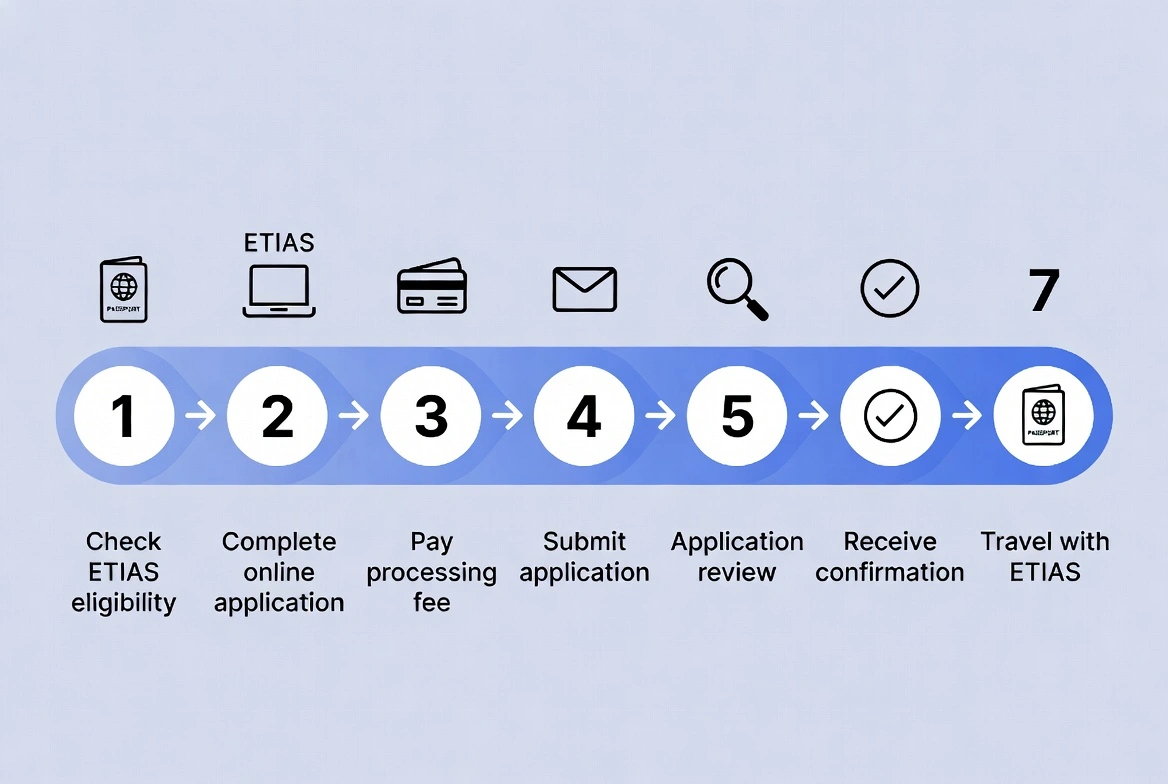
Step-by-step application process:
- Visit the official ETIAS website or use the official ETIAS mobile application.
Travelers should only use the official European Union portal to avoid fraudulent or third-party websites. - Start a new application or create a personal account.
- Enter your passport details and personal information accurately.
- Complete the required security and eligibility questions honestly.
- Pay the application fee of €20 (if applicable).
- Submit your application and wait for processing.
Most applications are approved within minutes, although some may take up to 96 hours (4 days) if additional checks are required. - Receive your approval via email. The authorization will be electronically linked to your passport.
Important note:
There is no need to print your ETIAS approval, but travelers are advised to keep a digital copy for reference during their journey.
Important Travel Tip
Travelers are advised to apply for ETIAS at least 2 to 3 weeks before their planned departure. This allows sufficient time in case additional processing or security review is required.
What Happens If Your ETIAS Application Is Rejected?
Although most ETIAS applications are expected to be approved quickly, in rare cases an application may be denied due to security, immigration, or eligibility concerns.
If your application is refused, you will receive an official explanation outlining the reason for the decision. Applicants also have the right to appeal the decision or submit a new application if their circumstances change.
In some cases, travelers may be required to apply for a traditional Schengen visa instead of ETIAS, depending on the reason for refusal.
Readmore Digital Nomad Visa Guide – Which Countries Allow Easy Stay in 2026
How ETIAS Works With the EU Entry/Exit System (EES)
ETIAS will operate alongside the European Union’s Entry/Exit System (EES), which is expected to be fully implemented in 2025.
The EES system automatically records traveler entry and exit data by scanning passports and collecting biometric information such as fingerprints. It also helps track compliance with the 90/180-day stay rule for visa-free travelers.
Together, ETIAS and EES are designed to improve border security, streamline immigration checks, and make travel across Europe more efficient for visitors.
What If Your ETIAS Application Is Rejected?
ETIAS application rejections are expected to be rare, as most applications are processed successfully within a short time. However, in some cases, applications may be denied due to security, immigration, or eligibility concerns.
If your application is refused, you will receive an official explanation stating the reason for the decision. You may also have the right to appeal or submit a new application if your circumstances change.
In certain situations, travelers may be required to apply for a standard Schengen visa instead of ETIAS, depending on the reason for rejection.
How ETIAS Works With the EU Entry/Exit System (EES)
ETIAS will operate alongside the European Union’s Entry/Exit System (EES), which is expected to be fully implemented in 2025.
The EES system records traveler entry and exit data by scanning passports and collecting biometric information such as fingerprints. It also monitors compliance with the 90/180-day short-stay rule for visa-free travelers.
Together, ETIAS and EES are designed to improve border security, reduce manual processing at immigration checkpoints, and make travel across Europe more efficient.
Practical Tips for US Citizens Planning Trips in 2026 and Beyond
Before traveling to Europe under the ETIAS system, it is important to prepare in advance to avoid any delays or travel issues.
- Ensure your passport meets the validity ETIAS Requirements (issued within the last 10 years and valid for at least 3 months beyond your departure date).
- Consider purchasing travel insurance that covers international travel and complies with ETIAS-related ETIAS Requirements.
- Families can submit applications together, making the process easier for group travel.
- Business travelers should ensure their travel itinerary and documentation are ready before applying.
- Frequent travelers will benefit from the long validity period, as one approval allows multiple trips for up to 3 years.
Common Misconceptions About ETIAS
There are several misunderstandings about ETIAS that travelers should be aware of:
- Myth: ETIAS is a visa
ETIAS is not a visa. It is a travel authorization system designed for visa-exempt travelers. - Myth: ETIAS is already required
ETIAS will not be required until its official launch in late 2026. - Myth: The application process is complicated or expensive
The application is expected to take around 10 to 15 minutes online and cost €20 for most travelers.
ETIAS Requirements for US Citizens – Frequently Asked Questions (2026)
1. When will ETIAS Requirements start for US citizens?
ETIAS Requirements is expected to launch in the last quarter of 2026. The European Union will announce the exact implementation date a few months in advance. Until the official launch, US citizens do not need ETIAS to travel to Europe.
2. Do children and infants need ETIAS?
Yes. Every traveler, including children and infants, will require an approved ETIAS Requirements authorization. However, applications for travelers under 18 years of age will be free of charge.
3. How much will ETIAS Requirements cost in 2026?
The ETIAS Requirements application fee is expected to be €20 for travelers aged 18 to 70.
- Travelers under 18 years: Free
- Travelers over 70 years: Free
4. How long is ETIAS valid?
Once approved, ETIAS will be valid for up to three years or until the traveler’s passport expires, whichever comes first.
5. Is ETIAS the same as a visa?
No. ETIAS Requirements is not a visa. It is a travel authorization system for visa-exempt travelers. It allows eligible US citizens to enter participating European countries for short stays of up to 90 days within a 180-day period.
6. I already have an approved ESTA. Do I still need ETIAS?
Yes. ETIAS is a separate system from the US ESTA. An approved ESTA does not apply to travel in Europe, so US citizens will still need to apply for ETIAS once it becomes mandatory.
7. Can I apply for ETIAS using a mobile phone?
Yes. Once the system is officially launched, applications will be available through the official ETIAS website and mobile application.
8. What happens if I travel without ETIAS after it becomes mandatory?
Travelers without a valid ETIAS authorization may be denied boarding by airlines or refused entry at the border. It is strongly recommended to apply before traveling to avoid disruptions.
9. Will ETIAS affect the 90/180-day rule for US citizens?
No. The ETIAS system does not change the existing 90-day in any 180-day period rule for visa-free travel within the Schengen Area.
10. Where can I apply for the official ETIAS?
Applications will only be accepted through the official European Union portal:
travel-europe.europa.eu/etias
Travelers should avoid third-party websites, as they are not authorized to process ETIAS applications.
Final Thoughts
The ETIAS requirements for US citizens in 2026 are designed to enhance border security while maintaining easy access for short-term travel to Europe. Although it introduces an additional step before travel, the process is expected to be simple, fast, and fully online.
Travelers are advised to check their passport validity in advance and stay updated with official announcements regarding the ETIAS launch date. Applying early once the system becomes active will help avoid unnecessary delays or travel disruptions.
Overall, ETIAS is expected to make European travel more organized and secure for millions of visitors each year, while still preserving the convenience of visa-free travel for US citizens.

Michael James is an American travel writer and Europe visa specialist with 7+ years of experience helping U.S. citizens stay longer in Europe. Through real conversations with digital nomads, retirees, and expat families, he delivers clear, no-fluff guides on the latest 2026 Schengen rules, ETIAS, and the best long-stay visas. Follow his practical advice at TravelTipHub.