
Digital Nomad Visa Guide – Which Countries Allow Easy Stay in 2026
Hello, remote worker. If you are a professional working online and tired of the traditional nine-to-five routine, 2026 offers more opportunities than ever to live and work abroad legally.
Digital nomad visas have expanded rapidly in recent years, with many countries introducing clear requirements, reasonable income thresholds, and longer stay options for remote workers.
Whether you are a freelance designer, software engineer, or marketing consultant, these visas allow you to live in different countries while continuing your work online. They also remove the need for frequent tourist visa runs or uncertain long-term stays.
In this guide, we will explore some of the easiest countries for Digital Nomad Visa in 2026, their requirements, and what makes each destination suitable for remote work.
Requirements may vary by country, so always check official government sources before applying.
What is a Nomad Visa?
A digital nomad visa, also known as a remote work visa or nomad residence permit, is a temporary residence permit designed for people who earn their income online and want to live abroad while continuing their work.
Unlike tourist visas, Digital Nomad Visa allow for longer stays, usually ranging from 6 months to 2 years initially, with the possibility of renewal or, in some cases, a path to permanent residency.
The main benefit is that you can continue working for foreign clients or employers without needing to take up local employment. Most countries require proof of stable remote income (typically between $2,000 and $4,000 per month), valid health insurance, and a clean criminal record.
For remote professionals, these visas have made long-term international living much more accessible. Many people from the US and Europe use them to explore new countries outside traditional visa limits or to settle in more affordable and warm climates.
In recent years, an increasing number of countries have introduced digital nomad programs, offering remote workers more flexibility in where they live and work.
2026 Will Be the Year for Digital Nomads
Remote work is no longer a trend—it’s the new normal. Governments saw the economic boon of nomads (they spend money locally without taking local jobs) and kept expanding programs. Italy has introduced or improved visas, Spain and Portugal have revised their rules, and Asia and Latin America have added new options.
The cost of living is still pretty reasonable in many places compared to the US or North European cities. Internet speeds are faster than ever, there are coworking spaces everywhere, and safety rankings for nomads are at an all-time high. Plus, many countries now allow family members to come along, so it’s realistic for couples or parents with kids.
If you have been waiting for the ‘right time,’ then 2026 is it. Application is easy; the process is as quick as 2-8 weeks in the easiest countries, and a lifestyle has never been supported more.
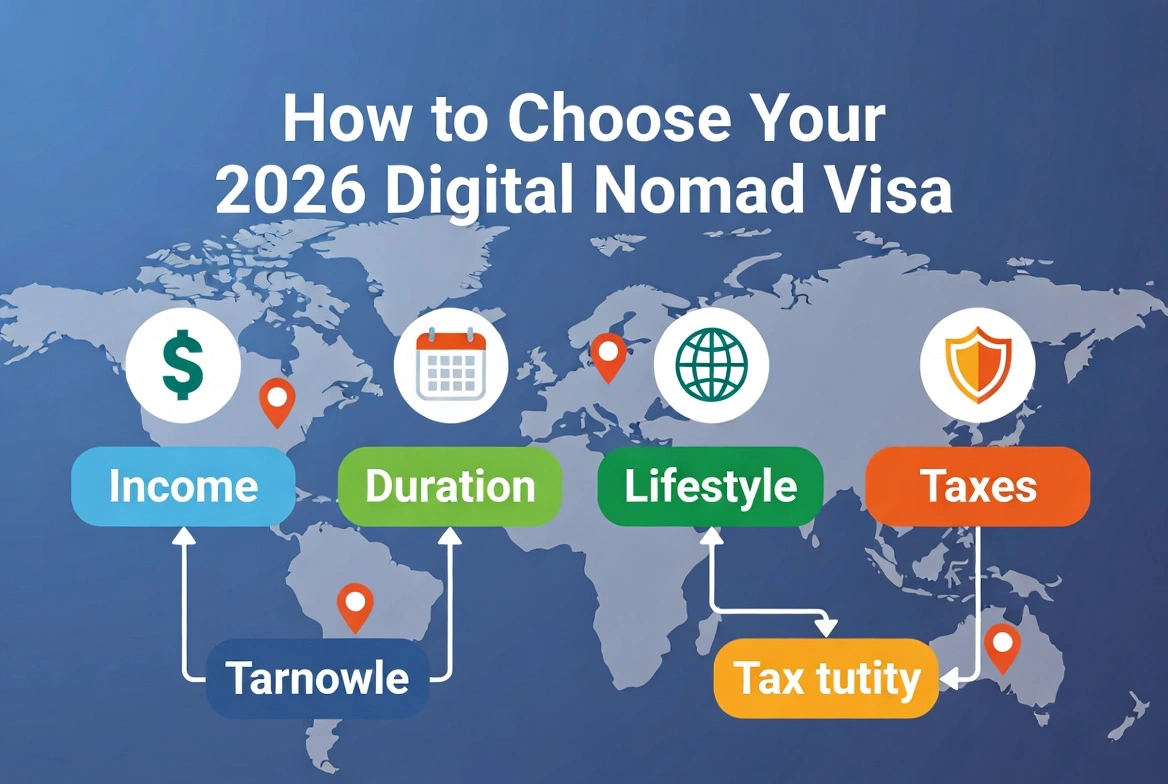
How to Choose the Right Digital Nomad Visa in 2026
Not every visa fits every nomad. Here’s what to weigh:
- Income threshold – Can you comfortably prove it with bank statements or client contracts?
- Duration and renewability – Want one year or up to five?
- Taxes – Some countries tax foreign income lightly or not at all.
- Cost of living – Will your income stretch further?
- Lifestyle fit – Beach, mountains, city buzz, or family-friendly?

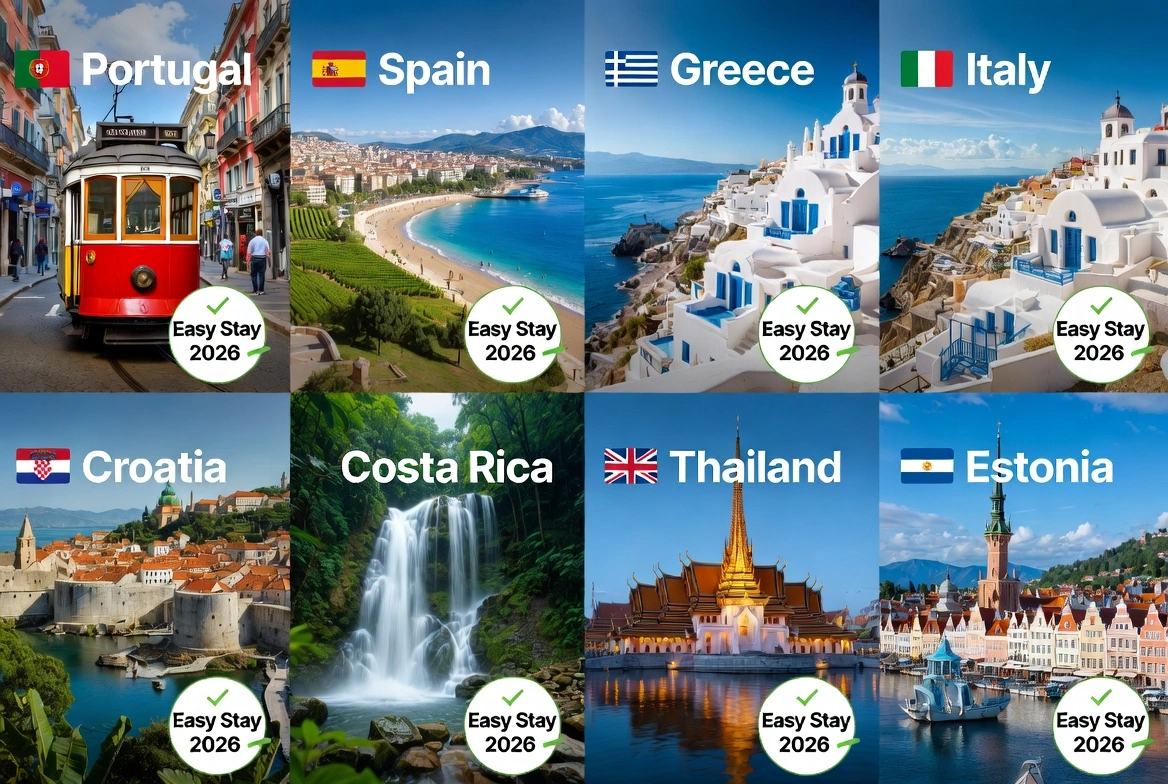
Top Countries for Digital Nomads in 2026 – In-Depth Analysis
So here are the big ones that are consistently rated as “easy” for Americans and Europeans to deal with—lower paperwork, solid infrastructure, and a friendly vibe.
1. Spain – The Mediterranean All-
Spain’s digital nomad visa continues to be one of the most popular in Europe. The minimum monthly income varies from €2,368 to €2,850 (approximately $2,600–$3,100 USD), depending on the last SMI adjustment. You get a year up front, and it’s renewable, up to a maximum of five years. Family members have easy access to it.
Pros: Great food, culture, beaches, and fast internet. Permanent residence stream. Cons: Slightly more expensive to live in Barcelona or Madrid (affordable in Valencia or Andalusia). Pro tip: You need to make at least 80% of your income from outside of Spain. Many Americans love the first six years of the “Beckham Law” tax break.
2. Portugal – The nomad’s
still The digital nomad visa, or D8, requires approximately €3,680 a month (four times the minimum wage). First-year stay, renewable up to 5 years with a clear path to citizenship after 5 years. Foreign income is tax-free if certain criteria are met.
There is a reason why Lisbon, Porto, and the Algarve attract nomads—the weather is mild, English is widely spoken, and there is a huge expat community. Outside the big towns, the cost of living is reasonable.
3. Greece – Island Life
on a visa in Greece’s program is around €3,500 per month. One year, renewable visa. Perfect for those who dream of the Cyclades or Crete. It has tax incentives (up to 7 years of breaks), which makes it attractive. Super easy application process for remote workers.
4. Italy
La Dolce Vita for the Digital Nomad Italy’s highly skilled remote worker visa is live, and it’s a hit. Minimum of €2,700 per month (€32,400 per year) One year, renewable. Picture Tuscany hills, the Amalfi Coast, or buzzing Rome. It’s easy to include family, and the lifestyle is second to none.
5. Croatia
Adriatic Adventure Monthly income between €2,300 and €3,600 depending on family size. Up to 18 months at first. Beautiful coastlines. Game of Thrones filming sites. Vibrant coworking scenes. Less expensive than Western Europe.
6. Costa Rica
Tropical in the Americas Ideal for North Americans wishing for short flights home. Individual minimum of $3000 a month. Up to 2 years with family choices. The “Pura Vida” lifestyle, rainforests, beaches, and good infrastructure. Many US citizens begin right here.
7. Thailand
The Digital Nomad Hub of Asia A brand new stand-alone program with competitive income rules (some $2,000-3,000 depending on the exact visa). Chiang Mai and Bangkok nomad communities, long stays, and amazing food. No foreign income taxes in many cases.
8. Estonia
The Digital Pioneer Europe’s tech-savvy jewel has a simple digital nomad visa. Cheap income threshold, fast processing, and world-class internet. Tallinn is the future and perfect for those who love startups and innovation.
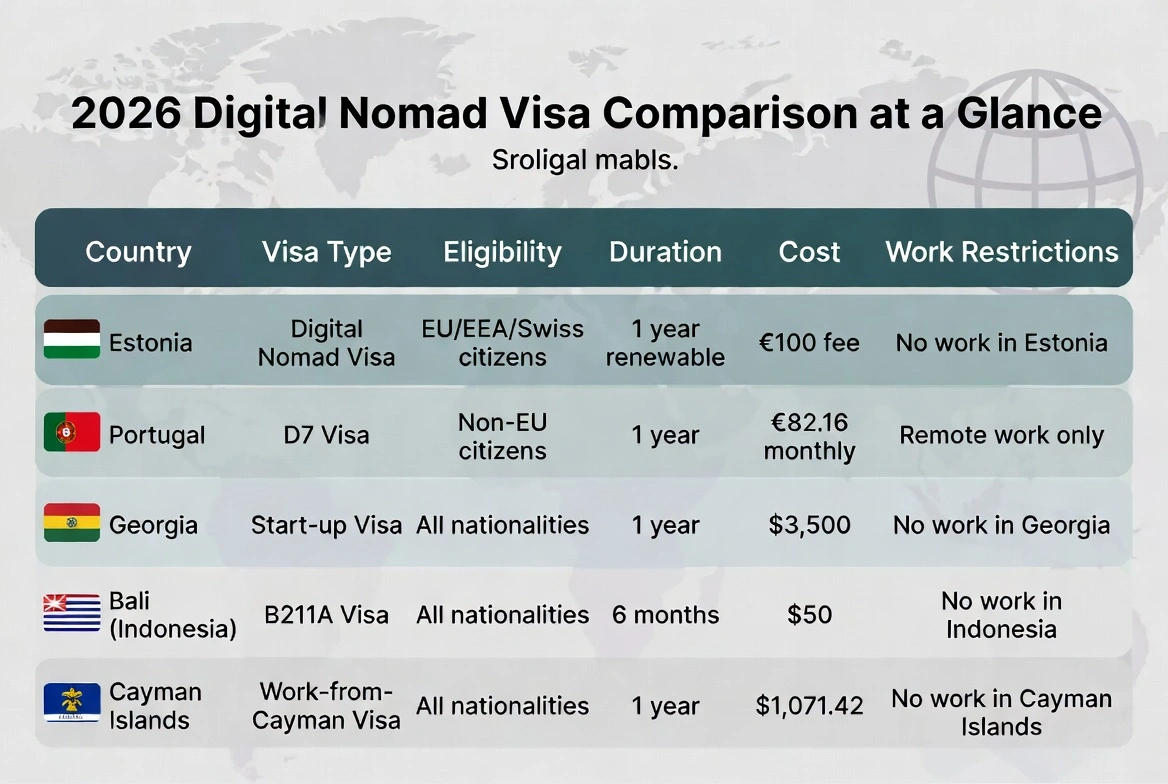
Quick Comparison: Digital Nomad Visas (2026)
| Country | Visa Type | Min Monthly Income (USD) | Duration | Family | Key Benefit | Fee |
|---|---|---|---|---|---|---|
| Spain | Digital Nomad Visa | $2,600–$3,100 | 1 year (renewable up to 5 years) | Yes | Long-term EU stay + lifestyle | $80–$100 |
| Portugal | D8 Visa | ~$4,000 | 1 year (renewable up to 5 years) | Yes | Tax benefits + EU residency path | $90–$120 |
| Greece | Digital Nomad Visa | $3,800–$4,300 | 1 year (renewable) | Yes | Island lifestyle + tax incentives | $75–$100 |
| Italy | Remote Worker Visa | $2,900–$3,200 | 1 year (renewable) | Yes | Culture + family-friendly living | $100–$150 |
| Croatia | Digital Nomad Permit | $2,500–$3,900 | Up to 18 months | Yes (limited) | Affordable Adriatic living | $50–$80 |
| Costa Rica | Rentista / Remote Visa | ~$3,000 | Up to 2 years (renewable) | Yes | Close to US + nature lifestyle | $100–$200 |
| Thailand | Long-Term Visa | $2,000–$3,500 | 1–2 years | Yes | Low cost + no foreign income tax (cases vary) | $150–$300 |
| Estonia | Digital Nomad Visa | ~$3,500+ | 1 year (renewable) | Yes | Tech infrastructure + digital society | $80–$120 |
Note: Requirements may change. Always verify on official government websites before applying.
How to Apply (Step-by-Step Process)
The application process for most digital nomad visas follows a similar structure across countries. Below are the general steps:
- Prepare proof of remote income
This may include employment contracts, client invoices, bank statements, or tax returns. - Arrange health insurance
You must have valid health insurance that covers your entire stay in the destination country. - Obtain a criminal background check
Some countries, especially for American applicants, may require an FBI background check. - Submit your application
You can usually apply online, through a consulate, or in some cases after arrival. - Provide biometrics (if required)
Fingerprints and identity verification may be needed depending on the country. - Wait for approval
Processing times typically range from 2 to 8 weeks. - Register locally upon arrival
Some countries require you to register with local authorities after entering.
Pro Tips & Mistakes to Avoid
Before applying for a digital nomad visa, it is important to prepare properly to avoid unnecessary delays or rejection.
- Start your application early:
It is recommended to begin the process at least 3–4 months in advance to allow enough time for documentation and approval. - Provide complete financial documentation:
Submitting detailed proof of income is better than risking rejection due to insufficient financial evidence. - Plan your budget carefully:
Make sure to include additional costs such as housing deposits, health insurance, and relocation expenses. - Join local communities:
Online groups and expat communities in your target country can provide useful insights about real-life experiences and practical advice.
Readmore How to Stay Safe in Bangkok as a Tourist in 2026
Frequently Asked Questions (FAQ)
Q1: Can Americans apply for digital nomad visas in Europe?
Yes. American citizens are eligible for many European digital nomad visa programs as non-EU applicants.
Q2: What is the lowest income requirement in 2026?
Spain generally offers one of the more accessible income thresholds, ranging from approximately $2,600 to $3,100 per month.
Q3: Do I need to quit my job to apply?
No. However, most countries require that you do not work for local employers within the host country.
Q4: Can I bring my family with me?
Yes. Many programs, including those in Spain, Portugal, Costa Rica, and Greece, allow family members such as spouses and children, usually with additional income requirements.
Q5: How long does the approval process take?
Processing times typically range from 2 to 8 weeks, although this can vary depending on the country and application volume.
Q6: Will I be taxed in the new country?
Tax obligations depend on the country and your residency status. Many destinations offer special tax regimes where foreign income is lightly taxed or exempt for a limited period.
Q7: Is health insurance required?
Yes. Most digital nomad visa programs require full health insurance coverage without gaps for the duration of your stay.
Q8: What if my income varies?
Applicants are usually required to show 3–12 months of stable income history. In some cases, client contracts or proof of ongoing work may also be accepted.
Q9: Can I switch countries while on a visa?
In most cases, you cannot switch countries mid-visa. However, you may apply for a new visa after your current one expires.
Q10: Can I obtain citizenship through a digital nomad visa?
In some countries, such as Portugal and Spain, long-term residency through continued legal stay may eventually lead to eligibility for permanent residency or citizenship, subject to national immigration laws.
Q11: Are pets allowed?
Yes, many countries allow pets if proper vaccination records, microchips, and health documentation are provided.
Q12: Is 2026 a good time for Digital Nomad Visa?
2026 is considered a strong year for remote workers due to expanding visa programs, improved infrastructure, and more stable post-pandemic policies across many countries.

Final Thoughts
2026 is expected to be one of the most accessible years for digital nomads looking to live and work abroad legally. With a growing number of visa programs across Europe, Asia, and the Americas, remote professionals now have more options than ever before.
If you are considering this lifestyle, it may be helpful to compare a few countries based on your income, work requirements, and personal preferences.
You can start by selecting two or three destinations from the comparison above and reviewing their official requirements carefully.
If needed, you may also consider consulting a qualified immigration professional for personalized guidance before applying.
The opportunities for remote work and international living continue to expand, making it easier for many professionals to explore life abroad.

Michael James is an American travel writer and Europe visa specialist with 7+ years of experience helping U.S. citizens stay longer in Europe. Through real conversations with digital nomads, retirees, and expat families, he delivers clear, no-fluff guides on the latest 2026 Schengen rules, ETIAS, and the best long-stay visas. Follow his practical advice at TravelTipHub.
The idea that “2026 Will Be the Year for Digital Nomads” is quite intriguing, especially with the growing number of countries offering easy stay options. As someone who’s spent time in both Spain and Portugal, I can attest that the Mediterranean lifestyle is a big draw, but the cost of living can add up quickly. One practical tip I’d offer is to research the specific tax implications for each country, as some have more favourable rates for remote workers than others. I’ve noticed that the parallel between the ease of obtaining a digital nomad visa and the overall cost of living in a country is something I have been thinking about because it seems that some countries are actively trying to attract remote workers with more relaxed visa requirements, but then balance it out with higher costs elsewhere. It’s interesting to consider how these trade-offs will play out in the coming year, and whether the increasing popularity of digital nomadism will lead to more countries adopting similar visa policies.