

The Ultimate Solo Travel Packing List for Europe
Hello, fellow adventurer! Planning your first (or next) solo trip across Europe? You’re about to do one of the most liberating, life-changing things you can do. Europe is practically built for solo travelers – fast trains, walkable cities, English-friendly spots, and the perfect blend of city buzz and countryside peace and quiet. But the truth is, the difference between an awesome solo trip and a stressful one often comes down to one thing — your solo travel packing list for Europe.
I’ve whittled this same list down through years of solo travel from the sunny beaches of Spain to the rainy streets of Edinburgh and the snowy peaks of the Alps. This isn’t just a generic list you find everywhere. This is a practical, battle-tested guide to packing for solo travel in Europe, written for the realities of 2026—including new ETIAS rules, strict budget-airline carry-on limits (we’re looking at you, Ryanair and easyJet), and the kind of versatile gear that actually works when you’re traveling on your own.
American Flying European Traveling
Whether you’re an American flying in from the States or a European traveling around your own continent, this 3,100-word guide will help you pack light, stay safe, look well put-together, and focus on the experiences instead of your suitcase. We’ll break down documents, clothing, tech, safety must-haves, seasonal breakdowns, packing hacks, what NOT to bring, and a full checklist at the end.
Let’s jump in and create the ultimate solo travel packing list for Europe together.
How to Pack Smart for a Solo Trip to Europe: All You Need to Know
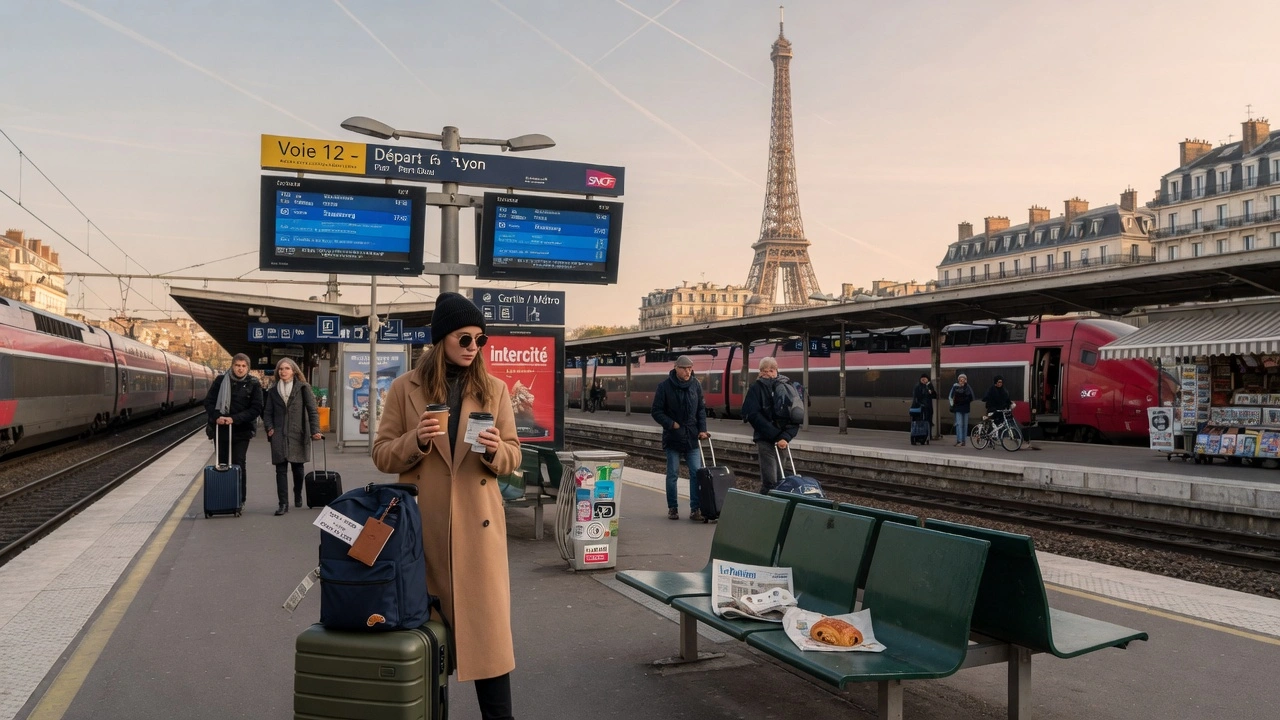
Traveling solo gives you complete freedom, but it also means you’re your own porter, navigator, and emergency contact. Europe’s weather can change in a heartbeat, public transportation has strict rules, and budget airlines hit you with insane checked baggage fees. The smartest European solo travel packing list revolves around carry-on only, mix-and-match outfits, and multi-purpose items.
Overpack and you’ll waste time and energy. If you don’t take enough, you’re spending money on replacements. My rule? Everything in your bag has to pull its weight — that is, be useful in two or more ways.
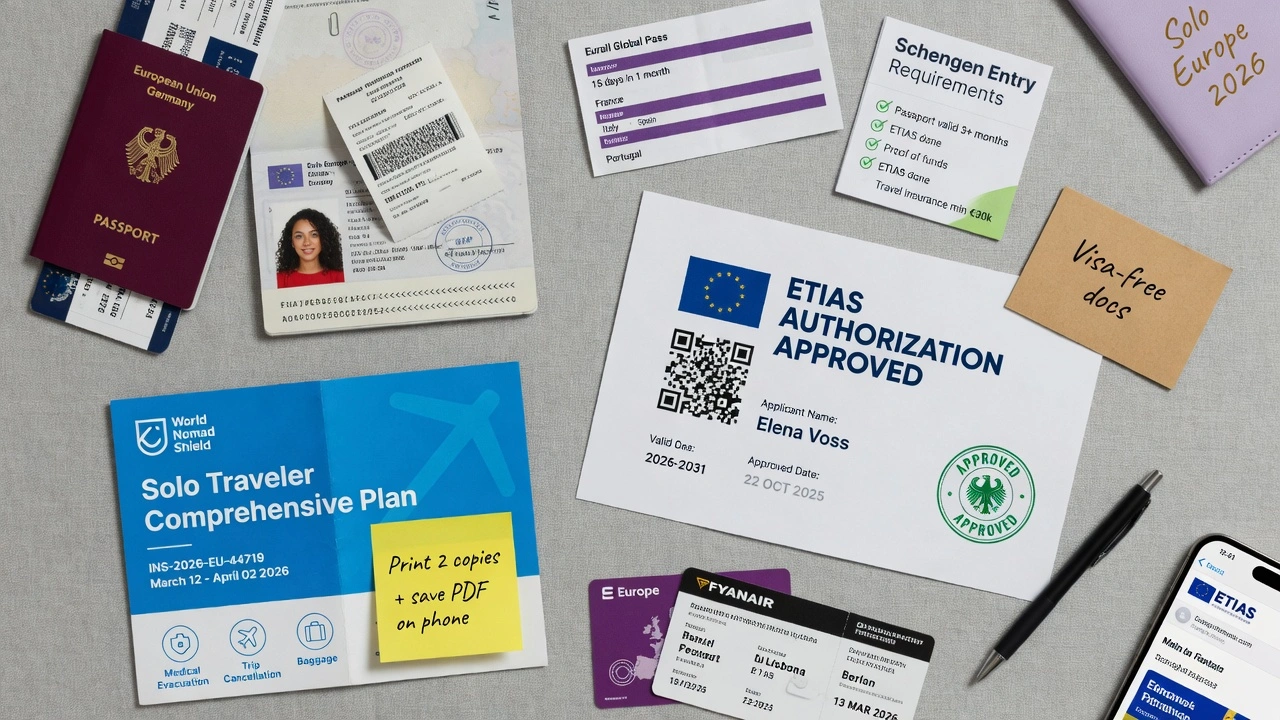
ETIAS (European Travel Information and Authorization System) is launching in late 2026 for visa-exempt travelers such as most Americans, Canadians, and Australians. It costs about €20 and takes just 10 minutes to apply online — but you must apply before you fly. Don’t get caught at the gate without it.
Must-Haves & Pre-Trip Documents (Don’t Leave Home Without Them)
First things first — these are the non-negotiables for any solo travel packing list for Europe.
- Valid passport (with at least 3 months validity beyond your planned return date)
- Printed and digital copy of your ETIAS approval (if required in late 2026 — always check the official EU website before travel)
- Travel insurance policy (make sure it includes medical evacuation coverage — I personally use SafetyWing or World Nomads)
- Printed confirmations for your flight, train, and hotel bookings (Wi-Fi isn’t always reliable in remote areas)
- A couple of credit and debit cards (kept in separate places) + some euros in small denominations
- International Driving Permit (if you plan to rent a car in countries like Ireland or Italy)
- Digital copies of all important documents stored in Google Drive or iCloud
Pro tip: Take clear photos of your passport and ETIAS approval, save them on your phone, and email them to yourself as a backup.
Selecting the Proper Luggage for Solo Travel Packing in Europe
Cabin bag only. Full stop. Most budget airlines in Europe allow one small personal item (40x30x20 cm for Ryanair) and one larger carry-on (55x40x20 cm). I travel with a 22-inch spinner suitcase and a 15L daypack that fits perfectly under the seat.
Top picks for 2026:
- Lightweight spinner suitcase (Samsonite or any good equivalent)
- RFID-blocking anti-theft daypack
- Packing cubes (absolute game changer for organization)
- Compression bags for bulky items
Full Clothing & Footwear Section (The Capsule Wardrobe That Works Everywhere)
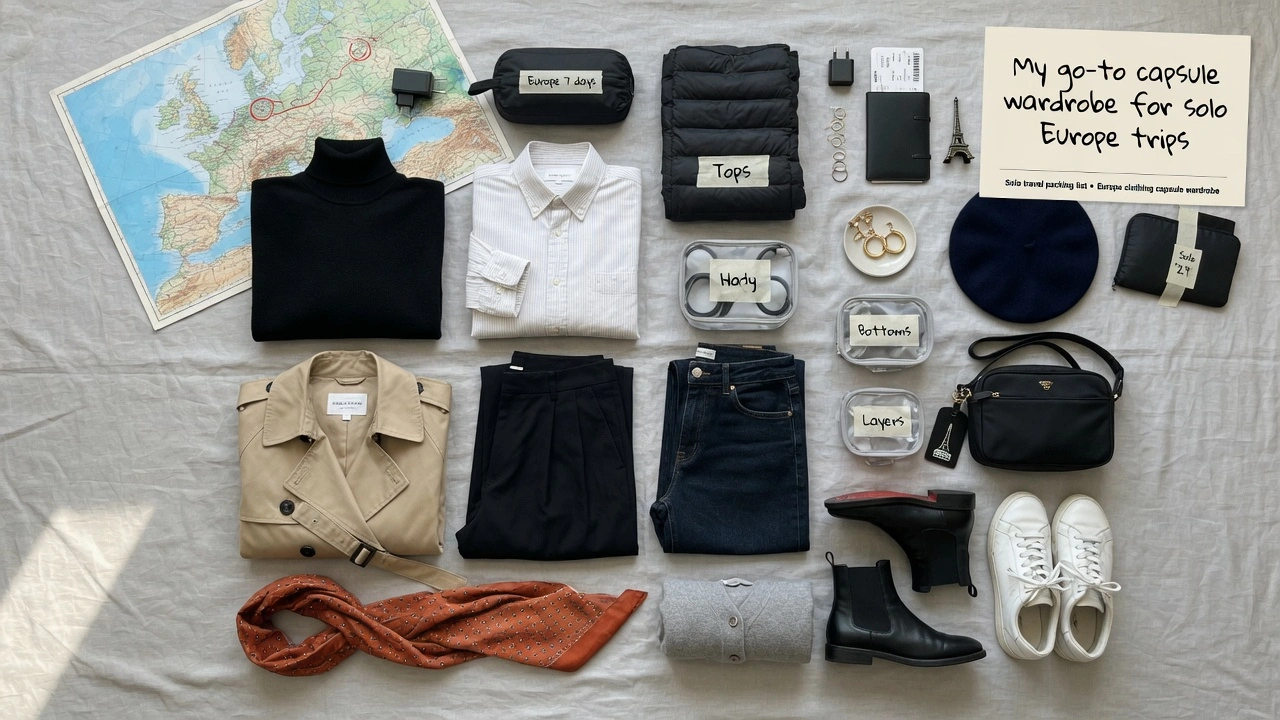
Europe’s weather is unpredictable no matter the season, so layering is your best friend. Stick to neutral colors that mix and match easily. Here is the exact solo Solo Travel Packing list for Europe clothing formula I use for 2–4 week trips:
Tops (5–7 pieces)
- 3–4 breathable t-shirts or tank tops
- 2 long-sleeve lightweight or merino button-down shirts
- 1 nice blouse or polo (for dinners or smarter occasions)
Bottoms (3–4 pieces)
- 1 pair of dark jeans or chinos
- 1–2 pairs of leggings or lightweight pants
- 1 skirt or pair of shorts (depending on the season)
Outer Layers
- Lightweight waterproof packable jacket
- Merino wool or fleece pullover
- Packable down jacket (for colder months)
Footwear (3 pairs max)
- 1 pair of comfortable walking shoes (I swear by Allbirds or Brooks)
- 1 pair of multi-purpose sandals or loafers
- 1 pair of waterproof boots or ankle boots (for fall/winter)
Underwear & Socks
- 7–10 days’ worth of quick-dry merino or synthetic fabric. You’ll do laundry every week or so, so there’s no need to pack for the entire trip.
Packing by Season in Europe
Europe’s weather can change dramatically, so smart seasonal packing makes a big difference. Here’s what you should focus on:
Readmore Digital Nomad Visa Guide – Which Countries Allow Easy Stay in 2026
Spring (March–May): Light jacket, scarf, and plenty of layers. Rain is frequent, so pack a compact umbrella or waterproof shell. Summer (June–August): Breathable cottons and linens. Remember to carry a light scarf or shawl for visiting churches and cathedrals. Fall (September–November): Jeans, sweaters, a waterproof jacket, and a scarf (Europeans absolutely love scarves in autumn!). Winter (December–February): Wool coat or packable puffer, thermal base layers, waterproof boots, gloves, and a warm hat.
Note: Southern Europe (Spain, Italy, Greece) stays milder, while Northern Europe (Scandinavia, UK) will be colder and wetter.
Health, Personal Care & Toiletries
- 3-1-1 liquids bag (TSA and EU rules still apply)
- Solid shampoo/conditioner bars (eco-friendly and travel-size)
- Toothpaste, deodorant, and other toiletries in travel size
- Reusable water bottle (tap water is safe and excellent across most of Europe)
- Small first-aid kit + any prescription medications (with doctor’s note)
- Hand sanitizer and wet wipes
- Quick-dry travel towel
- Sunscreen, lip balm, and basic medicines (pain reliever, allergy tablets, Imodium)
Electronics & Tech for Solo Travelers
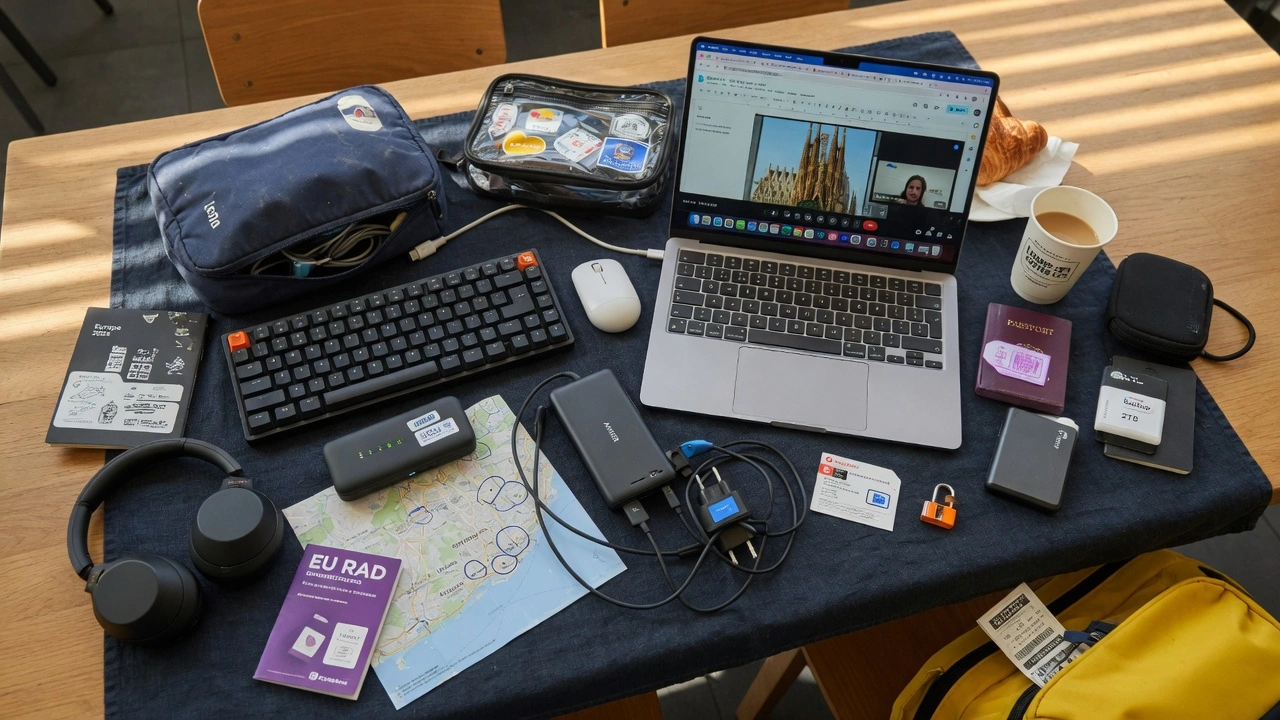
- Phone + charger + European plug adapter (Type C and F)
- Portable power bank (20,000 mAh recommended)
- Noise-canceling headphones (a lifesaver on trains and planes)
- Universal travel adapter
- eSIM or local data plan (Airalo or Saily work great in 2026)
- Small laptop or tablet (only if you work remotely)
Safety & Security Items Every Solo Traveler Should Have
Most of Europe is safe to Solo Travel Packing alone, but smart precautions always count.
- Anti-theft crossbody bag or money belt
- RFID-blocking wallet
- Portable door and window alarm
- Small headlamp or flashlight
- Copies of all essential documents (printed + digital)
- Emergency cash hidden in two separate locations
- Offline maps downloaded (Google Maps or Maps.me)
For solo female travelers: I always recommend carrying a personal safety alarm and sharing your real-time location with a trusted friend or family member.
Money, Comfort & Other Useful Items
- Reusable shopping bag (plastic bags are charged in most European countries)
- Travel diary or small notebook
- Earplugs and eye mask (perfect for hostels and overnight trains)
- Small laundry bag + Solo Travel Packing detergent sheets
- Snacks for long travel days
Packing Hacks & Pro Tips for the Solo Traveler
- Roll your clothes or use packing cubes for maximum space
- Wear your bulkiest shoes and jacket on the plane
- Weigh your luggage before leaving for the airport
- Download offline translation apps (Google Translate works great)
- Join local solo traveler Facebook groups or use apps like Polarsteps
What NOT to Bring to Europe
- Full-size toiletries (buy small sizes or solid bars)
- More than 3 pairs of shoes
- Cotton socks or underwear (they take forever to dry)
- Pricey or flashy jewelry
- Anything you can easily buy there
Packing Tips for Sustainable Solo Travel Packing
Pack light. The lighter your bag, the smaller your carbon footprint. Buy local products instead of carrying everything from home and always use reusable items.
Europe Solo Travel Packing List Checklist (Print This!)
[Full categorized checklist here — Documents, Clothing, Toiletries, Tech, Safety, etc. You can add a clean bullet list or table at the end when you finalize the article]
Frequently Asked Questions
Can you really travel to Europe with just a carry-on?
Yes, thousands of solo travelers do it successfully every year. With the right luggage and smart packing, carry-on-only travel is completely realistic across Europe.
When will ETIAS be operational?
ETIAS is expected to launch in late 2026 for most visa-exempt Solo Travel Packing (such as Americans, Canadians, and Australians). It is highly recommended to apply as soon as it becomes available.
What is the best time to Solo Travel Packing in Europe?
Shoulder seasons (spring and fall) are often the best choice — fewer crowds, lower prices, and pleasant weather.
What size luggage should I take for budget airlines like Ryanair and easyJet?
Stick to the strict limits: one small personal item (40x30x20 cm) and one carry-on (55x40x20 cm). I recommend a 22-inch spinner suitcase and a 15–20L daypack that fits under the seat.
Do I really need travel insurance for a solo trip to Europe?
Yes! Medical evacuation and trip cancellation coverage are must-haves. I personally use SafetyWing or World Nomads because they are affordable and designed for long-term Solo Travel Packing.
How do I handle laundry while Solo Travel Packing in Europe?
Pack only 7–10 days’ worth of quick-dry merino or synthetic underwear and socks. Most hostels and Airbnb places have washing machines, and you can buy detergent sheets locally.
What adapters and chargers do I need for Europe?
Europe uses Type C and Type F plugs. Take a universal Solo Travel Packing adapter and a good 20,000 mAh power bank. An eSIM (Airalo or Saily) is also highly recommended for cheap data.
How can I stay safe as a solo traveler in Europe?
Use an anti-theft bag, keep emergency cash in two places, download offline maps, and share your location with a friend. Solo female Solo Travel Packings should carry a personal safety alarm.
Should I pack for the worst weather or the average weather?
Always pack for layering and unpredictable weather. A packable waterproof jacket and a scarf will save you in almost every season and country.
What if I forget something important?
Don’t worry — Europe has excellent stores (Decathlon, Uniqlo, pharmacies). Focus on packing light and buying small items locally instead of overpacking “just in case.”
Final Thoughts
Your ultimate Solo Travel Packing list for Europe is now ready. Travel light, stay safe, and focus on creating memories that will last a lifetime. Europe is an incredible destination for solo adventurers because every choice is yours to make.
Safe travels! If you want me to customize this packing list for a specific country, season, or trip length, just leave a comment below.

Michael James is an American travel writer and Europe visa specialist with 7+ years of experience helping U.S. citizens stay longer in Europe. Through real conversations with digital nomads, retirees, and expat families, he delivers clear, no-fluff guides on the latest 2026 Schengen rules, ETIAS, and the best long-stay visas. Follow his practical advice at TravelTipHub.